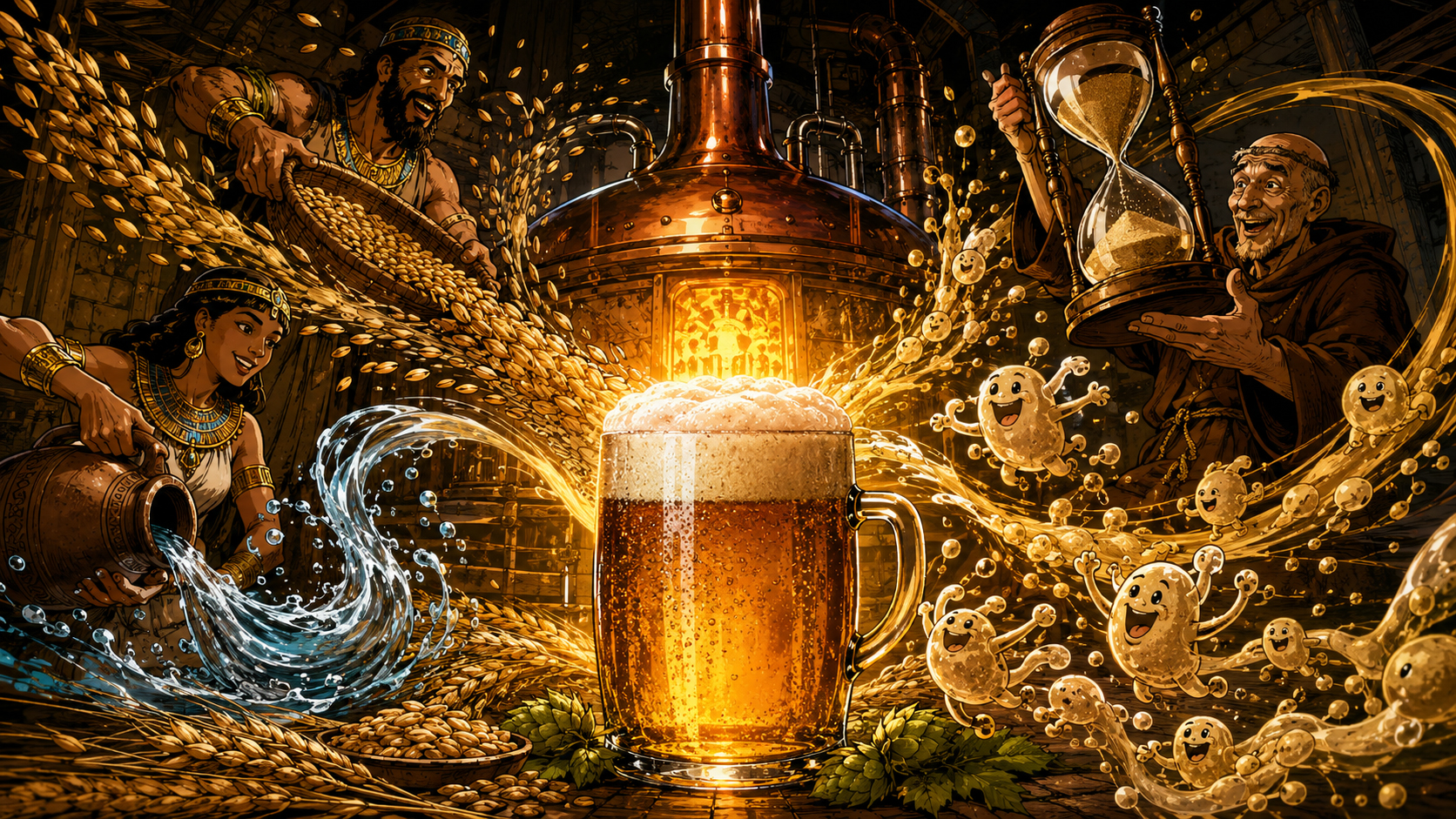
What Is Beer?
Grain, water, yeast, time, and the basic engine of beer history.
Start with the basicsCommon questions about beer history, answered without foam myths. Professor Pint handles the timeline. Foam Detective checks the claims. Foam Goblin is not allowed near the chalkboard.
Fast answers, no bad history
Beer history includes ancient grain, fermentation, workers, temples, Ninkasi, bread beer, hops, gruit, monks, lager caves, industrial breweries, Prohibition, homebrewing, and craft taprooms.
The short version: beer is not just a drink. It is a technology, a food tradition, a social system, and a very persistent historical character with excellent foam.
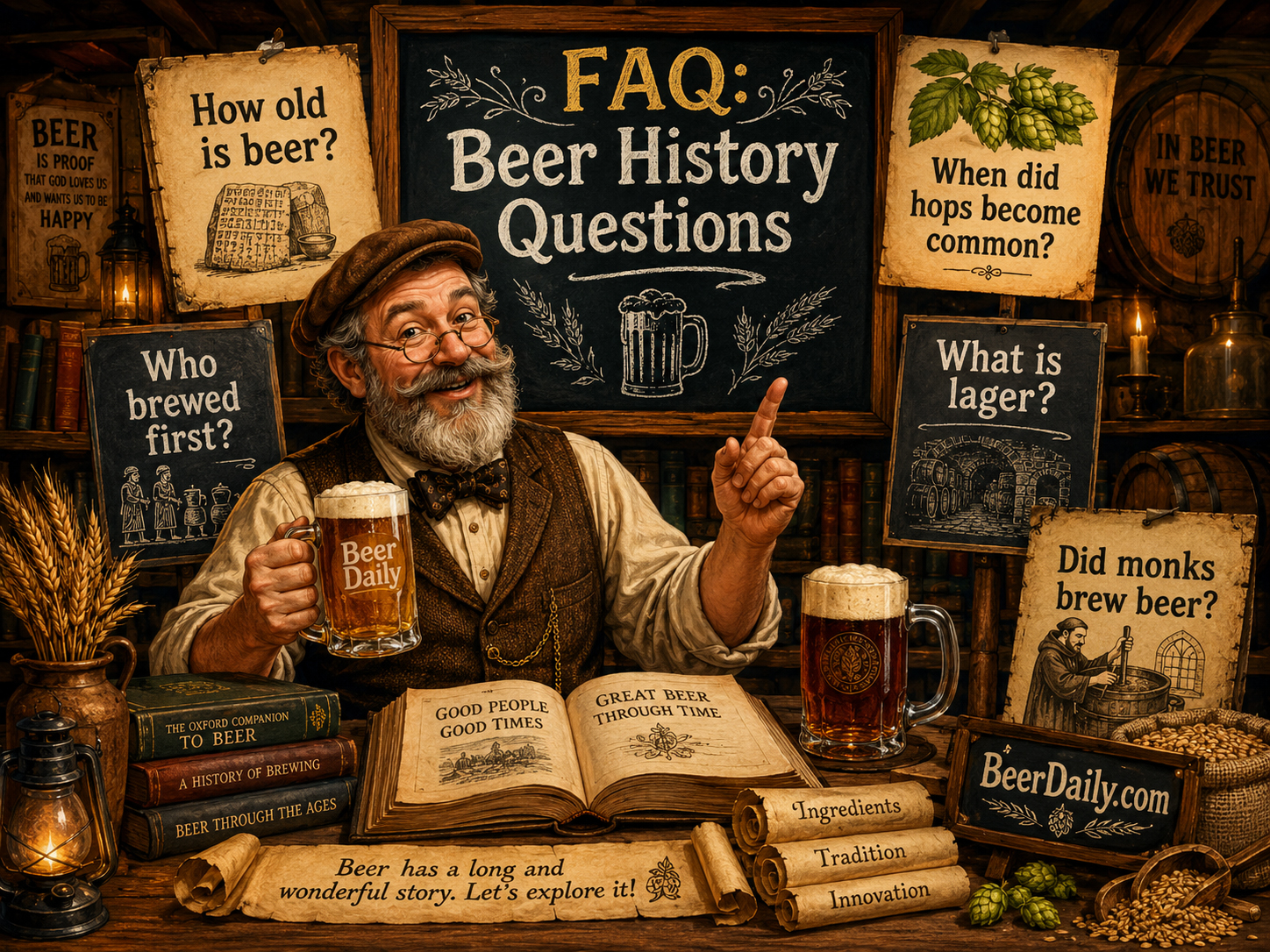
FAQ
Tap a question if your browser supports the BeerDaily accordion. If not, the answers are still readable because Foam Detective believes in graceful degradation.
Beer is a fermented grain drink. Brewers extract sugars from grain, usually through malting and mashing, then yeast ferments those sugars into alcohol, carbon dioxide, aroma, and flavor. The simple formula is grain, water, yeast, and time — plus human skill, temperature control, vessels, and patience.
Beer-like fermented grain drinks are thousands of years old. The exact beginning is not one clean invention moment. Early agricultural people repeatedly discovered that wet, sprouted, cooked, or sweet grain mixtures could ferment. The important shift was learning to repeat the process.
No single person invented beer. Beer emerged from early grain cultures through repeated discovery and practice. Sumer, Babylon, Egypt, China, and many other regions had fermented grain traditions. BeerDaily’s answer: humanity invented beer slowly, one bubbling jar at a time.
No. Water quality mattered in many times and places, but that claim is too simple. Ancient beer was also food, ritual, wage, offering, stored grain technology, social glue, and cultural practice. Foam Detective rejects any one-sentence explanation that erases the whole grain economy.
The Hymn to Ninkasi is an ancient Sumerian praise song to the beer goddess Ninkasi. It is famous because it also preserves brewing process language. It is part prayer, part recipe memory, part cultural time capsule, and proof that beer had a theme song early.
Ninkasi was the Sumerian goddess associated with beer and brewing. In BeerDaily’s manga world, she becomes a radiant character who protects recipe memory, ancient brewing, and clay-tablet dignity. Historically, she shows that beer had religious and cultural meaning.
Ancient Egyptian beer was closely tied to bread, grain, worker rations, offerings, and the Nile economy. It was probably often cloudy, thick, nourishing, and very different from a modern clear lager. BeerDaily calls it bread that learned to flow.
Beer could be part of ancient worker provisioning and ration systems. That does not mean every worksite was a wild party. It means fermented grain drink could function as nourishment, compensation, custom, and labor support.
No. Beer existed long before hops dominated many brewing traditions. Earlier brewers used herbs, gruit mixtures, smoke, sourness, fruit, spices, honey, and local plants. Hops later became powerful because they brought bitterness, aroma, and preservation benefits.
Hops helped balance malt sweetness, added aroma, and improved beer stability. That made hopped beer valuable for storage, trade, and larger brewing systems. Hops did not invent beer, but they changed beer’s route map.
No. Beer is much older than medieval monastic brewing. Monks mattered because monasteries helped preserve, record, refine, and repeat brewing practices. They did not invent beer; they helped beer behave.
Lager is beer shaped by cool fermentation and cold storage. It depends on yeast behavior, time, and temperature control. Historically, lager relied on caves, cellars, ice, and eventually mechanical refrigeration. The revolution did not shout. It chilled.
Refrigeration made cold controllable. Before mechanical cooling, brewers relied on caves, cellars, winter, ice, and climate. Refrigeration helped lager spread, improved consistency, and changed beer storage, transport, and industrial scale.
Industrial beer changed brewing through steam power, railroads, glass, refrigeration, sanitation, packaging, laboratories, distribution, and advertising. It made beer consistent and widely available, but it also helped narrow mainstream variety in many markets.
No. Prohibition devastated legal brewing, but beer survived through near beer, malt products, brewery pivots, hidden cellars, smuggling, home production, speakeasies, and eventually repeal. The beer world came back changed.
Craft beer is the modern return of local, varied, independent-minded, flavor-forward brewing. It revived old styles, pushed hops forward, expanded taproom culture, and reopened beer’s flavor map after decades of mainstream sameness.
No. Craft beer can be excellent, mediocre, or terrible. Small is not automatically good, and large is not automatically bad. Good beer needs skill, sanitation, balance, freshness, and purpose. Foam Detective insists the label does not replace the glass.
Not automatically. Color comes from malt roast. Alcohol strength comes from fermentable sugar and fermentation. A dark beer can be low alcohol, and a pale beer can be strong. Do not judge the pint by its cloak.
Foam Goblin is BeerDaily’s villain of lazy beer history. He spreads half-truths, fake origin stories, and oversimplified trivia. His natural enemy is Foam Detective, who carries a red pen and the phrase “source?”
Professor Pint is BeerDaily’s calm teacher of fermented facts. He explains the timeline, corrects bad myths, and reminds everyone that beer history is agriculture, chemistry, labor, law, machinery, culture, and memory in one glass.
No. BeerDaily.com is an educational history and culture site. It uses humor, manga characters, and historical storytelling to explain beer’s role in civilization. Please follow local laws and enjoy responsibly.
Professor Pint says
Beer is ancient, local, technical, social, legal, industrial, and funny. The true version has more flavor than the myth version.
Start here
Grain, water, yeast, time, and the basic engine of beer history.
Start with the basics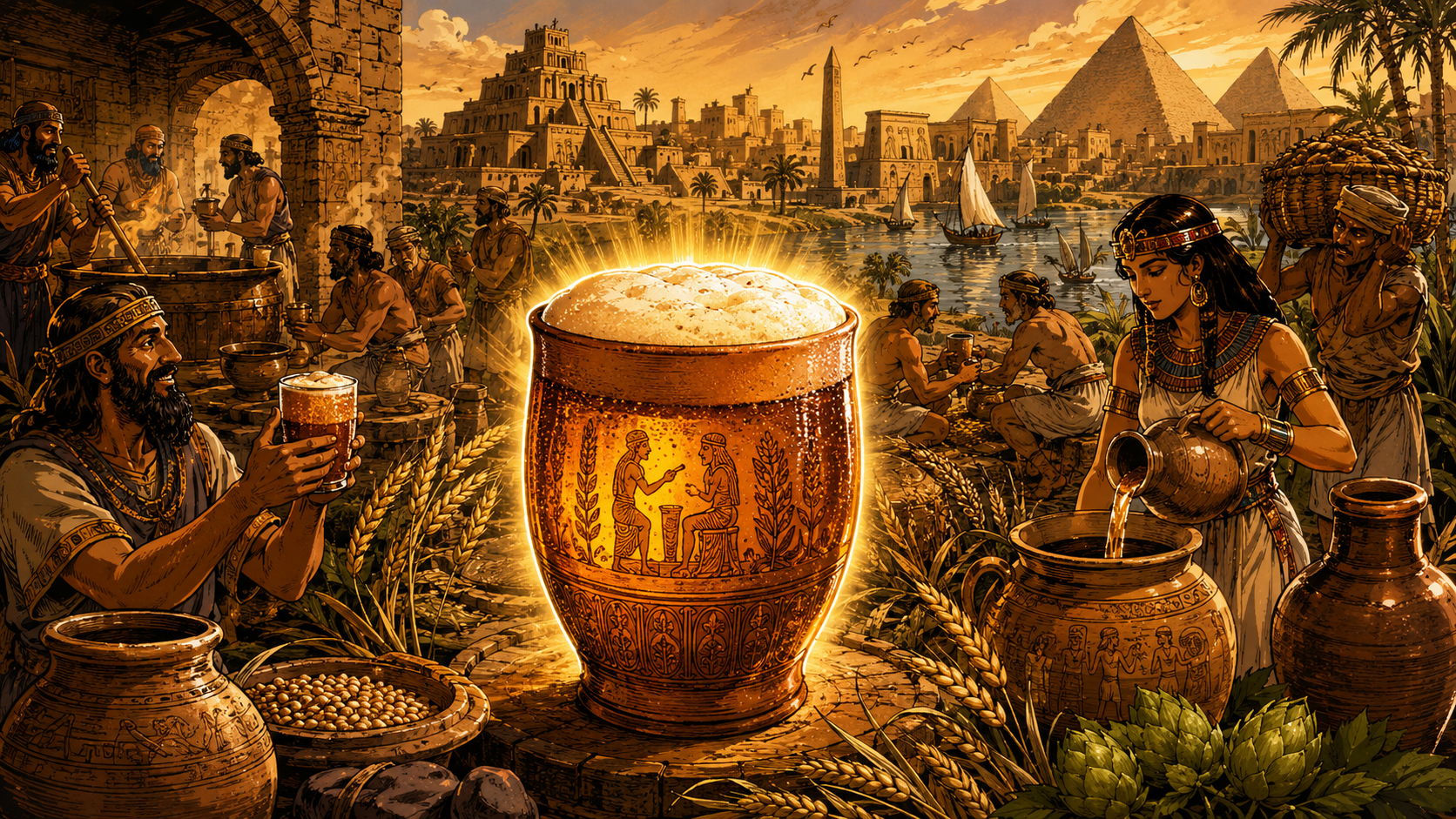
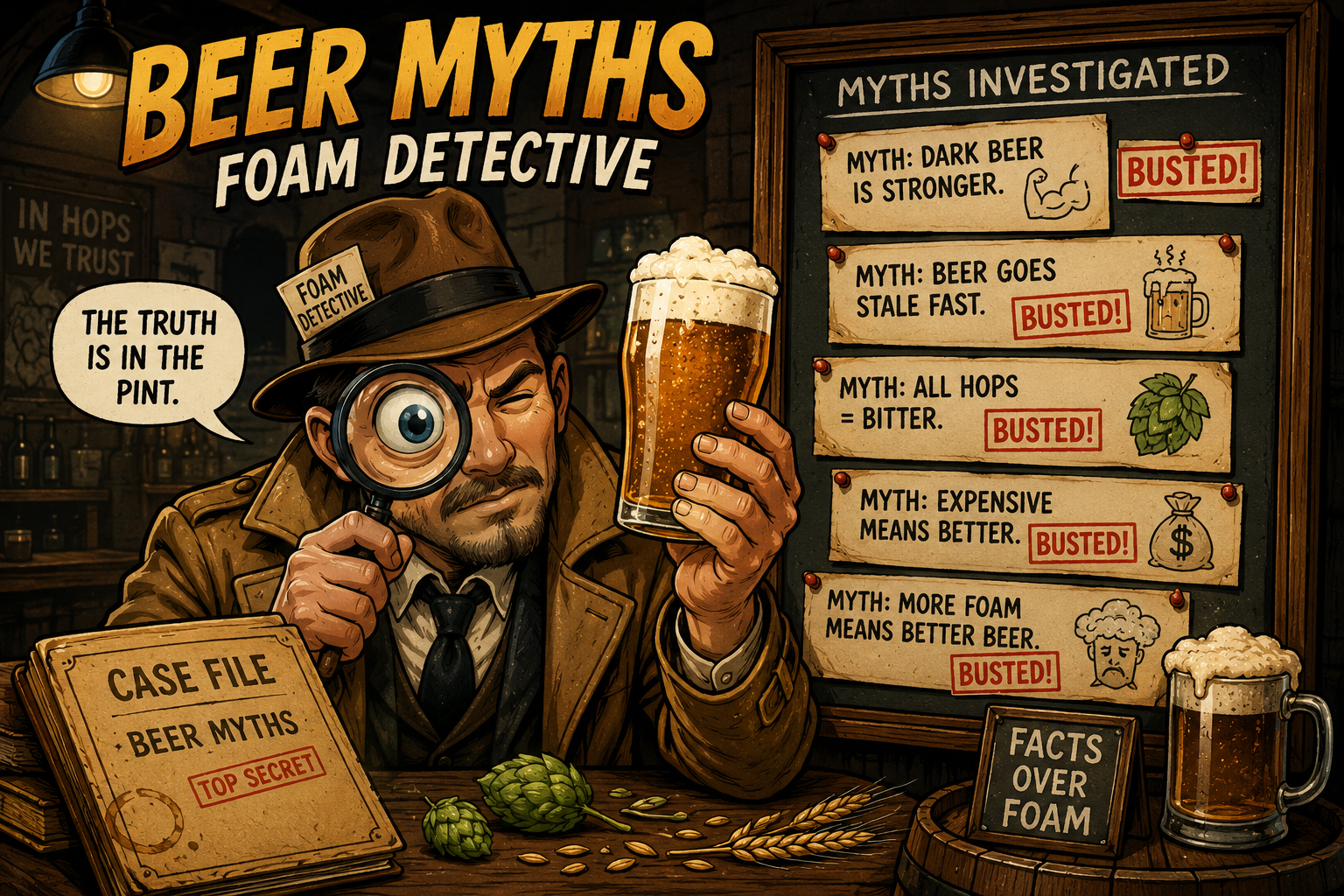
Debunk bad water myths, hop myths, monk myths, IPA myths, and lazy trivia.
Bust the myths