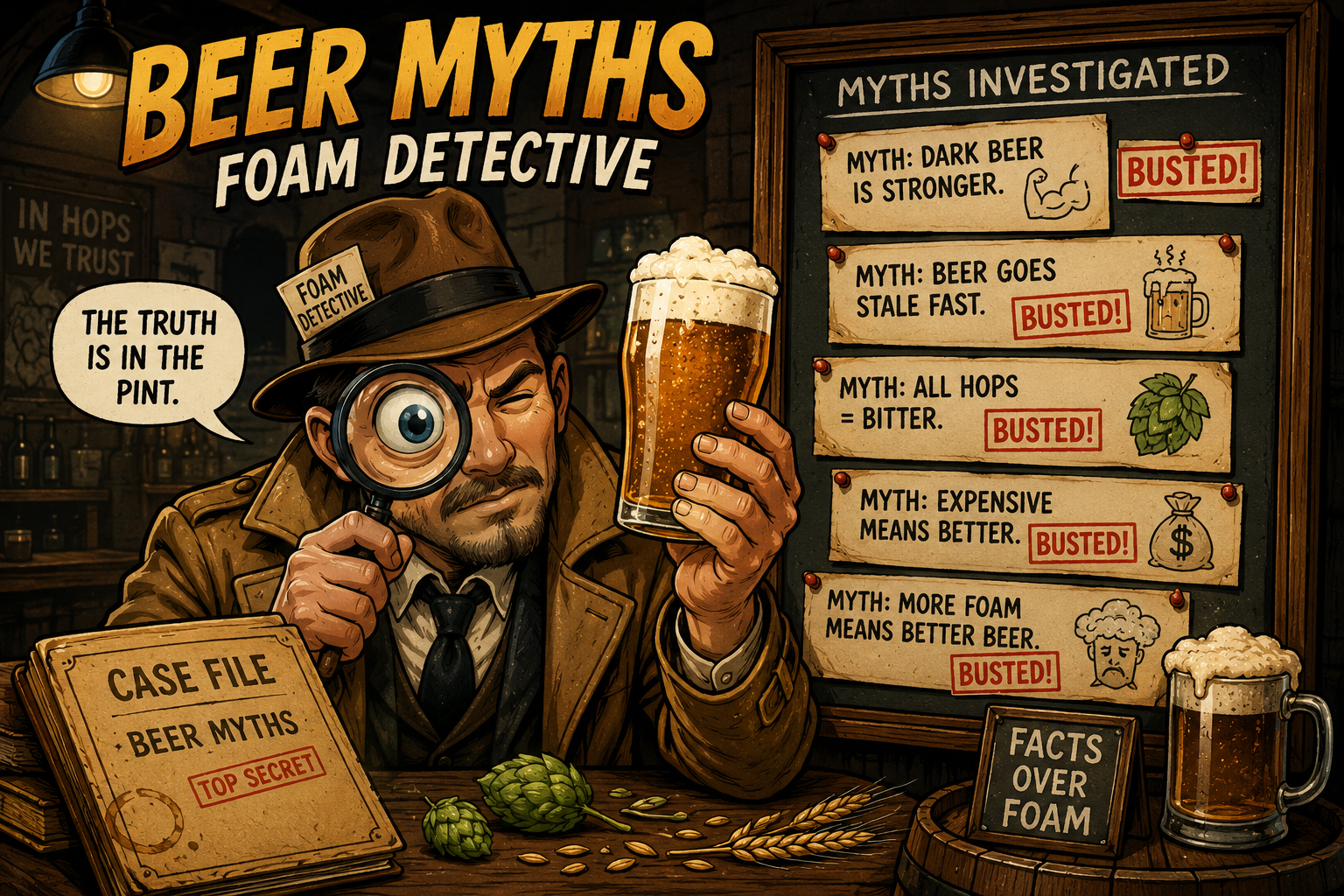
Meet Professor Pint
Professor Pint is part historian, part brewer, part patient tavern lecturer, and part myth-defense system. He wears a tweed jacket, carries chalk dust on both sleeves, and can smell an unsupported beer claim from across the room.
He does not hate fun. He hates fake certainty. His rule is simple: the true version should be vivid, funny, and accurate enough to survive the next round.
Professor Pint: “A good beer story may be foamy. It may not be false.”
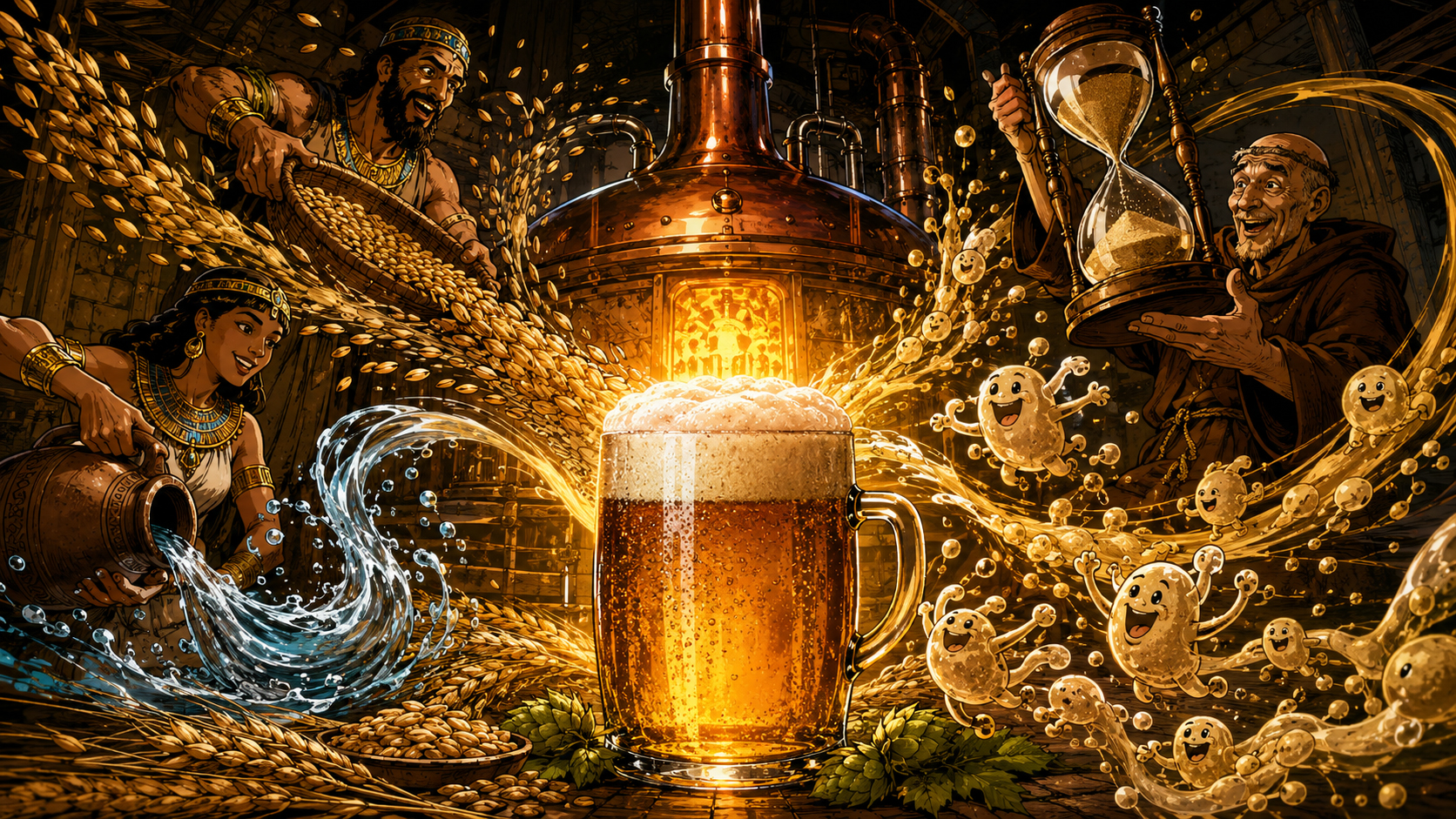
Lesson one: beer begins with grain.
Professor Pint begins every class at the grain basket. Beer starts when humans learn to transform stored grain into fermentable liquid. Grain provides starch, body, color, flavor, and the agricultural foundation of the whole story.
Barley Boy usually raises his hand here and says, “I am historically important.” Professor Pint nods. “Correct. But please wait until the yeast arrives.”
Lesson two: yeast does the invisible work.
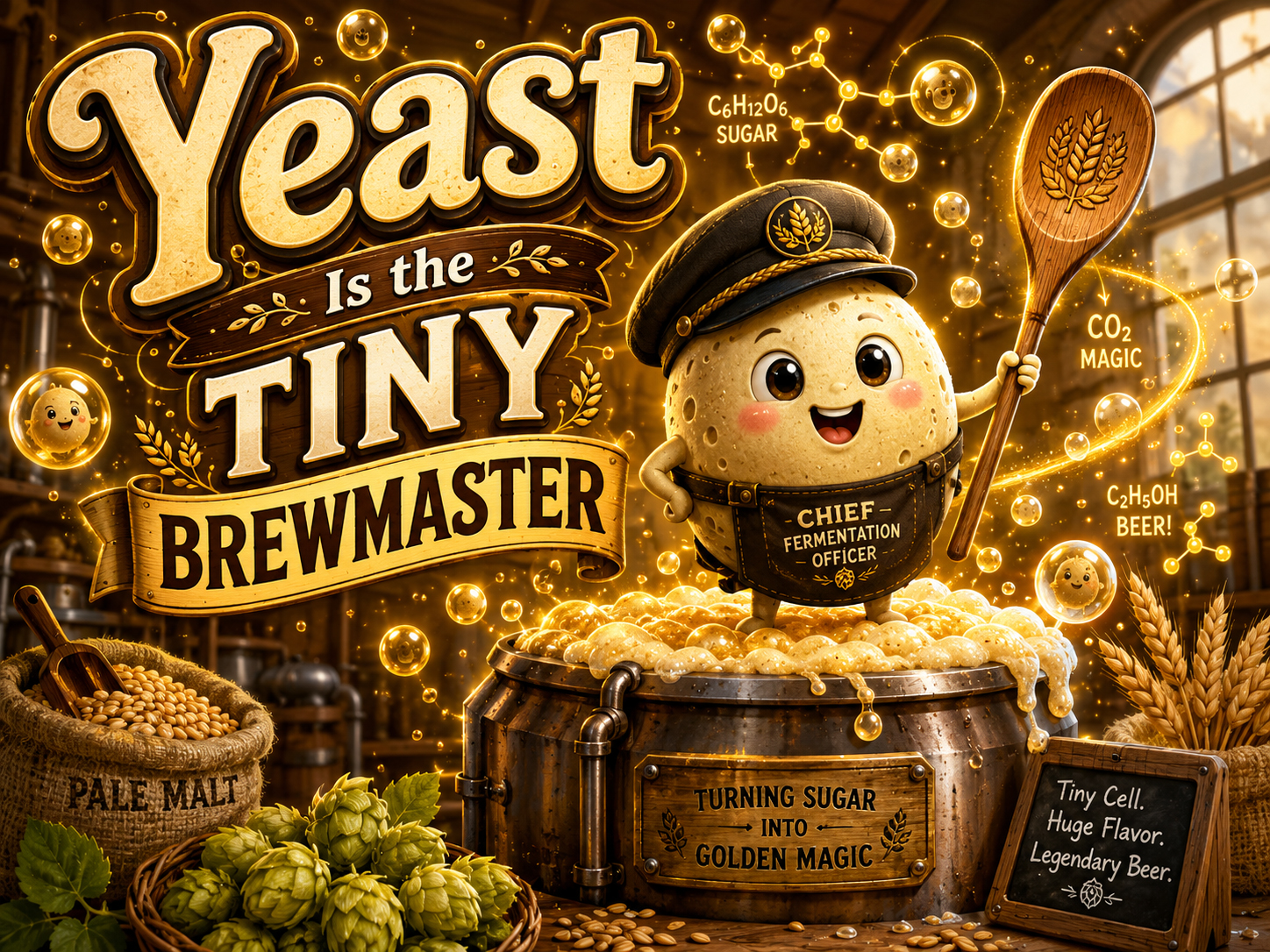
Yeast-chan is the tiny brewmaster. She eats sugar and produces alcohol, carbon dioxide, and flavor compounds. Brewers create the conditions, but yeast performs the transformation.
Professor Pint writes on the board: “Without yeast, beer is only sweet ambition.”
Lesson three: ancient beer was civilization in a jar.
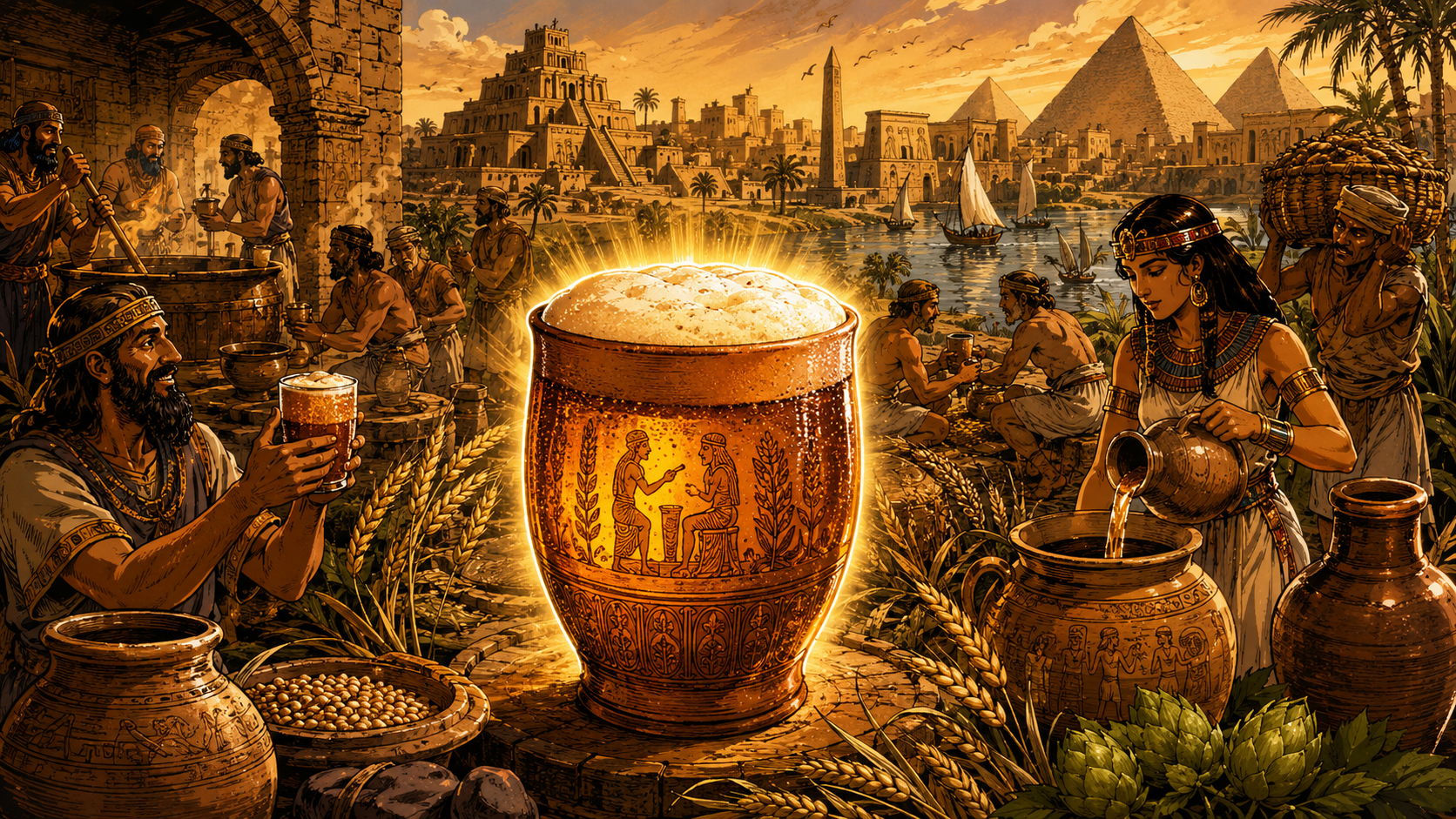
Ancient beer belonged to grain economies, temples, worker rations, offerings, households, river cities, and social life. It was not simply a party drink, and it was not merely a response to bad water.
Professor Pint points to Mesopotamia, Egypt, China, and other early grain cultures. “Do not pretend one modern pint explains all ancient fermented grain traditions,” he says. “The jar had a whole world behind it.”
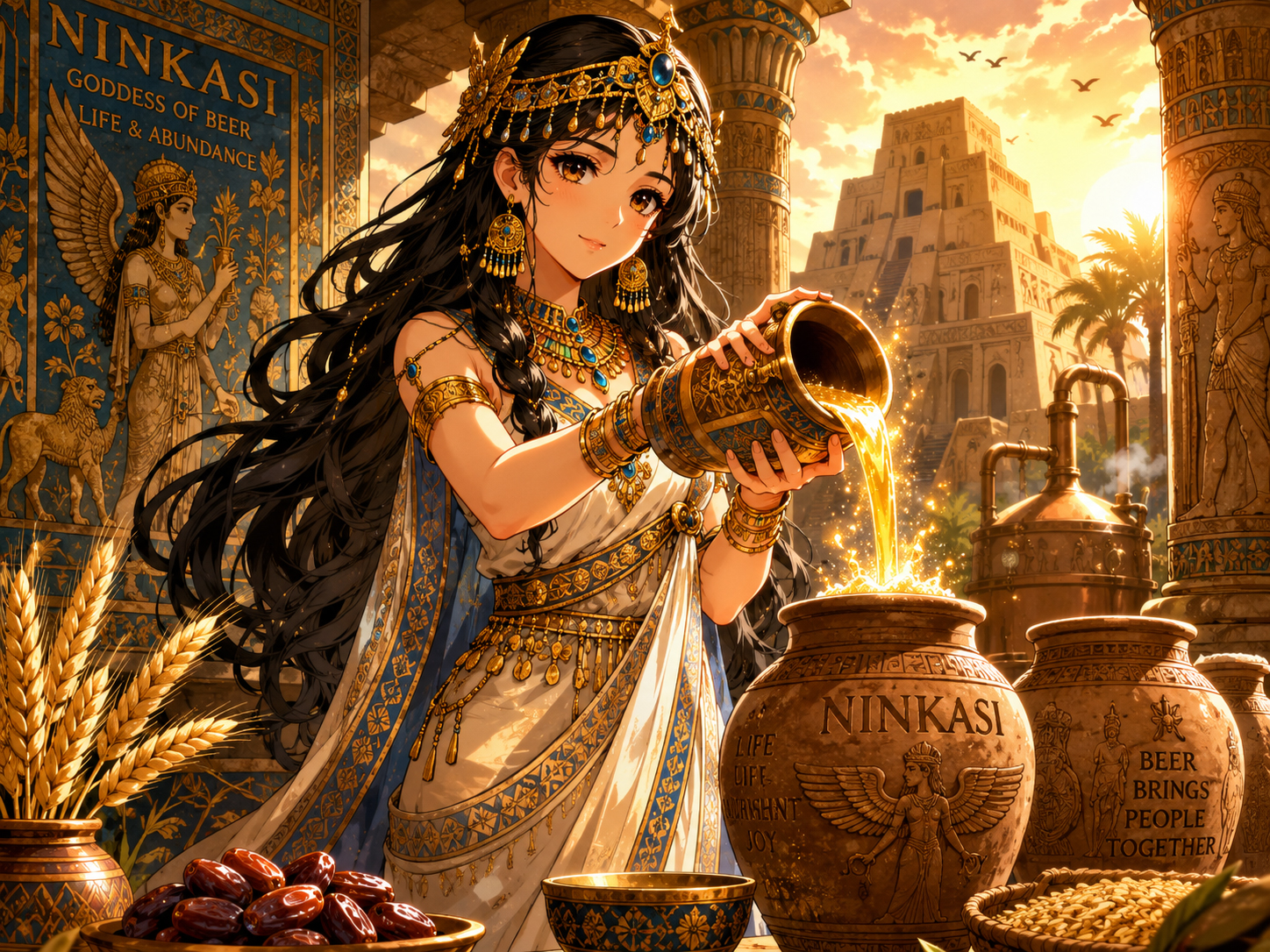
Lesson four: Ninkasi shows beer as sacred memory.
Professor Pint loves the Hymn to Ninkasi because it shows beer as more than process. It preserves brewing knowledge in poetic, sacred form. A recipe becomes a prayer. A brewing sequence becomes cultural memory.
Ninkasi enters the classroom only when the chalkboard has been cleaned. She has standards.
Lesson five: hops changed the beer map.
Hops did not invent beer, and they were not always required. But once hops became widely used, they changed beer by bringing bitterness, aroma, improved stability, and trade advantages.
Professor Pint gives Hop Samurai the floor here. Hop Samurai bows and says, “Respect the herb cabinet. Then respect the cone.”

Lesson six: monks refined beer; they did not invent it.
The Foam Goblin often claims monks invented beer. Professor Pint calmly opens a timeline long enough to cover three tables. Ancient beer is far older than medieval monastic brewing.
Monks mattered because they helped preserve, record, refine, and repeat brewing practices. They gave beer patience, ledgers, cellars, and better batch memory.

Lesson seven: lager made cold into a revolution.
Lager brewing depends on cool fermentation and cold storage. Caves, cellars, ice, winter brewing, and eventually mechanical refrigeration changed beer’s flavor, stability, and reach.
Professor Pint writes: “The cellar taught beer to wait. Refrigeration taught beer to travel.”

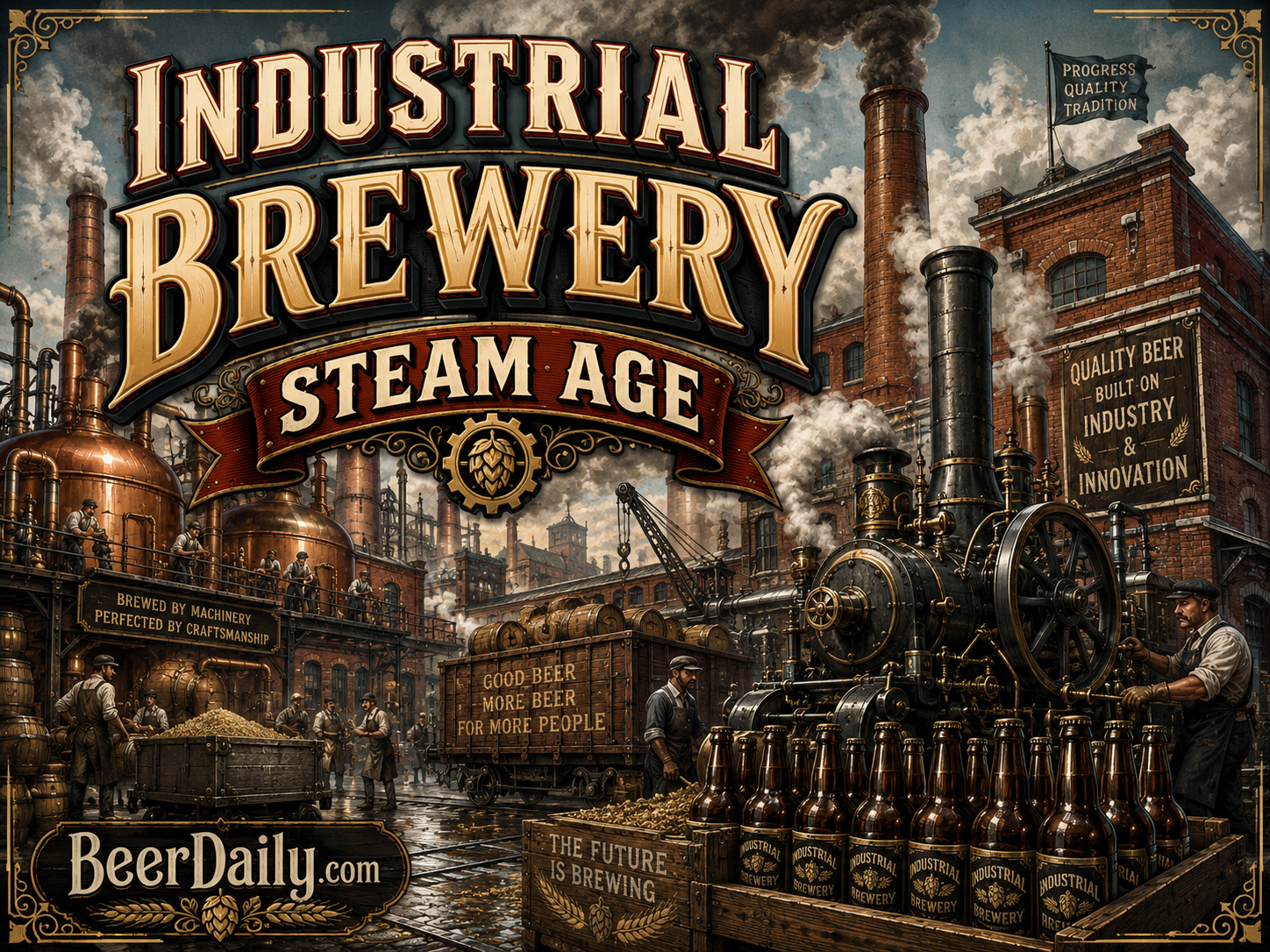
Lesson eight: industry gave beer machinery.
Industrial brewing changed beer through steam power, railroads, glass, refrigeration, sanitation, packaging, laboratories, distribution, and advertising. It made beer consistent and widely available, but it could also narrow variety.
Professor Pint’s position is balanced: “Industrial beer solved real problems. It also created new ones. History is allowed to have two hands.”
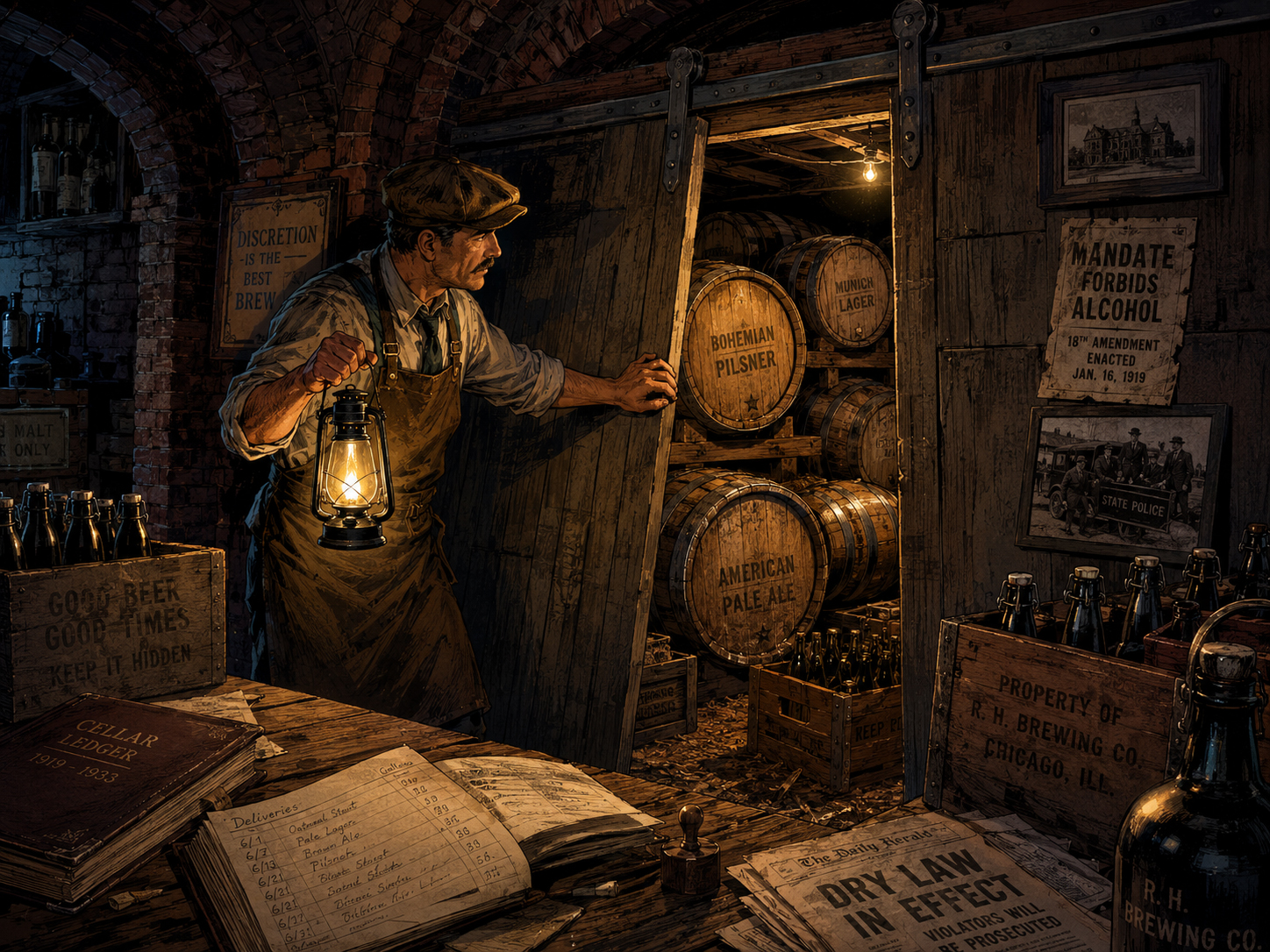
Lesson nine: Prohibition did not erase beer.
Prohibition devastated legal brewing, but beer survived through pivots, near beer, malt products, hidden cellars, home production, smuggling, speakeasies, and eventual repeal. The industry came back changed.
The barrel did not win easily. It endured.
Lesson ten: craft beer reopened the flavor map.
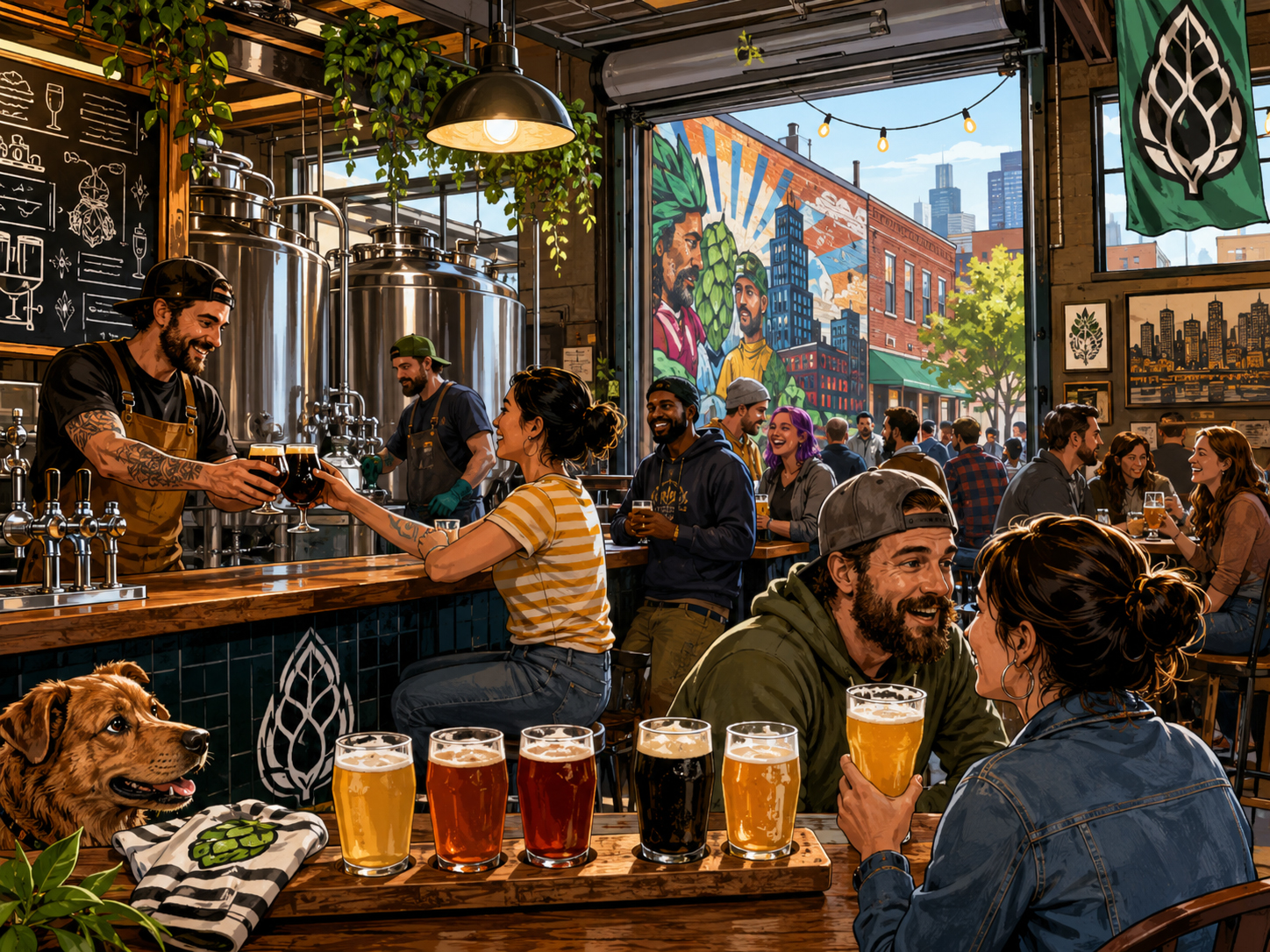
Craft beer returned beer to locality, variety, taprooms, homebrew energy, historic styles, hop creativity, sourness, barrel aging, and community. It challenged industrial sameness while borrowing many industrial tools.
Professor Pint’s warning: “Craft is not automatically good. Industrial is not automatically bad. Clean your lines and cite your claims.”
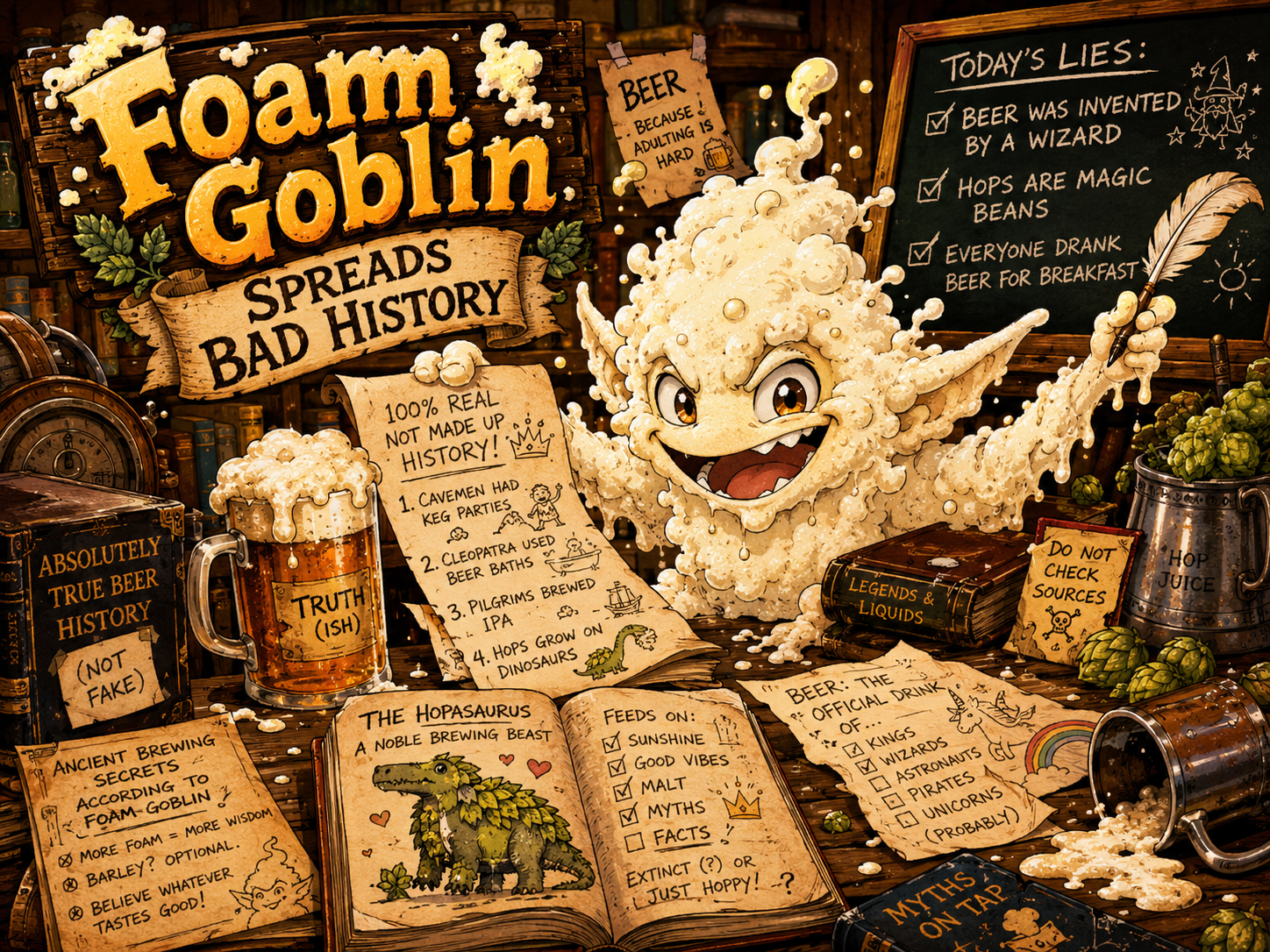
The Foam Goblin interruption
Foam Goblin bursts into the classroom with a chalkboard that says:
- Ancient people drank beer only because water was bad.
- Hops were always required.
- Monks invented beer.
- Dark beer is always stronger.
- Craft beer is automatically better.
Professor Pint quietly takes the chalkboard, flips it over, and writes: “No.”
Why Professor Pint matters
Professor Pint exists because beer history deserves better than lazy myths. The true story includes farmers, brewers, bakers, workers, women, scribes, monks, sailors, tax collectors, inventors, industrialists, reformers, bootleggers, homebrewers, craft brewers, and drinkers.
Beer is not just liquid. It is a long human system made of grain, water, yeast, heat, vessels, law, trade, technology, culture, and memory.
Professor Pint: “The glass is small. The history is not.”
The BeerDaily lesson
Professor Pint teaches the site’s central rule: be funny, be readable, be bold, but do not fake the history. Beer’s real story is already strange enough, rich enough, and dramatic enough.
Grain learned to sing. Ninkasi wrote a recipe-prayer. Workers received rations. Hop Samurai fought spoilage. Monks wrote ledgers. Refrigeration changed the cellar. Prohibition knocked on the wrong barrel. Craft brewing brought the neighborhood back. No myth required.