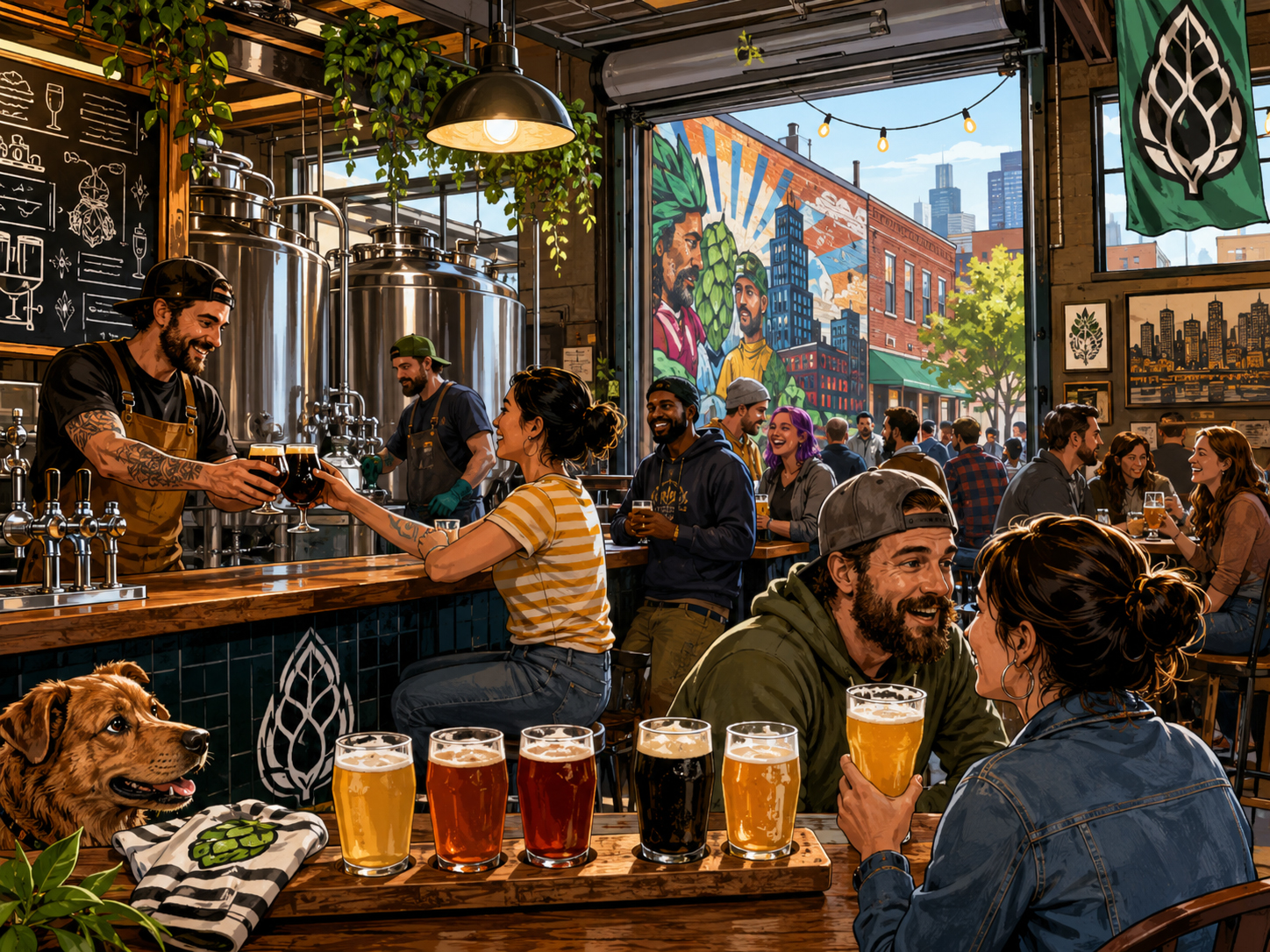
Industrial beer begins with scale.
Brewing had always required tools, labor, storage, and repeated process. But industrial brewing changed the size and reliability of those tools. More grain could be handled. More liquid could be moved. More beer could be cooled, packaged, shipped, and sold.
The old brewer watched the factory arrive and realized beer had entered a new age: fewer quiet jars, more iron pipes, more thermometers, more ledgers, and many more people asking about delivery schedules.
Industrial beer is what happens when the kettle gets a steam engine and a sales department.
Steam power: muscle for the brewhouse
Steam power helped breweries grow beyond the limits of hand labor and animal power. It could move pumps, mills, hoists, mash equipment, and other heavy brewery tasks. The brewhouse became more mechanical, more productive, and more expensive to build.
This changed who could compete. A small brewer with skill still mattered, but the industrial brewery had machinery, capital, labor organization, and scale. The beer business was no longer just about knowing grain. It was also about owning the machine that could move it.
Porter and stout: city beer grows up
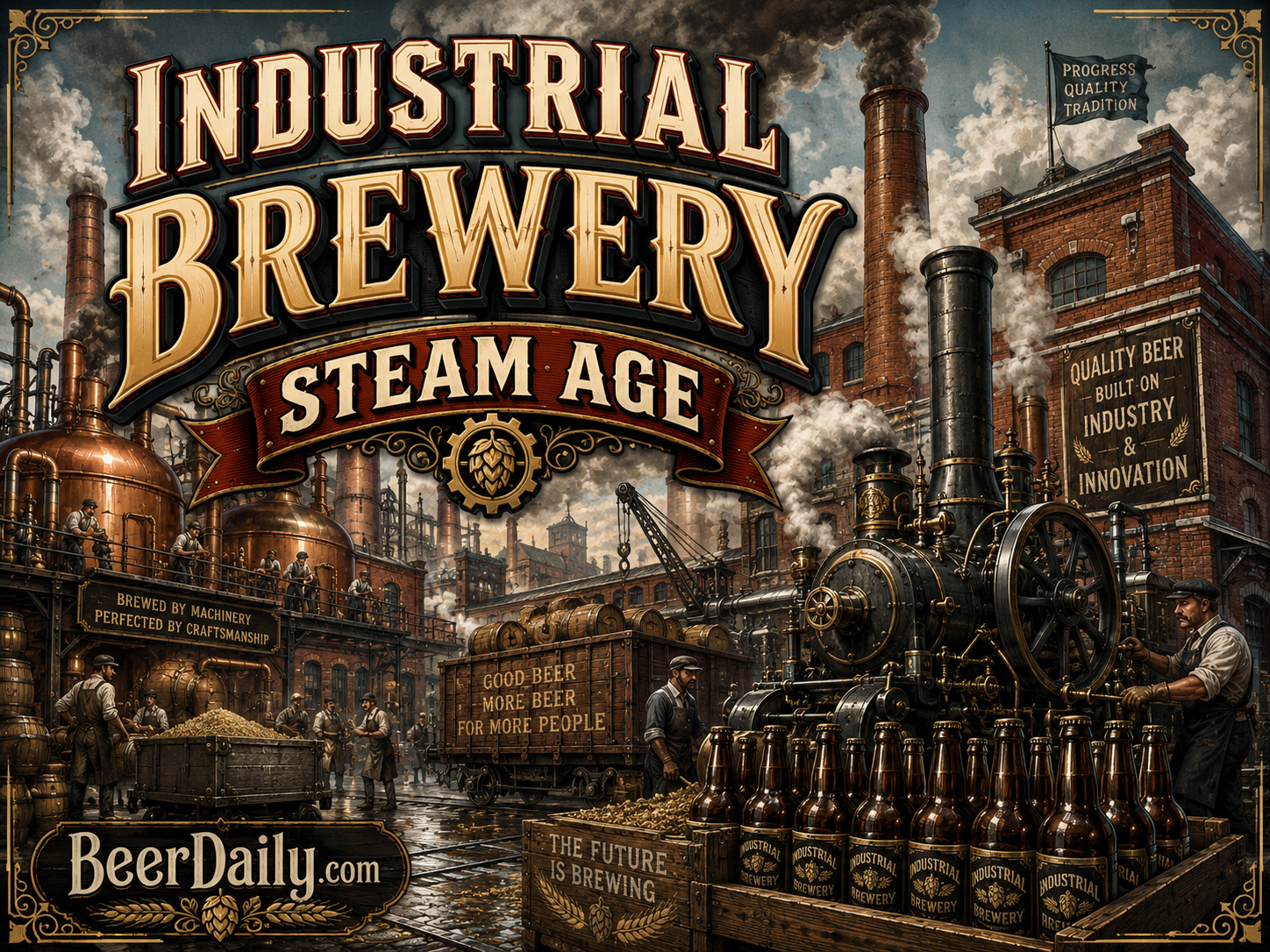
Industrial London helped make porter and stout famous. Dark beers suited urban markets, large-scale production, and the changing taste of working cities. Porter in particular became associated with scale, trade, and the early industrial brewing economy.
BeerDaily’s city summary: the town got crowded, the brewery got huge, the beer got dark, and someone in a waistcoat started using the word “market” too often.
Railroads: beer gets wheels
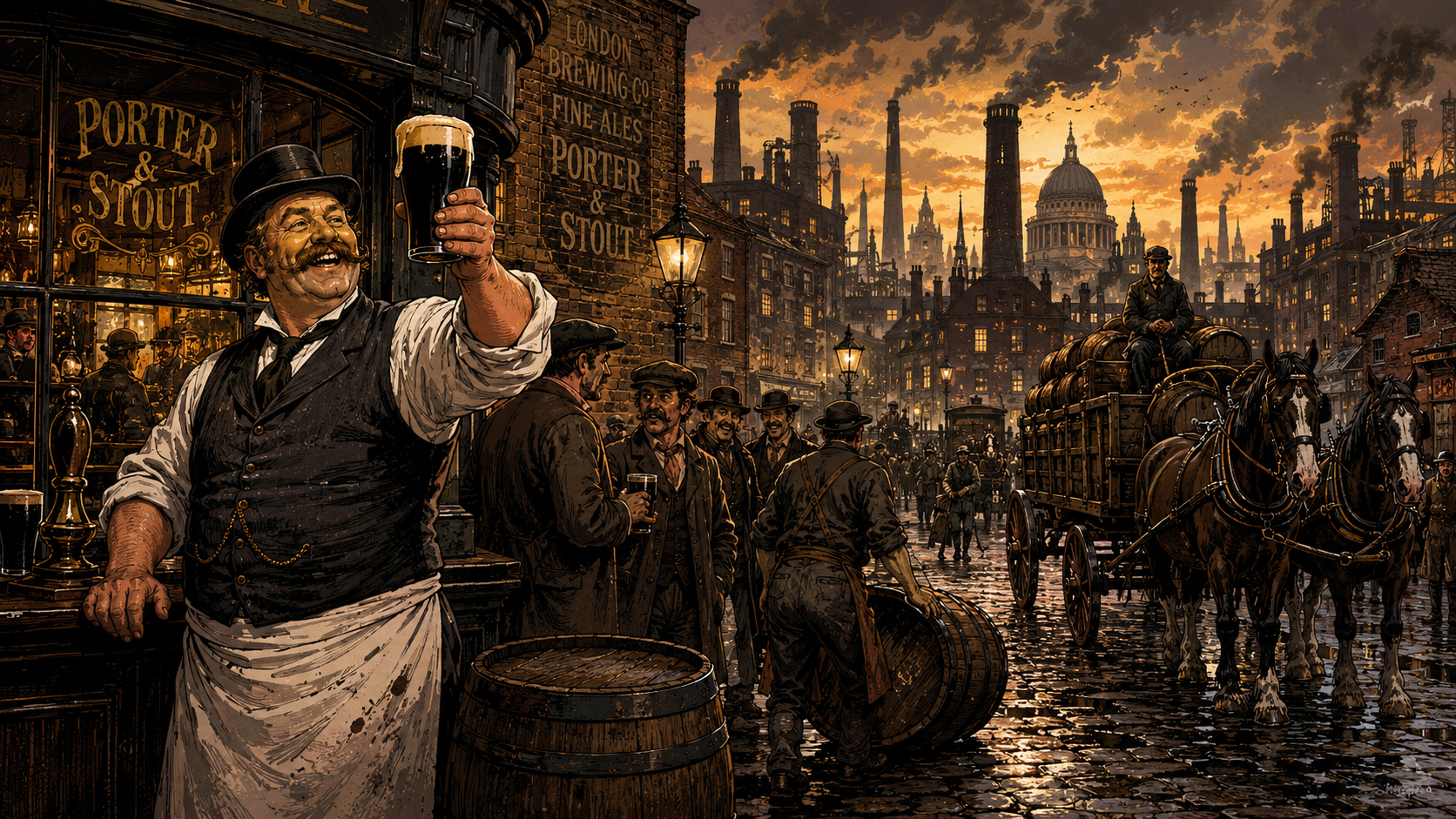
Railroads changed beer distribution. Ingredients could move into breweries more efficiently, and finished beer could travel farther to reach more customers. Beer was no longer trapped as tightly inside local geography.
Railroads also encouraged larger markets and more competition. A brewery could sell beyond its immediate neighborhood. That made consistency more important. If your beer travels, your reputation travels with it.
Glass bottles: beer becomes visible.
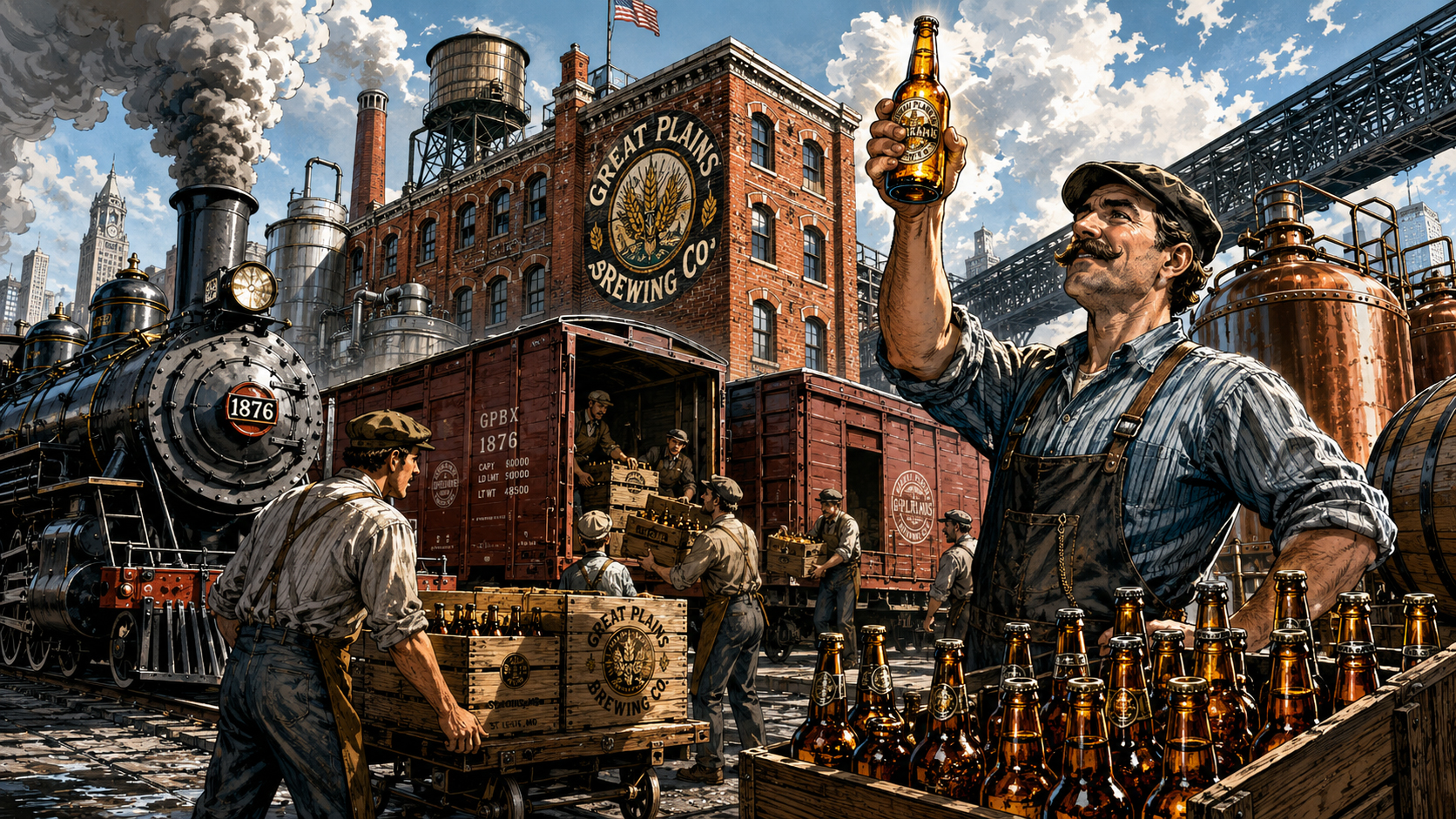
Glass changed how people saw beer. A mug or opaque vessel hides flaws. A clear bottle or glass lets drinkers judge color, clarity, bubbles, sediment, and visual appeal. Pale lager benefited enormously from this visual stage.
Once drinkers could admire clear golden beer, clarity itself became a sales tool. The beer had to taste good, yes, but now it also had to look like it had attended finishing school.
Refrigeration: cold stops being local luck.
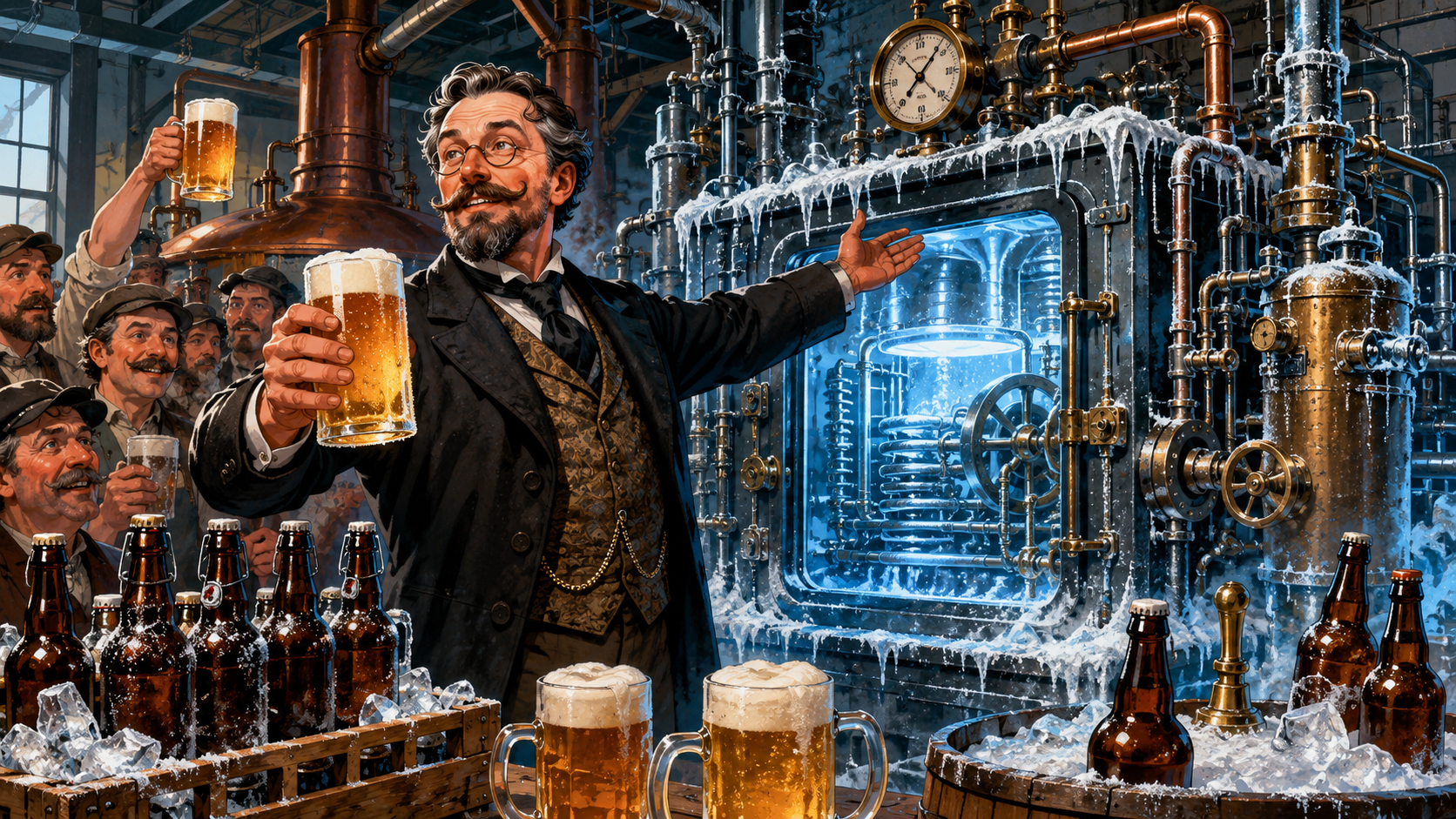
Mechanical refrigeration transformed brewing. Before engineered cold, brewers depended on caves, cellars, winter seasons, ice harvesting, and climate. Refrigeration let breweries control temperature more reliably and in more places.
This was huge for lager. Cold fermentation and cold storage could expand beyond naturally cold regions. Beer became more consistent, more stable, and more scalable. The cave got replaced by machinery with a bill from the engineer.
Science enters the glass.
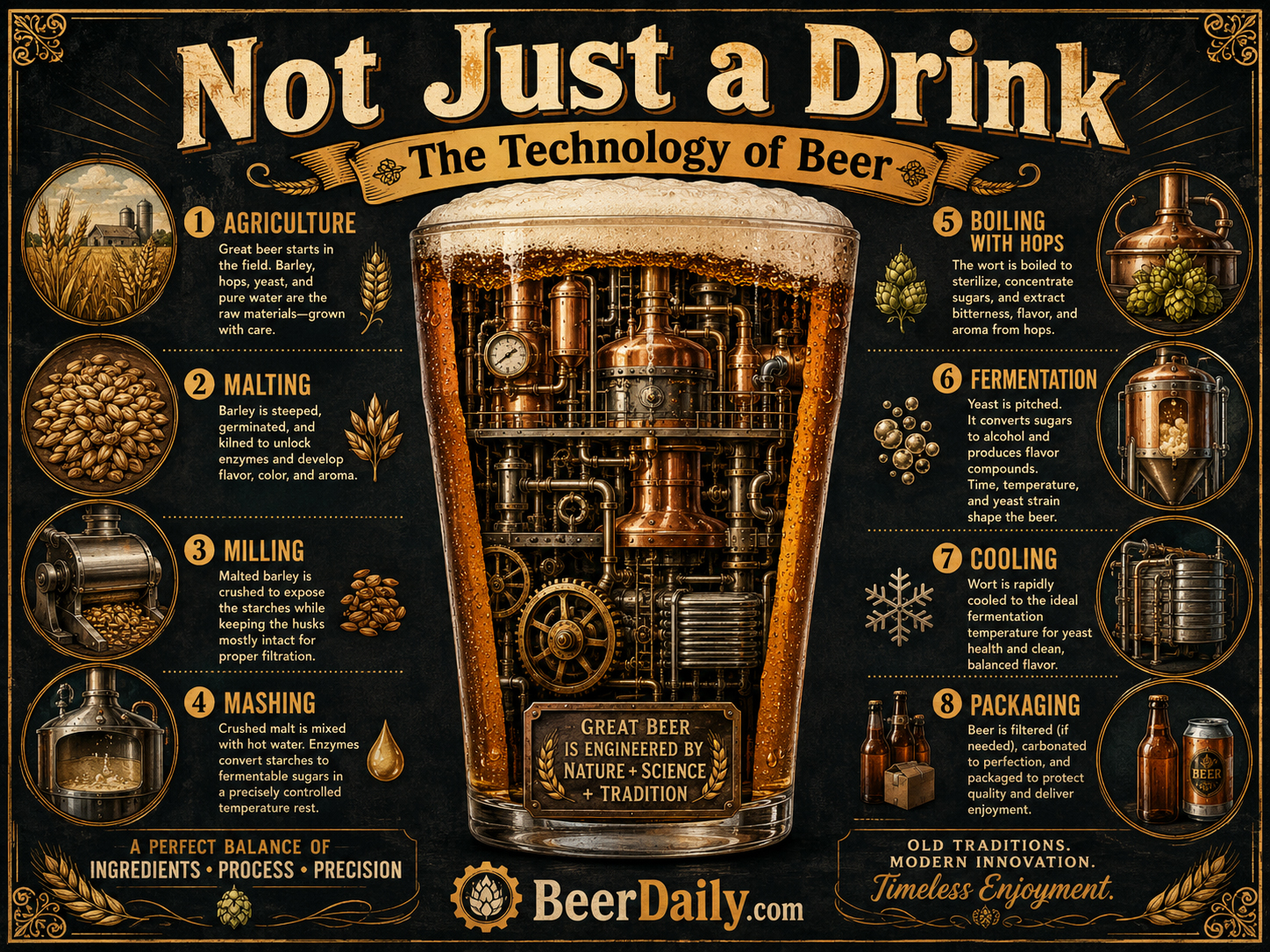
Industrial brewing also grew alongside advances in chemistry, microbiology, sanitation, measurement, and quality control. Brewers learned more about yeast, contamination, temperature, fermentation, and consistency.
The old world knew how to brew by experience. The industrial world added instruments, laboratories, and process control. Beer became more measurable. The yeast still did the work, but now someone was watching with a notebook.
Advertising and brand identity
When breweries expanded beyond local customers, branding became more important. Labels, signs, bottles, crates, wagons, tavern agreements, and eventually mass advertising helped breweries become recognizable across larger markets.
Beer was not only brewed. It was named, labeled, shipped, displayed, and remembered. The industrial brewery did not just make beer. It made identity at scale.
The downside: standardization
Industrial brewing brought consistency and access, but it could also flatten variety. Local traditions, small producers, unusual flavors, and regional styles could be pressured by large, efficient breweries selling familiar beer at enormous scale.
BeerDaily’s Foam Detective does not say industrial beer is bad. That would be lazy. Industrial brewing solved real problems and created real quality. But it also narrowed the imagination in many markets. Progress brought a very clean glass and sometimes a smaller flavor map.

Mass beer and modern expectations
The industrial age helped shape what many people came to expect from beer: cold, clear, consistent, stable, packaged, branded, and easy to find. Those expectations are not timeless. They were built by machinery, distribution, advertising, refrigeration, and consumer habit.
The modern beer aisle is an industrial artifact. Every bottle, can, label, carton, date code, distribution route, and cold shelf belongs to a history of scale.
Industrial beer made craft beer possible too.
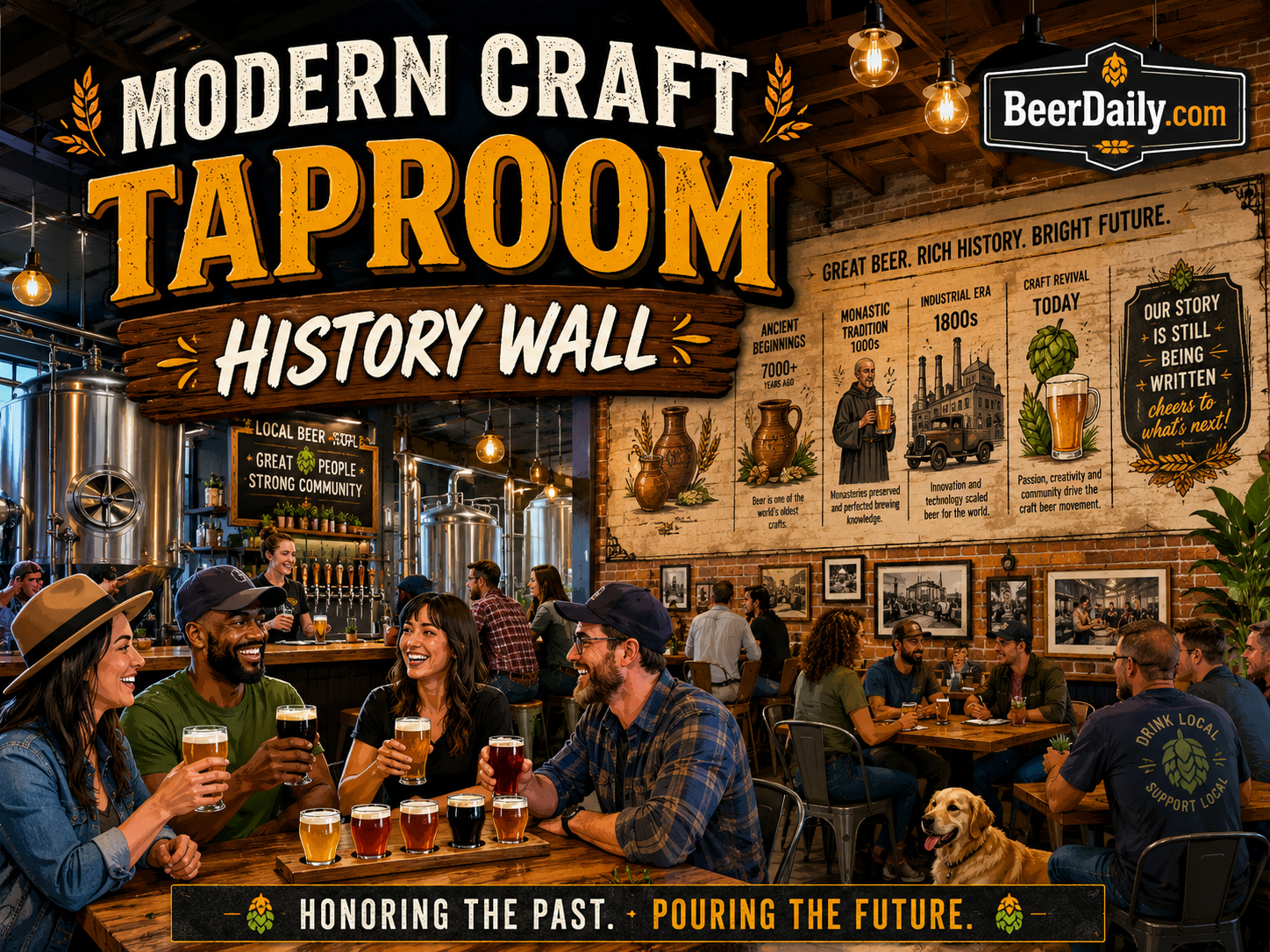
Craft beer often defined itself against industrial uniformity, but it also inherited industrial tools: stainless steel, pumps, refrigeration, lab knowledge, packaging systems, distribution methods, and ingredient supply chains. The small brewery is not outside history. It stands on the factory floor, then paints a dragon on the wall.
Without industrial brewing, modern craft brewing would look very different. The craft revival did not erase industry. It borrowed its tools and rebelled against its sameness.
The big lesson
Industrial beer changed the world by changing beer’s infrastructure. Steam scaled production. Railroads extended markets. Glass changed presentation. Refrigeration controlled temperature. Science improved consistency. Advertising built brands.
Beer became modern because the brewhouse became a system. The glass may look simple, but behind it stands a factory, a railroad, a cold room, a label press, a laboratory, and someone counting barrels with suspicious enthusiasm.