Beer is grain made drinkable.
Wine begins with fruit sugar. Beer begins with grain starch. That is the key difference. Barley, wheat, rye, rice, corn, millet, sorghum, and other grains can all be part of beer traditions, but barley became especially famous because it malts well and brings useful enzymes to the party.
Grain is not instantly fermentable. Yeast cannot simply march into a hard kernel and shout, “Party time!” The grain must be prepared. Brewers coax starch into sugar through malting and mashing. Once the sugars are in the liquid, yeast can get to work.
Beer is not magic. It is controlled grain chaos with a yeast staff.
The simple version
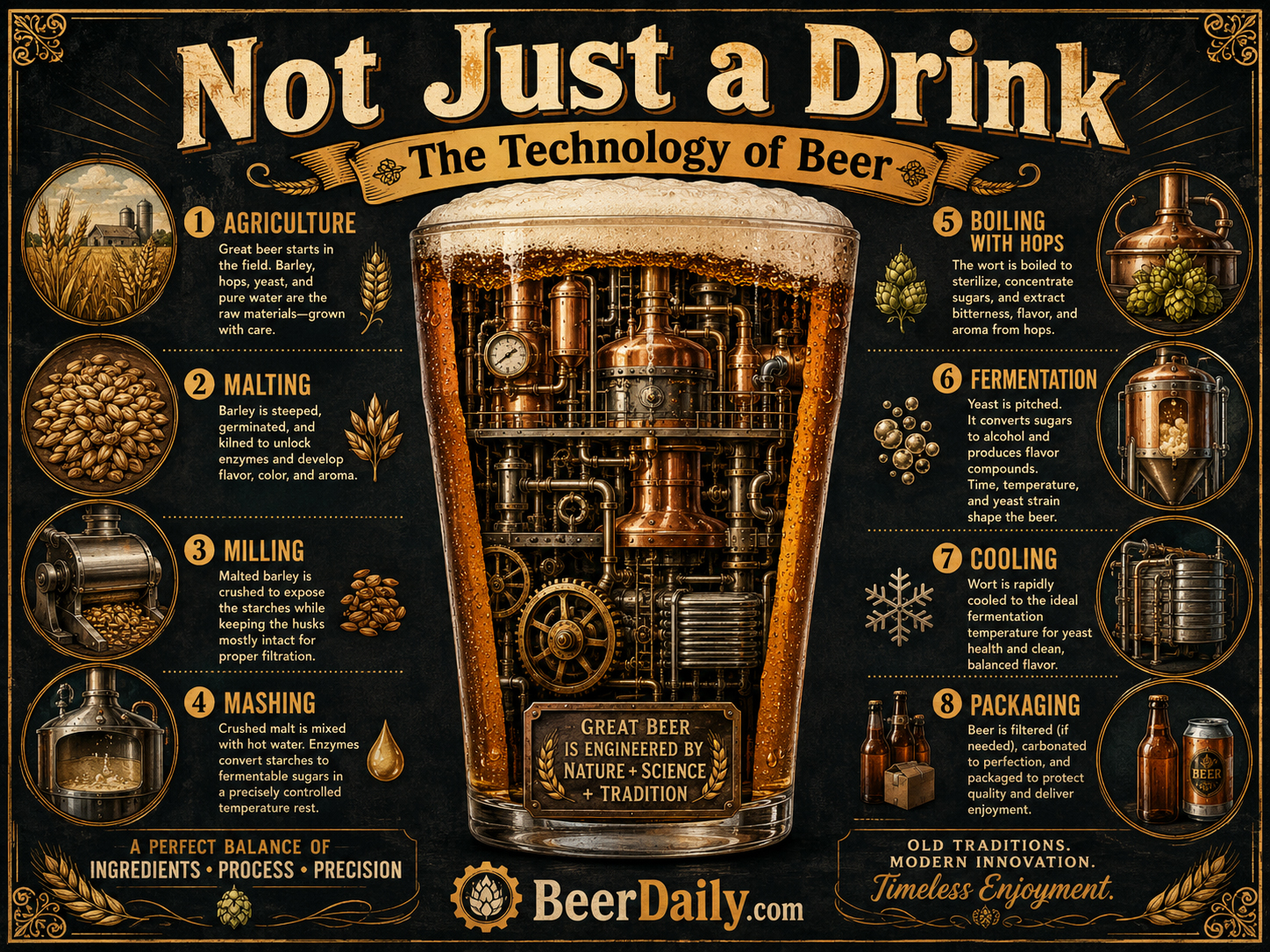
Beer is usually made in five big moves:
- Malt the grain: let grain begin to sprout, then dry it.
- Mash the malt: soak crushed malt in warm water to release sugars.
- Boil the wort: heat the sweet liquid, often with hops or other flavoring plants.
- Ferment: add yeast or let natural yeast do the work.
- Condition: give the beer time to settle, carbonate, mature, and become itself.
Grain: the body of beer
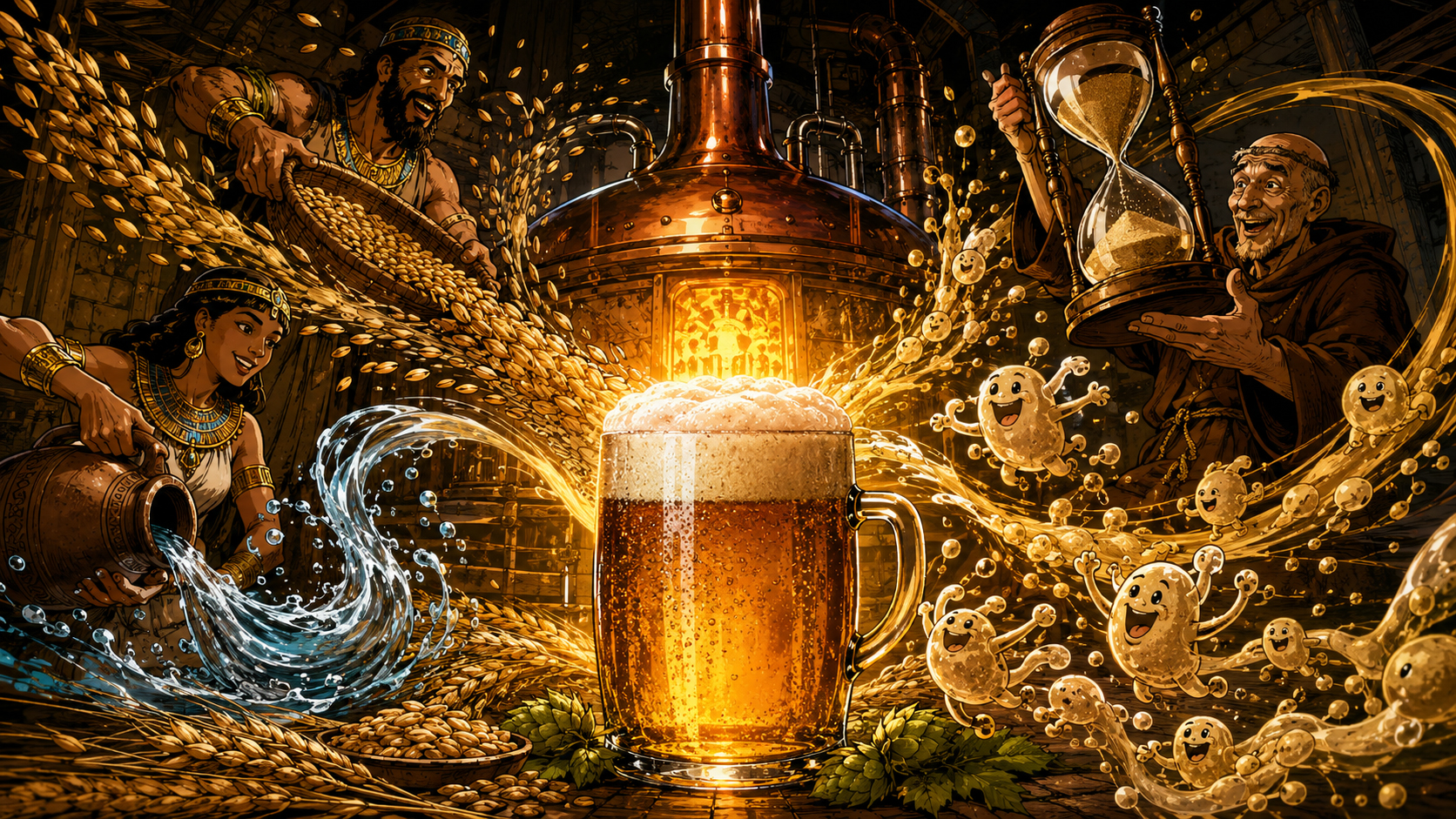
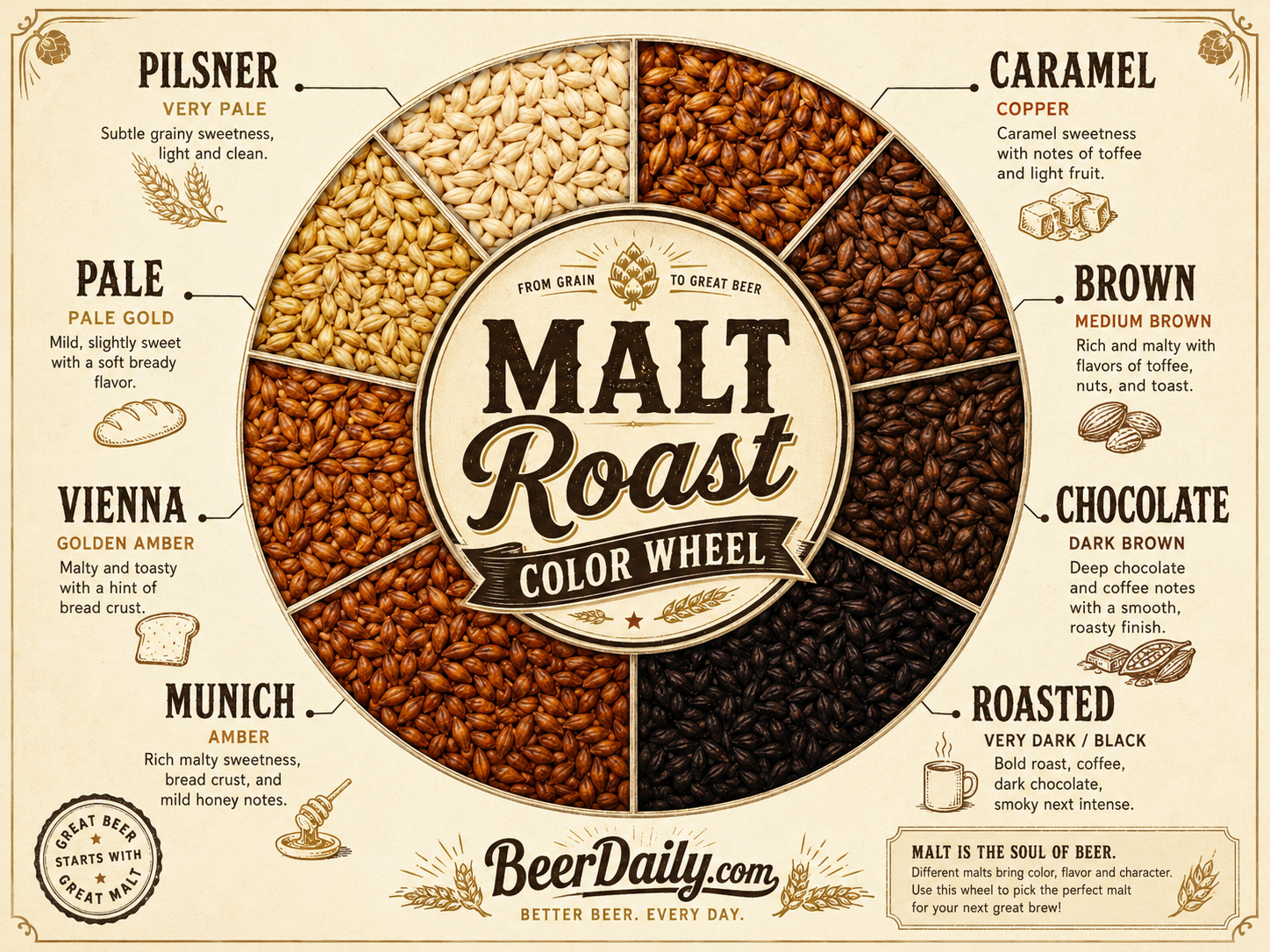
Grain gives beer its sugars, color, body, foam structure, and much of its flavor. Pale malt can taste bready, honeyed, or cracker-like. Roasted malt can bring toast, coffee, chocolate, smoke, or burnt crust. Wheat can add softness and haze. Rye can add spice. Other grains can add dryness, lightness, or regional identity.
Water: the invisible ingredient
Water is most of the glass, but it is easy to ignore because it looks quiet. It is not quiet. The minerals in water affect mash chemistry, bitterness, mouthfeel, clarity, and regional brewing character.
Historic beer styles often grew around local water. Some places had water that suited pale, bitter beers. Others favored darker malt profiles. Before modern chemistry, brewers learned by repetition, taste, and local habit. The water was writing part of the recipe before anyone wrote it down.
Yeast: the tiny brewmaster
Yeast eats sugar and produces alcohol, carbon dioxide, and many flavor compounds. It can make beer clean, fruity, spicy, funky, dry, soft, sharp, bright, or strange. For most of beer history, brewers did not fully understand yeast as a microorganism, but they understood that certain vessels, residues, temperatures, and practices made better beer.
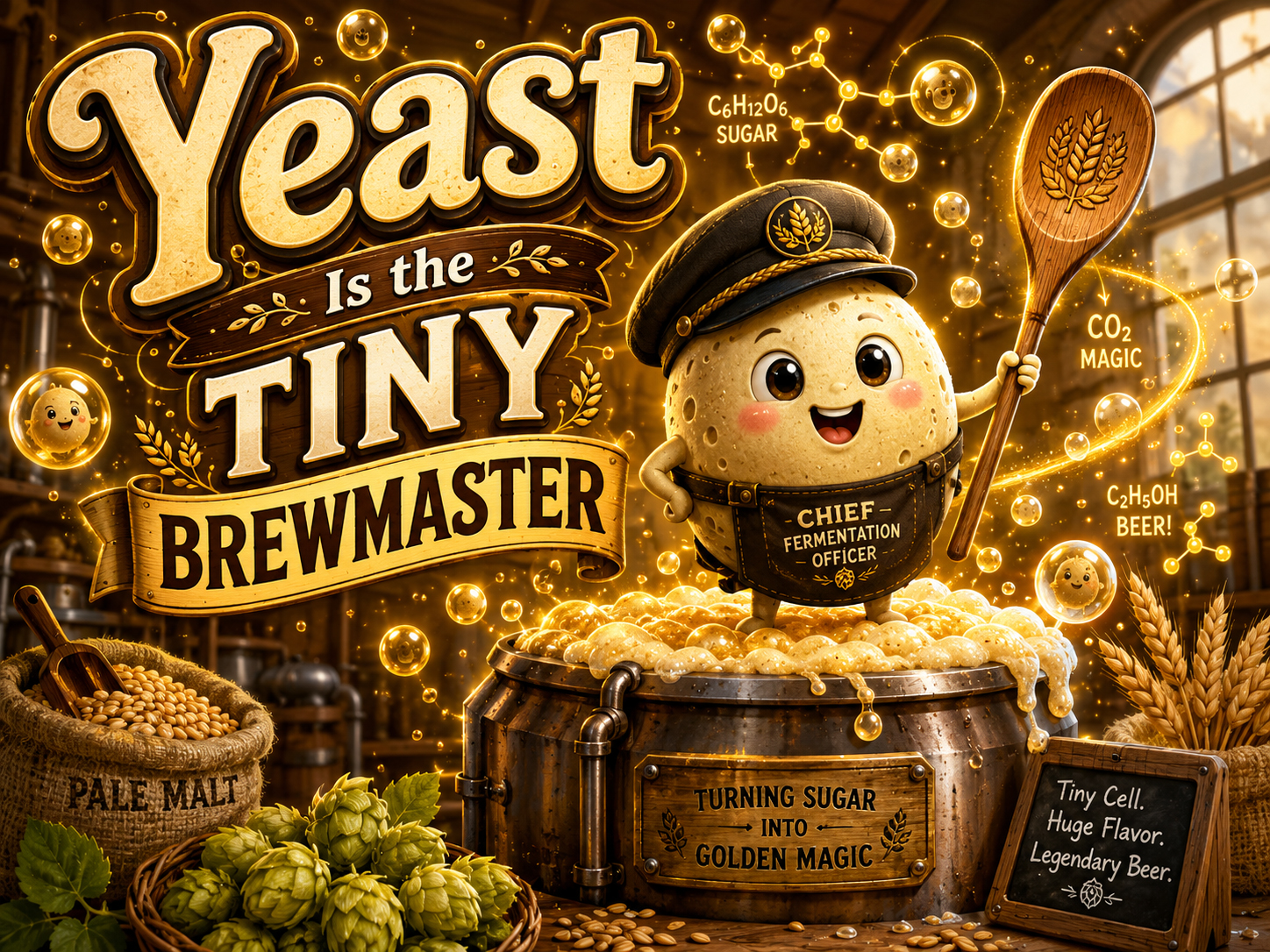
In modern brewing, yeast is selected and managed carefully. Ale yeast generally ferments warmer and can create fruity or spicy notes. Lager yeast generally ferments cooler and can produce a cleaner, smoother profile. Wild and mixed fermentations can bring sourness, earthiness, fruit, leather, barnyard, or bright acidity.
Time: the underrated ingredient
Time lets enzymes work. Time lets yeast ferment. Time lets harsh flavors mellow. Time lets carbonation build. Time lets cold lagering polish a beer. Time also ruins beer when storage is bad, oxygen gets in, heat takes over, or the wrong organisms win the battle.
That is why beer history is also storage history. Clay jars, wooden barrels, caves, cellars, ice, glass bottles, metal tanks, pasteurization, refrigeration, and sealed cans all changed what beer could be and how far it could travel.
Hops are important, but beer existed before hops ruled.
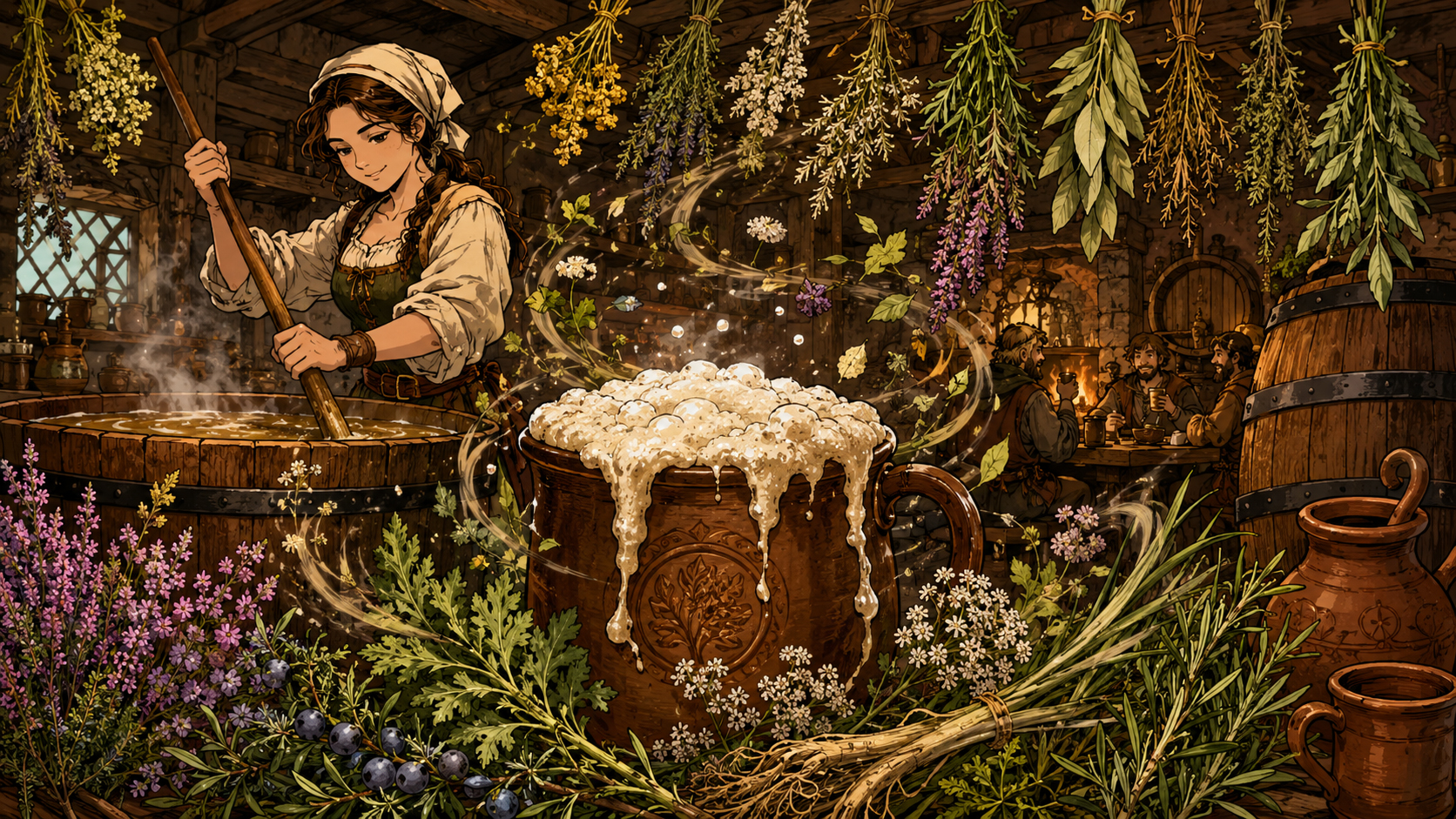
Many modern drinkers think beer automatically means hops. Hops are now a defining ingredient in most commercial beer, but earlier beers were often flavored with herbs, spices, fruits, smoke, honey, or local plants. Hops eventually became dominant because they add bitterness, aroma, and useful preservative qualities.
Beer is technology hiding inside a mug.
A glass of beer can look casual, but behind it sits a chain of inventions: agriculture, kilns, mills, kettles, fermentation vessels, barrels, brewing records, thermometers, microscopes, refrigeration, railroads, bottling lines, sanitation, yeast labs, and tap systems.
BeerDaily’s official position: beer is not merely “a drink.” It is one of humanity’s great edible technologies. Also, it has foam, which makes it look unserious at meetings.