Beer begins where grain gets organized.
Ancient beer history is not one clean invention story. It is more like a series of human discoveries repeated in different places: grain gets wet, grain sprouts, grain is dried, grain is cooked, grain releases sweetness, and something invisible turns that sweetness into a fermented drink.
The ancient brewer did not need the word “microbiology.” The ancient brewer needed grain, water, vessels, heat, memory, and someone nearby saying, “Do that again, but less smoky this time.”
Ancient beer was not simply a party drink. It was edible technology with a social life.
Sumer: beer, temples, and Ninkasi
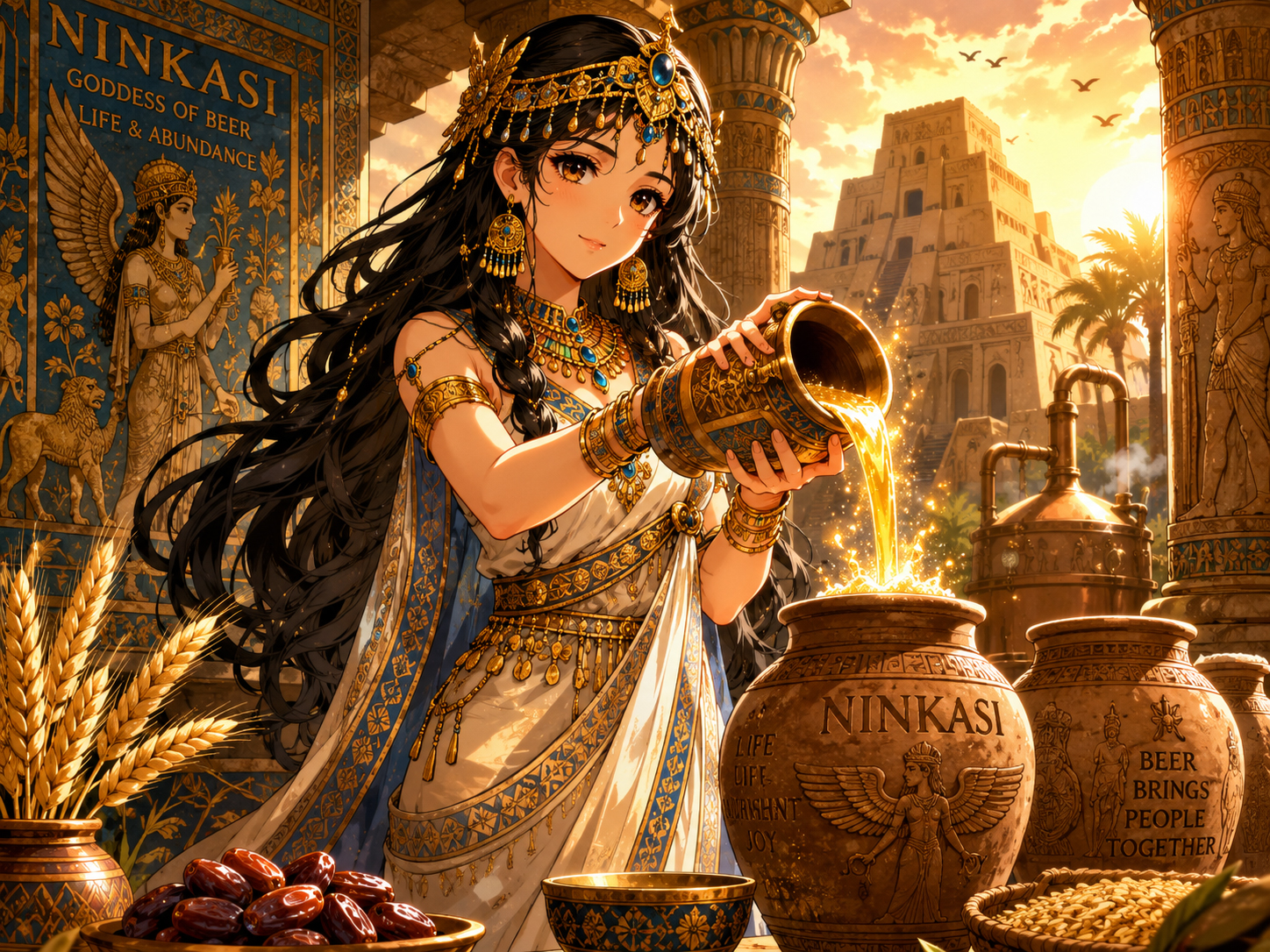
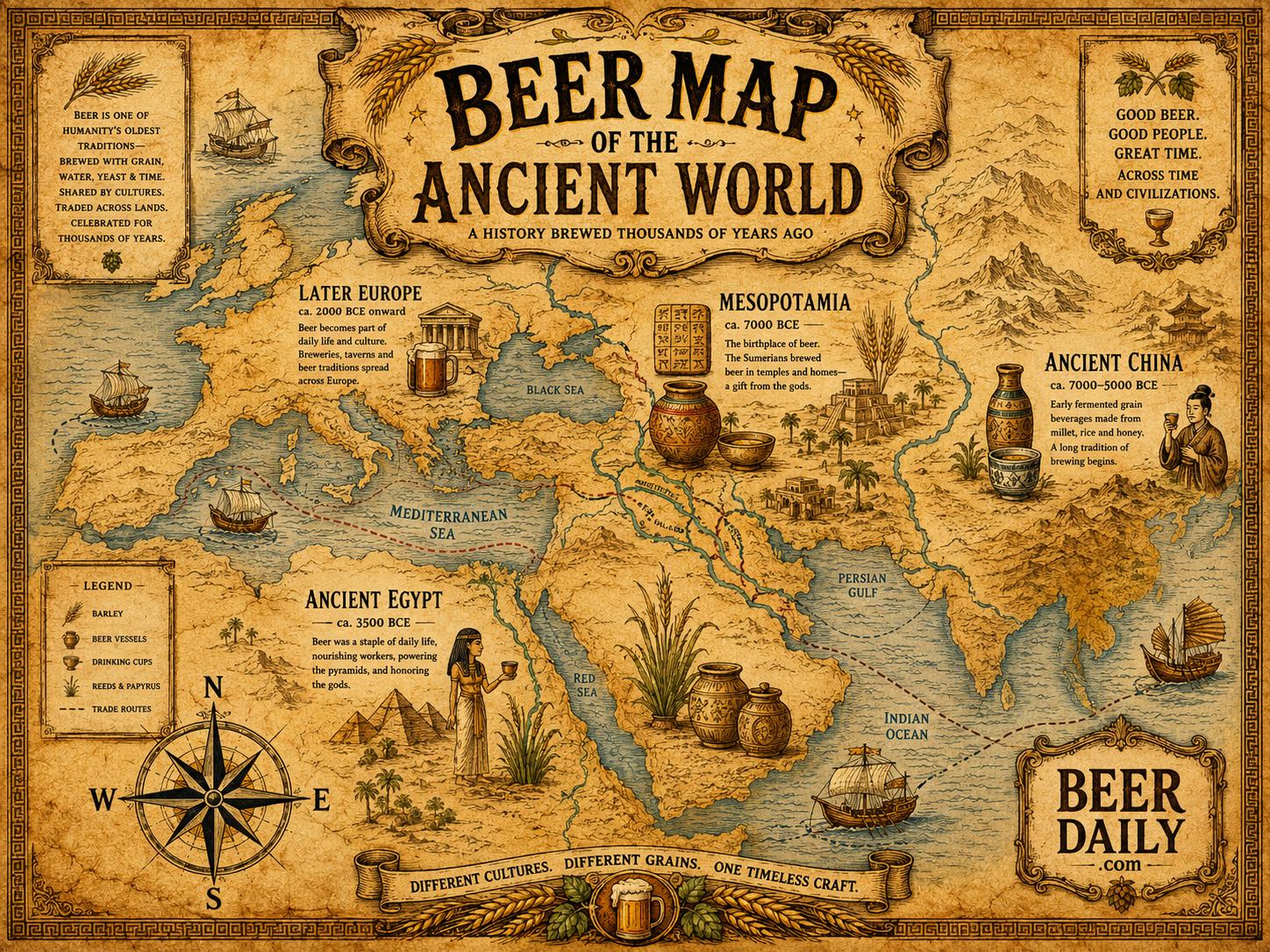
Sumer gives beer history some of its most famous early evidence. In southern Mesopotamia, beer appears in administrative texts, religious imagination, and daily life. The famous Hymn to Ninkasi celebrates a beer goddess and preserves brewing language in poetic form.
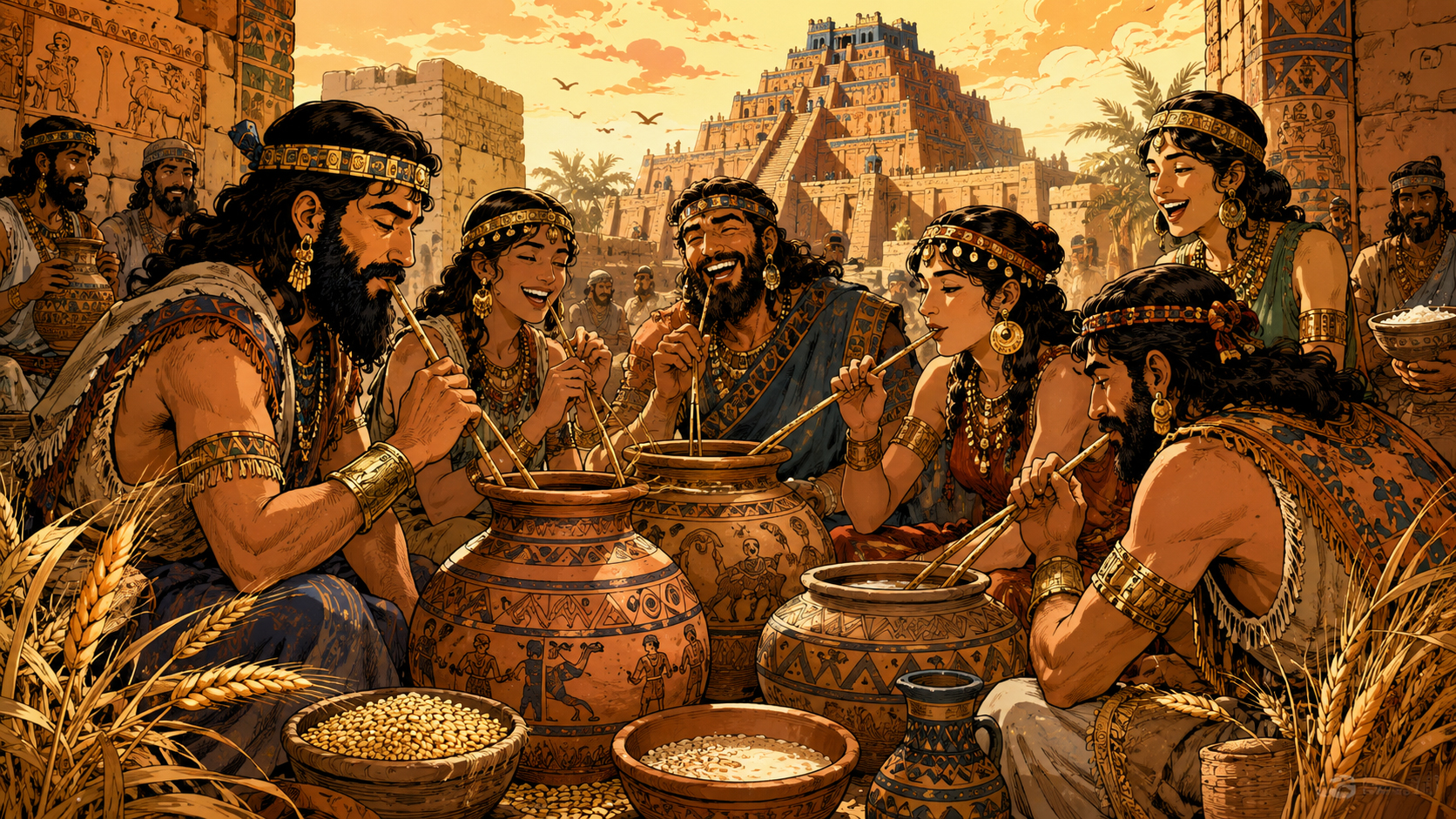
Sumerian beer was often connected to grain products and large jars. People are commonly shown or imagined drinking through reed straws, likely useful when the drink contained floating grain solids or sediment. This was not your modern crystal-clear lager. This was grain history with a straw.
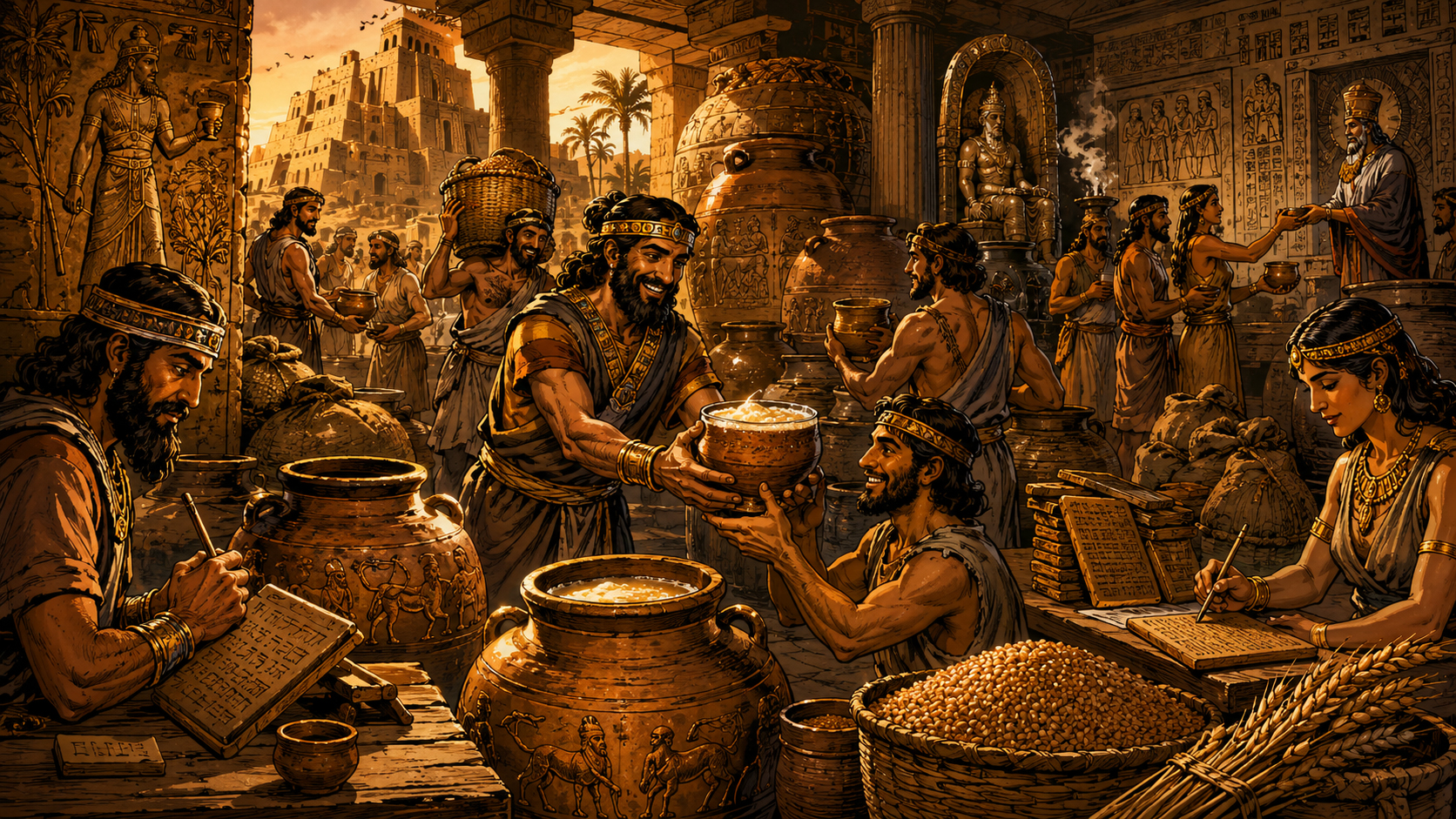
Babylon: beer enters the paperwork department
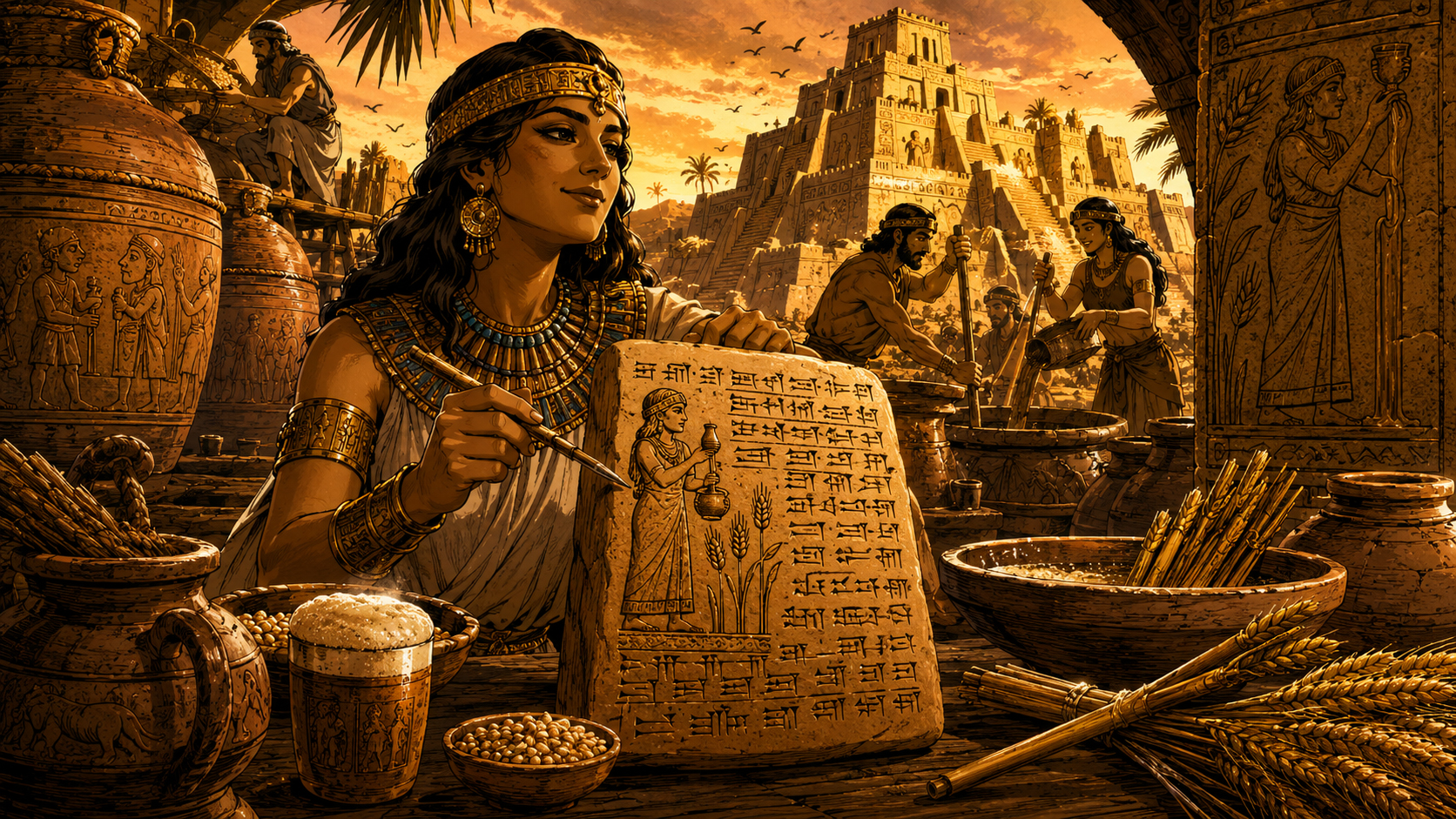
Babylon inherited and expanded Mesopotamian beer culture. Beer appears in law, commerce, temple activity, rations, and daily accounting. Once scribes start tracking something, you know it matters. Nobody invents paperwork for a beverage society does not care about.
Beer could be paid out as a ration, measured, traded, taxed, and regulated. That means beer had moved beyond household accident. It had become part of a managed economy. The barrel was not just cheerful. The barrel had a boss.
Egypt: bread beer beside the Nile
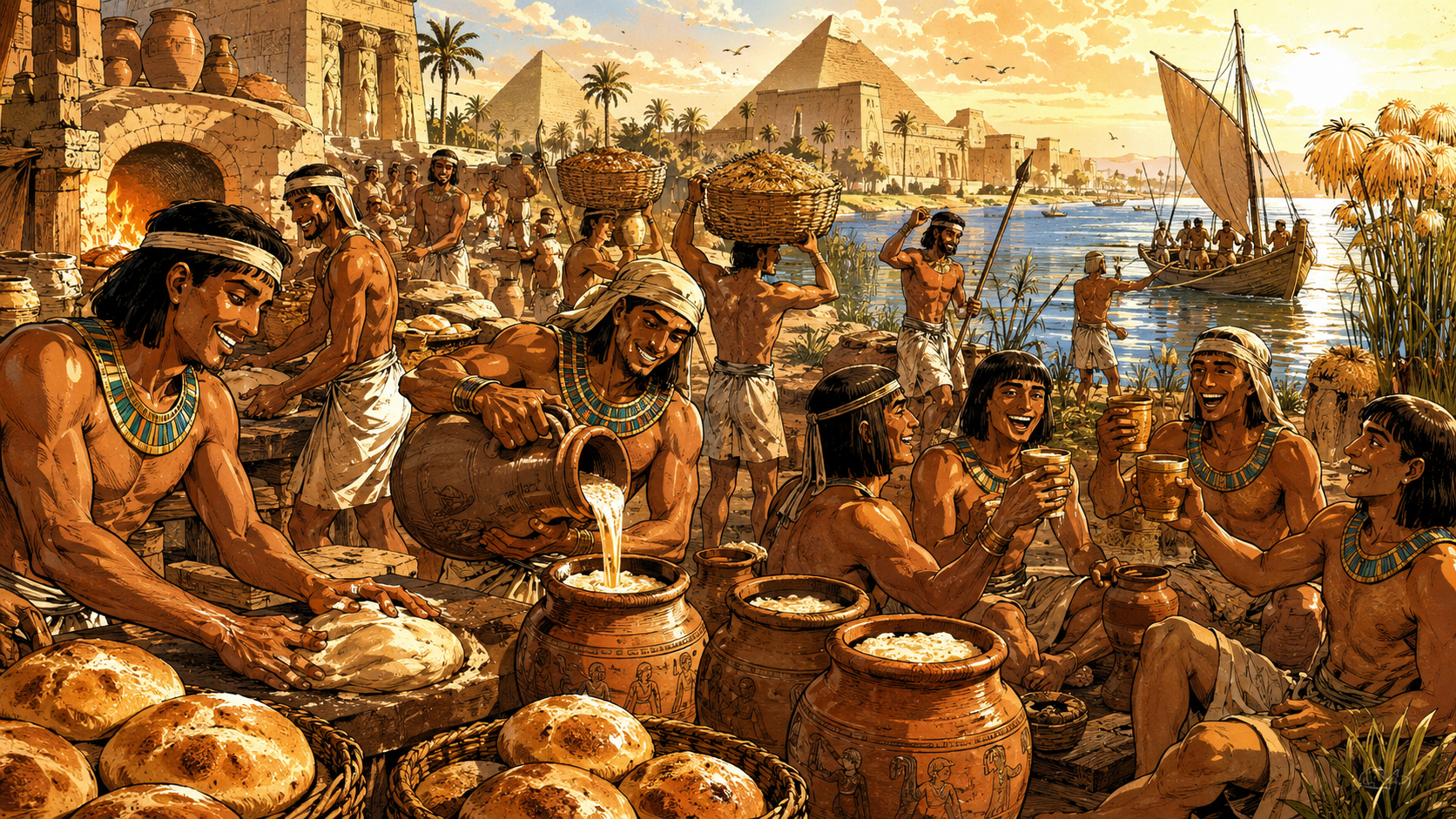
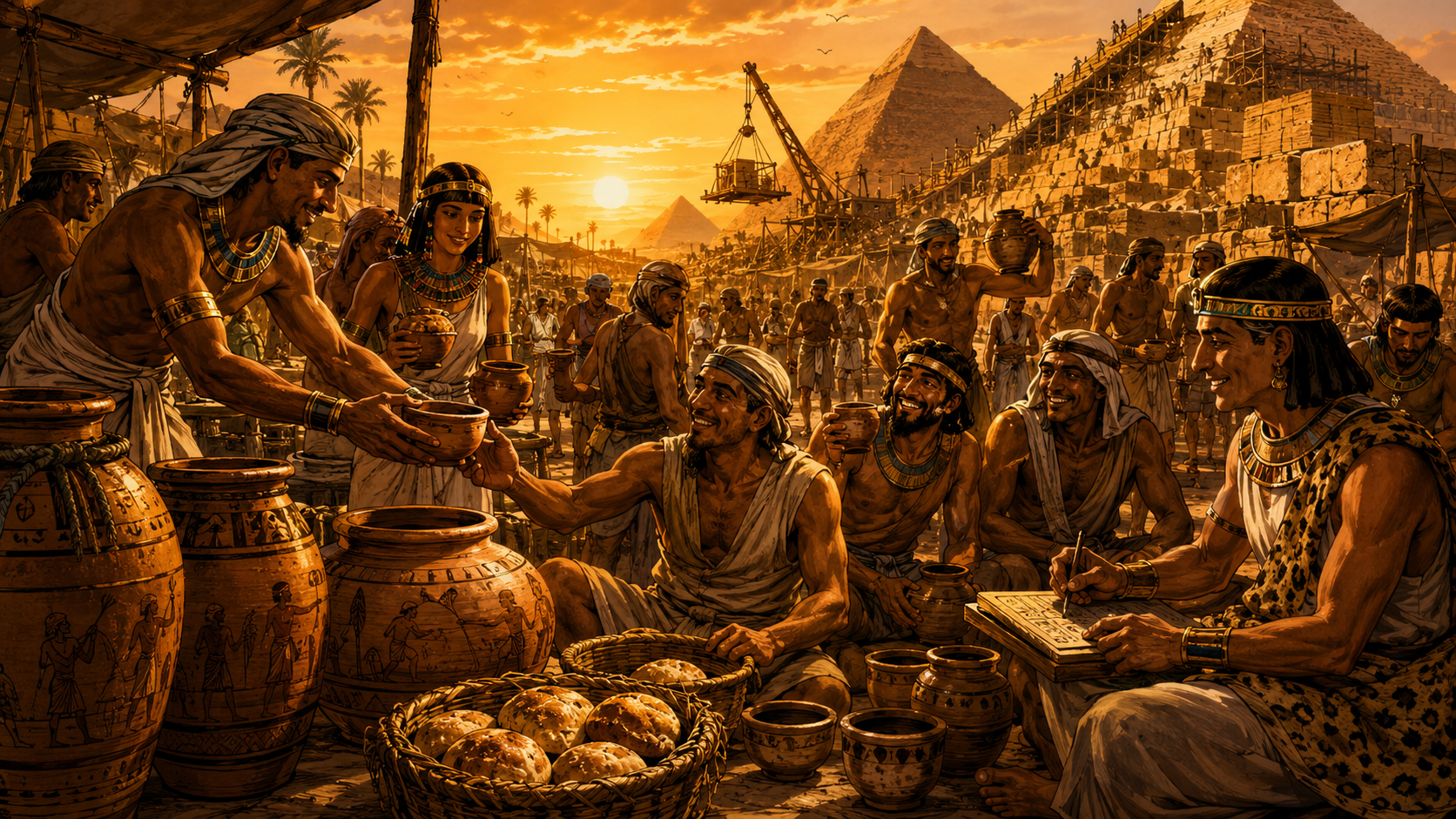
Ancient Egypt had a deep brewing tradition tied to bread, grain, labor, offerings, and the Nile economy. Egyptian beer was often connected with bread-like grain preparations and large-scale provisioning. It appears in tomb art, models, worker rations, and religious offerings.
Egyptian beer could be thick, nourishing, and practical. It was part drink, part food, part wage, part ritual. The pyramid worker did not clock out, crack open a branded can, and complain about parking. But grain beer was part of the labor world that built ancient Egypt.
China: fermented grain before the modern beer category
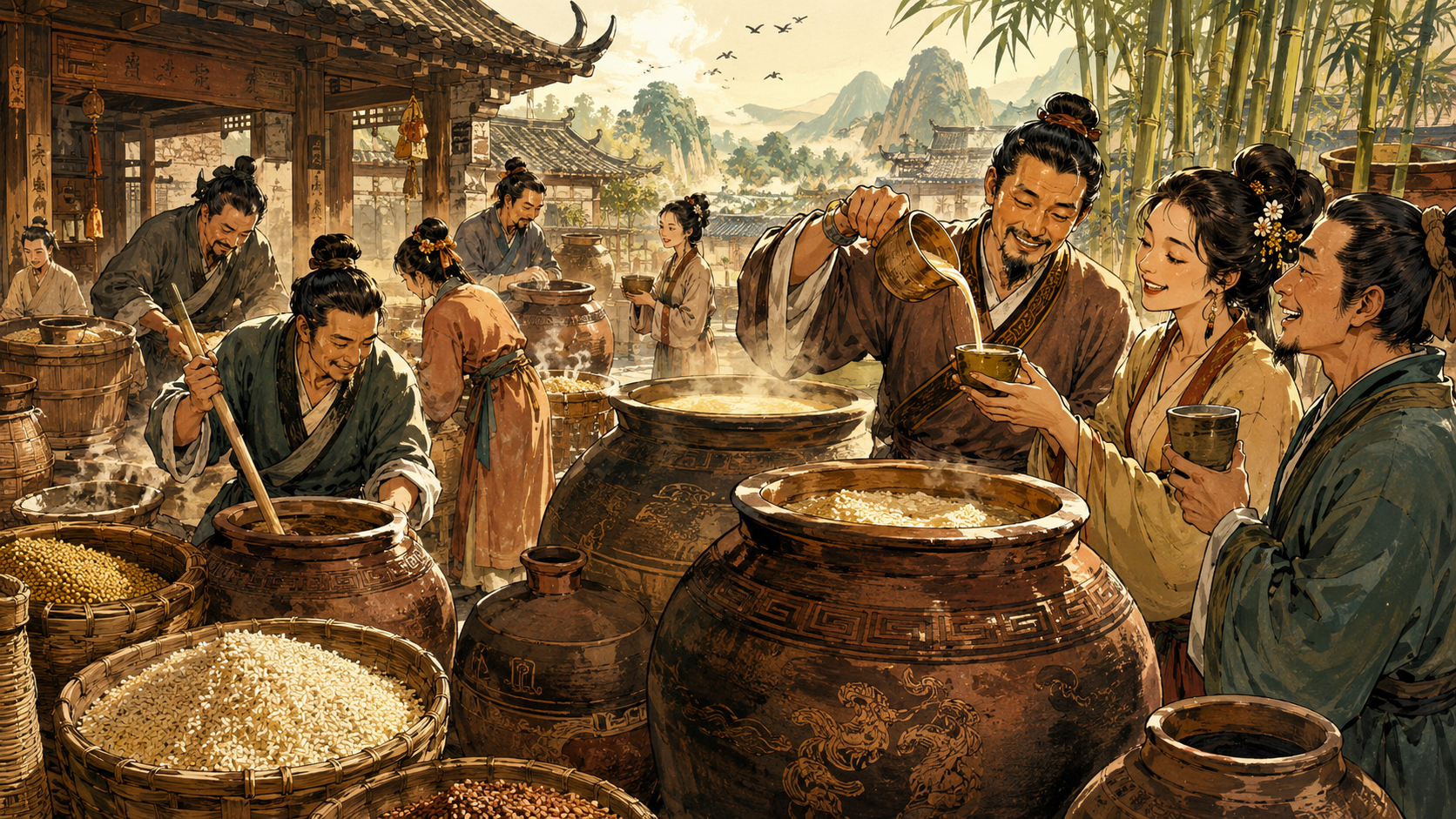
Ancient China had early fermented grain beverages made with combinations of rice, millet, honey, fruits, and other ingredients. These drinks were not always “beer” in the modern barley-hop sense, but they belong in the larger story of humans fermenting grain into meaningful beverages.
This matters because beer history should not pretend every ancient drink was a modern pint in disguise. The honest version is better: different cultures used local grains, local vessels, local microbes, and local ritual worlds to create fermented drinks that helped shape food culture and society.
Clay jars and reed straws
Clay jars were ancient brewing technology. They stored, fermented, served, and transported. A jar could be kitchen equipment, temple equipment, party equipment, or government accounting trouble waiting to happen.
Reed straws appear in Mesopotamian beer imagery and are one of the most memorable details of ancient beer culture. The straw helped drink from vessels where solids, husks, or sediment might float near the top. It was not a novelty straw. It was practical ancient engineering with style.
Beer rations: the payroll with foam
In ancient societies, beer could be issued as part of a ration system. That does not mean everyone was wandering around drunk on the job. It means fermented grain drink could function as nourishment, compensation, and administration. Beer belonged to the logistics of labor.
The funny version: payroll looked at a worker, looked at the grain stores, looked at the jar, and said, “Human resources has approved your beer.”
Ancient beer was probably diverse, cloudy, and alive.
Modern beer categories can make ancient beer hard to imagine. Ancient beer was not necessarily filtered, carbonated, chilled, bottled, hopped, or clear. It may have been sweet, sour, smoky, thick, herbal, grainy, or lightly alcoholic depending on place and method.
Some ancient fermented drinks may have included fruits, dates, honey, herbs, or other plants. Some were likely consumed fresh. Some were ritual. Some were everyday. Some probably tasted wonderful. Some probably tasted like a storage accident wearing a ceremonial hat.
Why ancient beer matters
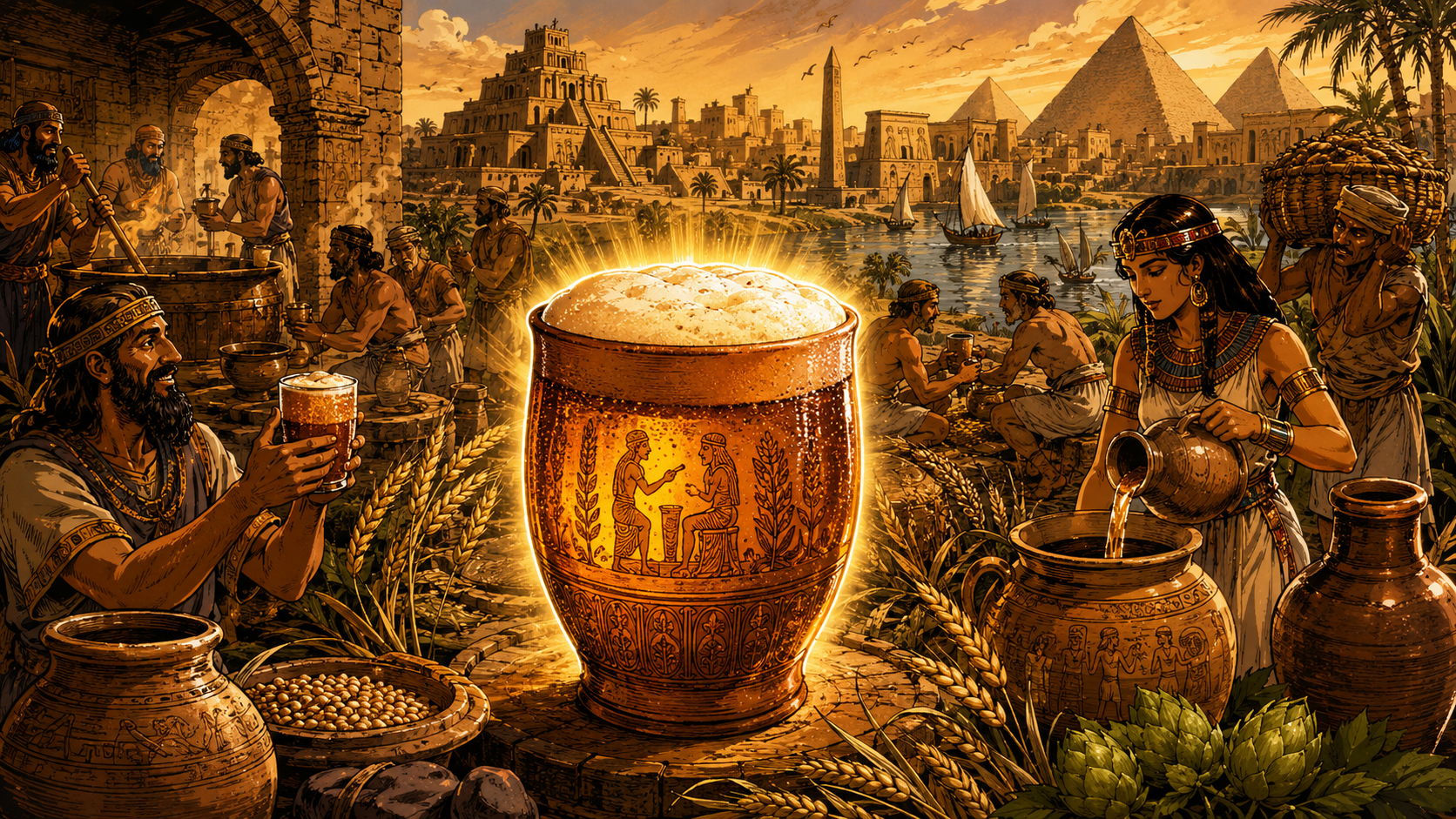
Ancient beer matters because it shows beer as a bridge between farming and civilization. To make beer regularly, people needed grain production, containers, heat control, storage knowledge, shared methods, and social demand. Beer did not merely follow civilization. In many places, it sat right in the middle of it.
The story of ancient beer is the story of humans learning to manage grain, water, time, taste, and invisible life. That is why BeerDaily treats beer as history, not just refreshment.