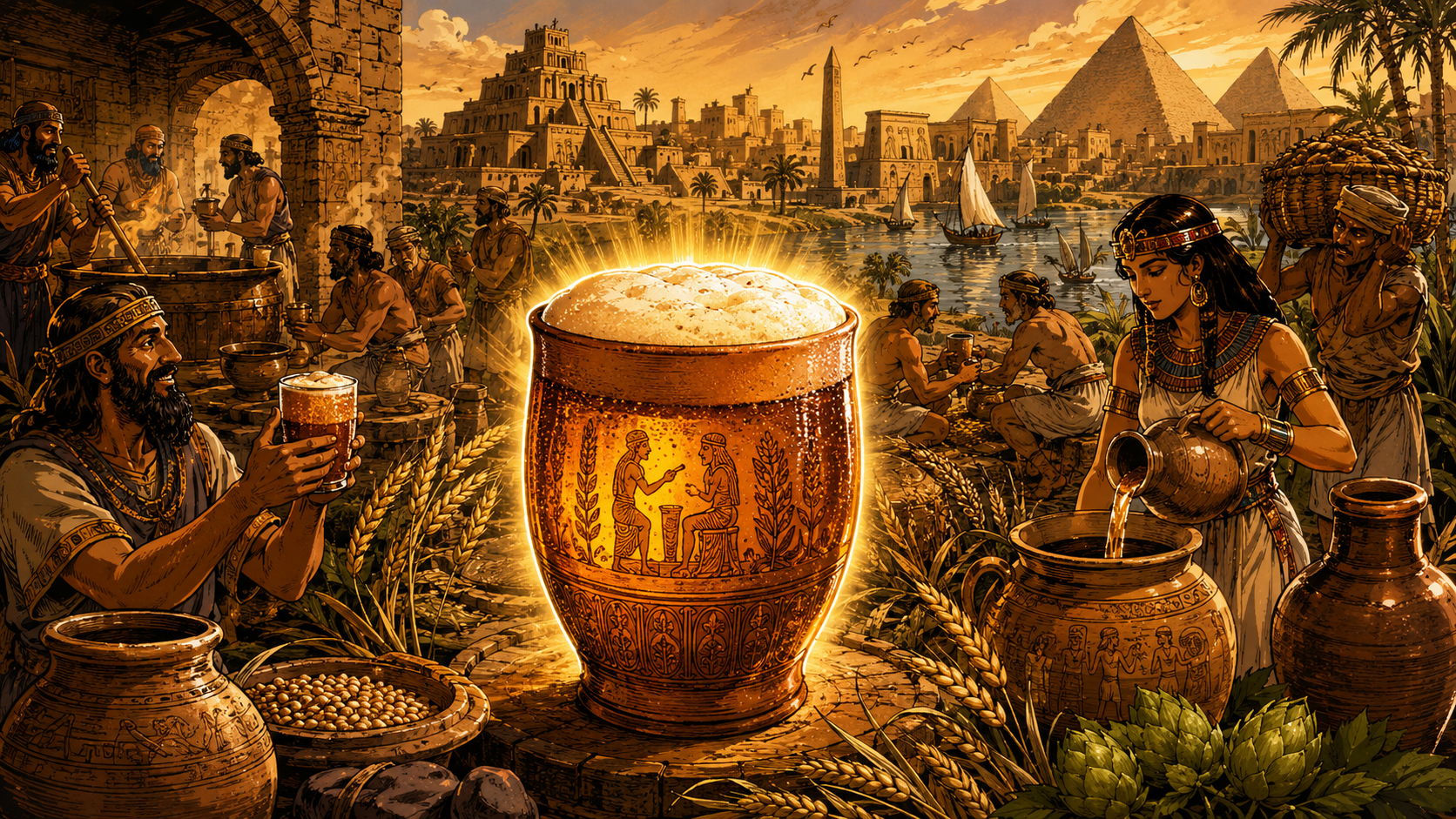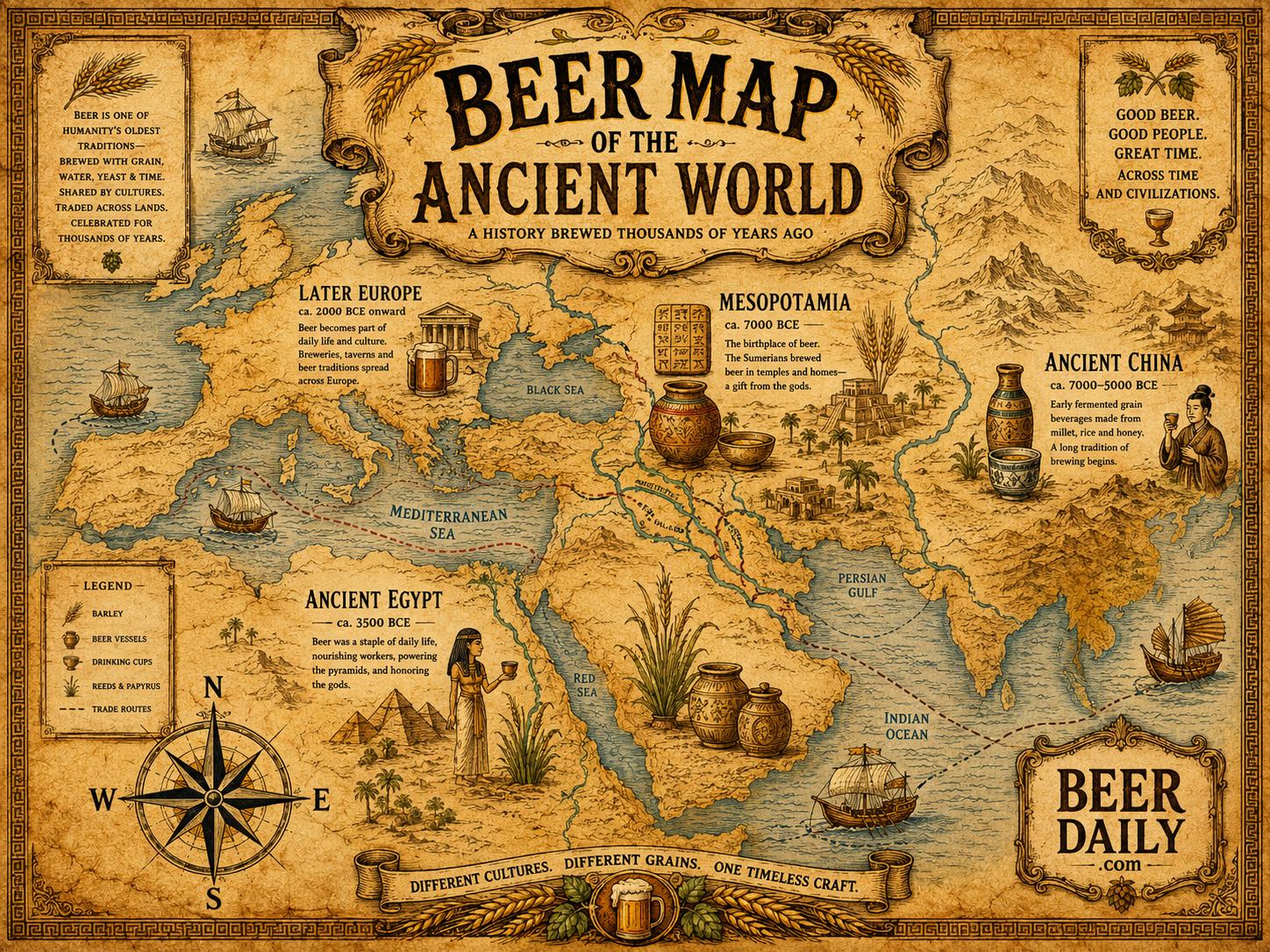
The ancient beer map is really a grain map.
Beer begins where grain becomes organized. Early beer-like fermented drinks were tied to farming, storage, cooking, vessels, and repeated household or institutional practice. If a society had grain, water, containers, heat, and patience, it had the ingredients for fermentation experiments.
This is why the ancient beer map tends to follow river valleys, farming zones, temple economies, and cities. Beer was not floating randomly through history. It was attached to fields, kitchens, storehouses, and people who knew when a jar was behaving strangely.
Professor Pint says: “To map ancient beer, first map grain. Then look for jars.”
Mesopotamia: clay tablets, barley, and Ninkasi
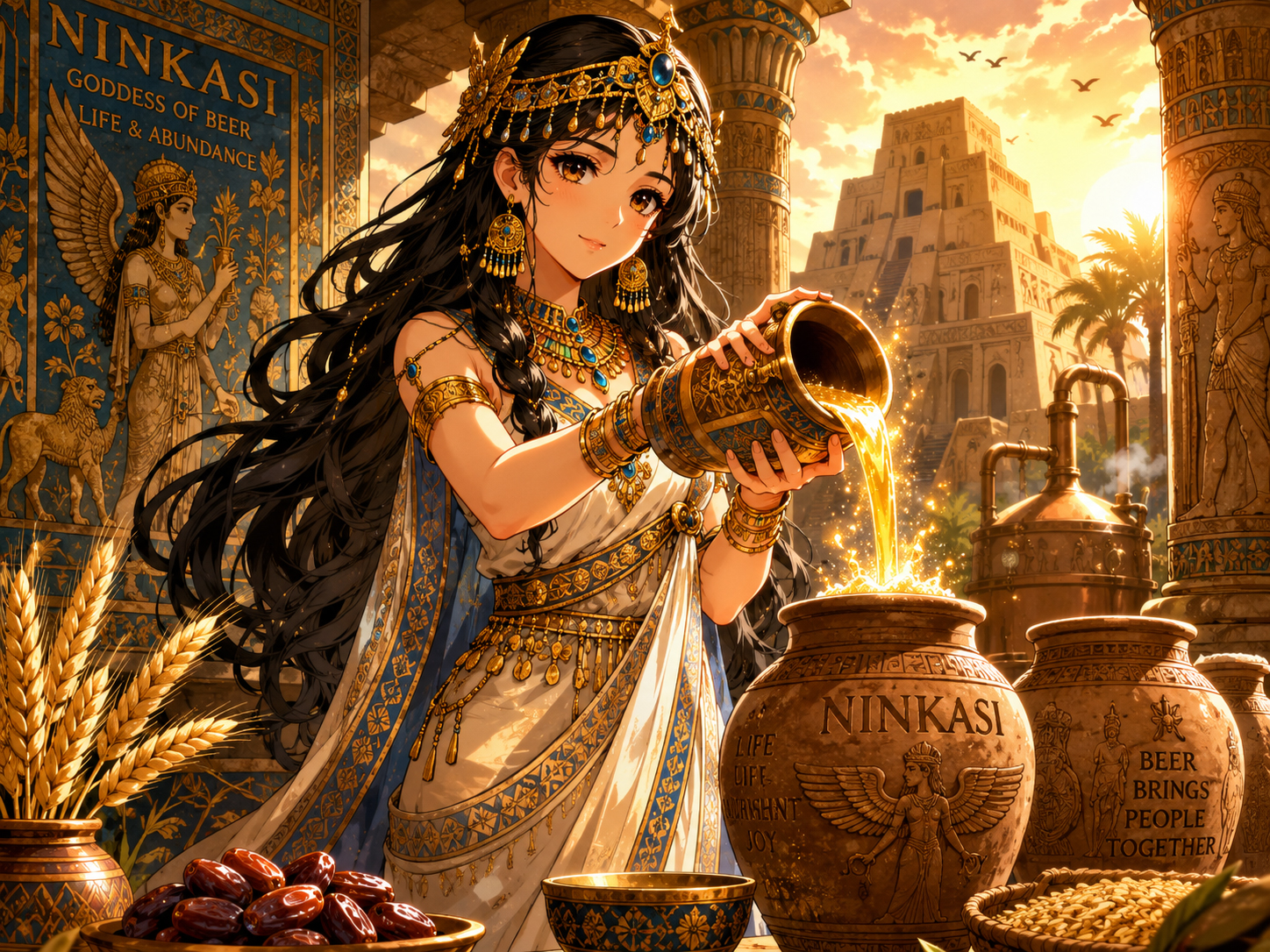
Mesopotamia is one of the great early beer-history zones. In Sumer and later Babylonian worlds, beer appears in religious imagination, administrative records, rations, and cultural memory. The famous Hymn to Ninkasi connects beer to a goddess, a brewing process, and a poetic memory system.
BeerDaily’s Mesopotamian map marker reads: barley, clay jars, reed straws, temple rations, scribes, and Ninkasi watching Foam Goblin very closely.
Sumer: the recipe-prayer zone
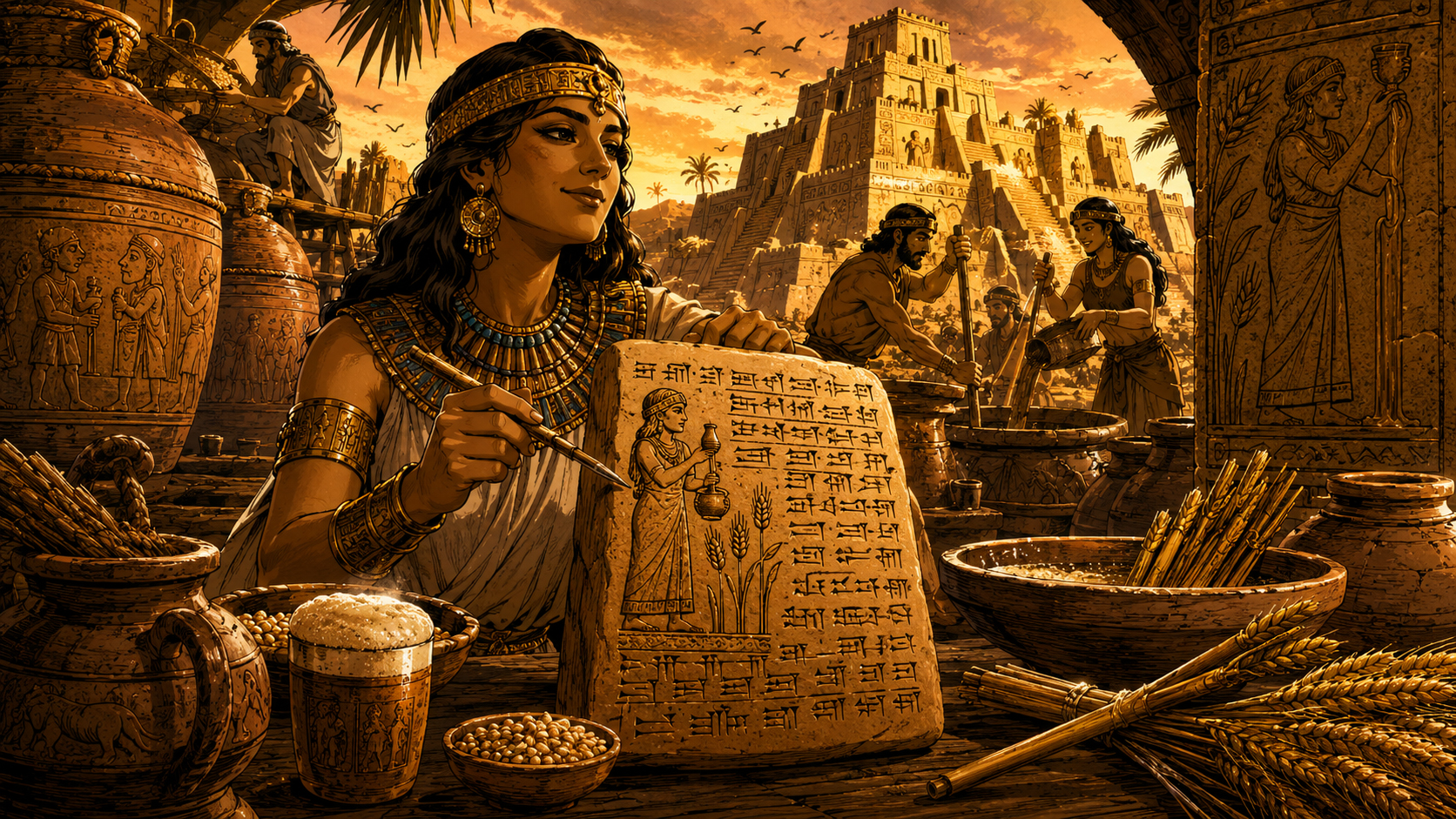
Sumer earns a special marker because of the Hymn to Ninkasi. This was not a modern recipe with exact temperatures, but it shows how brewing knowledge could be preserved in poetic and sacred form.
On BeerDaily’s map, Sumer is where the clay tablet says, “Please remember the brewing sequence,” and the beer goddess replies, “Make it sing.”
Babylon: beer gets counted
Babylon belongs on the map because beer became part of the administrative world. When beer appears in accounting, law, commerce, rations, or temple life, it has become more than a household beverage. It is now part of the managed grain economy.
BeerDaily’s Babylon marker reads: the barrel has entered paperwork. Somewhere nearby, a scribe is making sure no jar leaves without being counted.
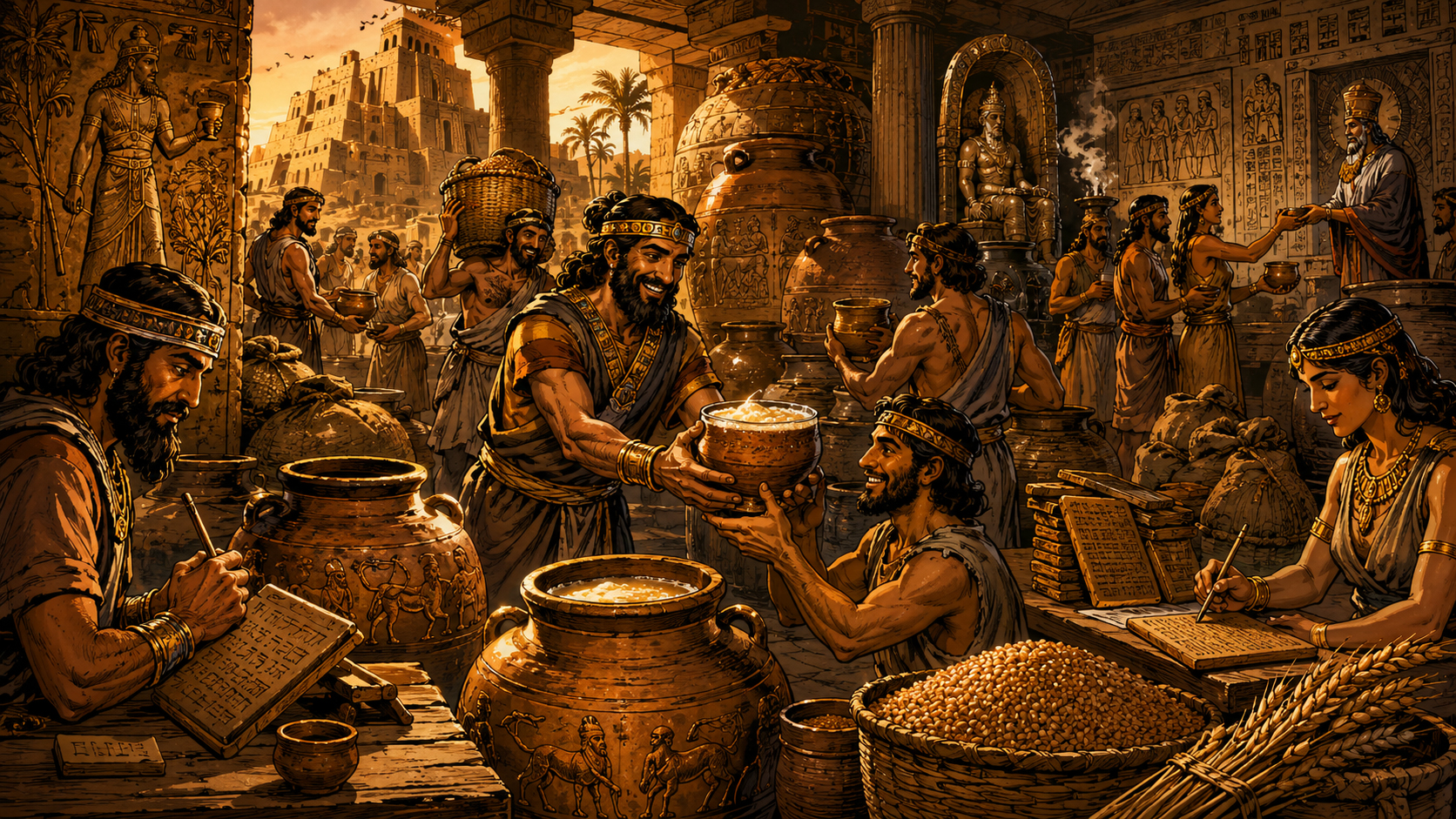
Egypt: bread beer and the Nile
Ancient Egypt gives beer history one of its richest visual worlds: bread and beer production, worker provisioning, offerings, tomb scenes, and models showing food and drink preparation. Egyptian beer was tied to the Nile grain economy and to the close relationship between bread and fermented grain drink.
BeerDaily’s Egyptian map marker reads: bread beer, Nile grain, worker rations, tomb models, offerings, and a clay jar with excellent job security.
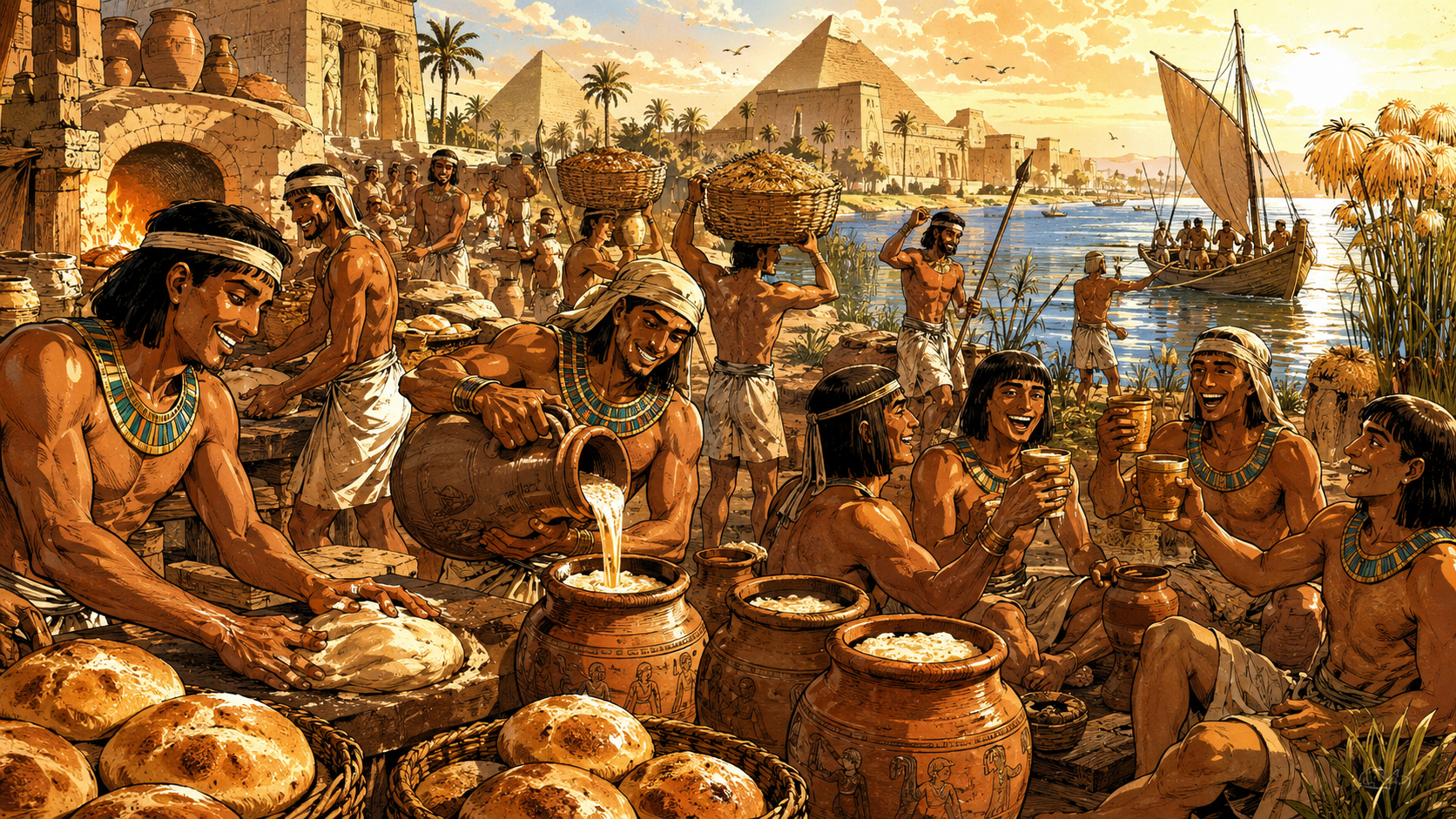
The Nile corridor: grain becomes labor support
The Nile shaped agriculture, settlement, transport, food storage, and labor. Beer fit naturally into that system. Grain could become bread, beer, offerings, rations, and recorded economic value.
The map marker here is not “ancient happy hour.” It is a much better story: grain logistics, food technology, labor provisioning, and civilization with bubbles.
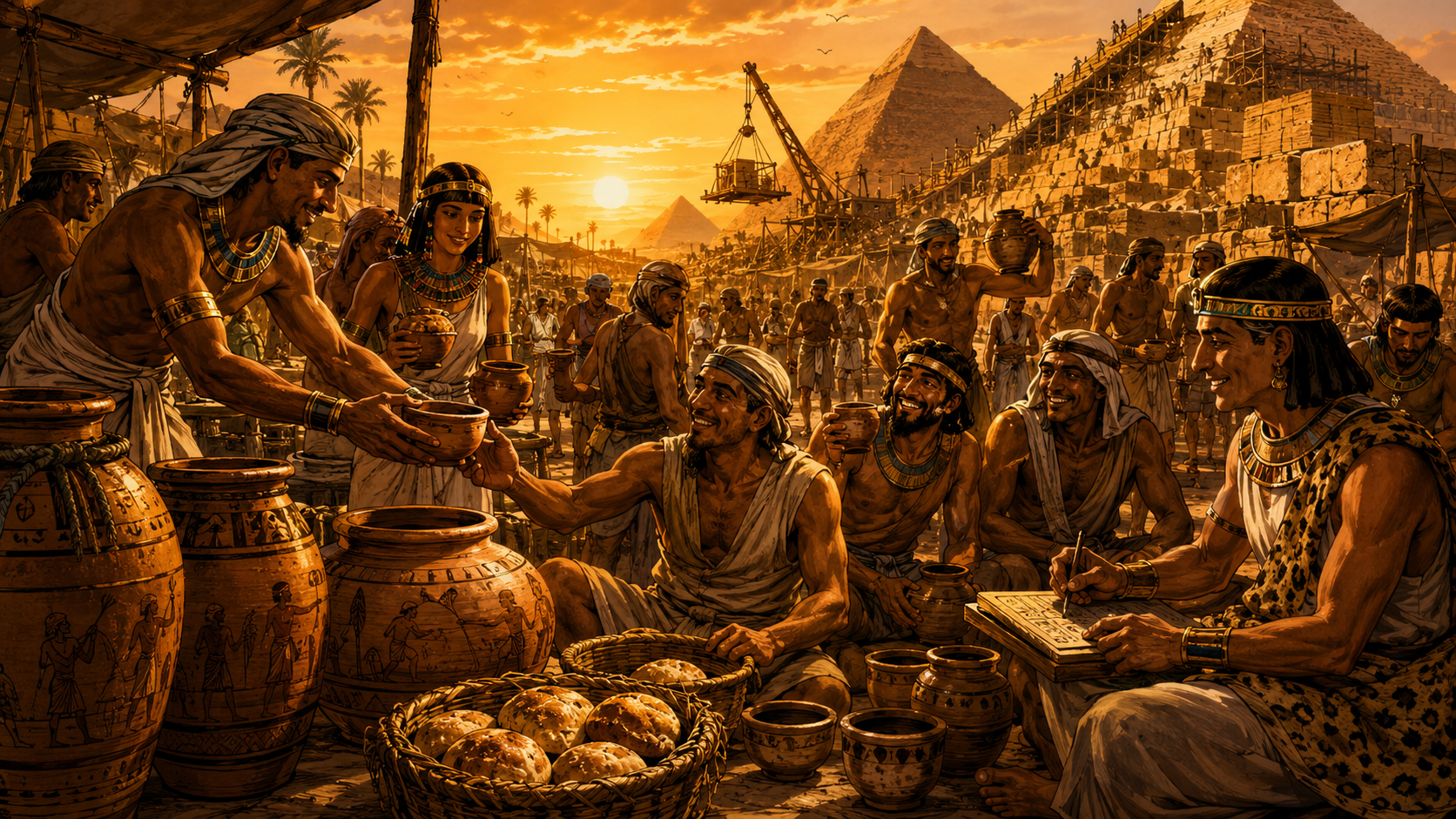
China: fermented grain beyond the modern beer box
Ancient China belongs on the map because early fermented beverages could include grain, rice, millet, honey, fruit, and other ingredients. These drinks were not always “beer” in the modern barley-and-hop sense, but they belong in the larger human story of fermenting grain into meaningful beverages.
BeerDaily’s China marker reads: do not force every ancient fermented drink into a modern pint glass. The map is richer when we respect local ingredients and local categories.

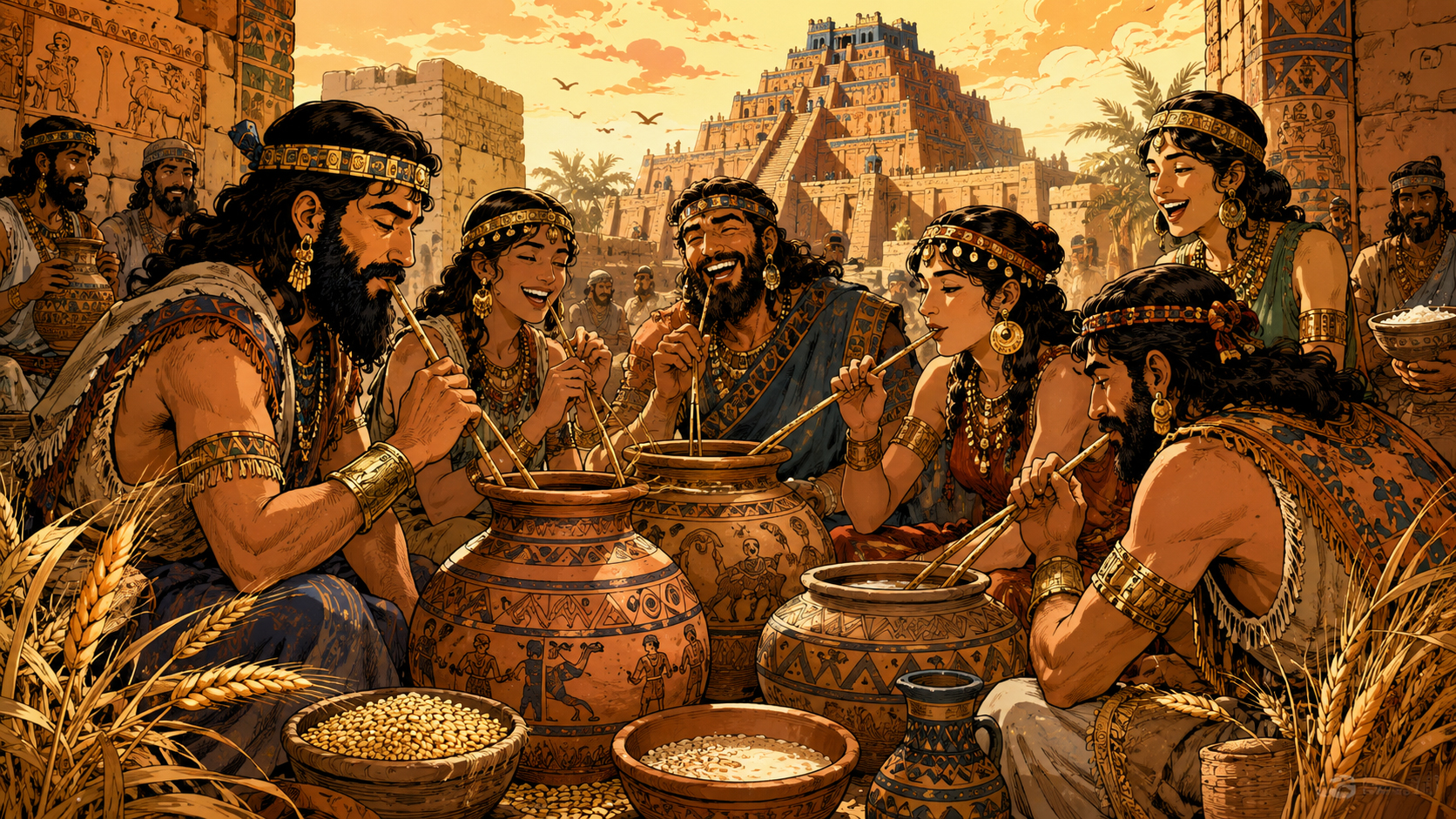
Reed straws and shared vessels
Some ancient beer imagery shows people drinking from shared jars with reed straws. That detail matters because ancient beers could be cloudy, thick, sedimented, or full of grain material. The reed straw was practical, not just decorative.
On the map, reed straws are little arrows pointing to a simple truth: ancient beer often did not behave like modern clear lager. It had texture, sediment, vessel culture, and social ritual.
What the map does not claim
Foam Goblin likes maps because he thinks they make oversimplification look official. So BeerDaily must be clear:
- This map does not claim beer was invented in one place by one person.
- This map does not claim ancient beer tasted like modern beer.
- This map does not claim hops were part of every ancient tradition.
- This map does not claim every fermented grain beverage fits one modern category.
- This map does not erase household brewers, women brewers, local traditions, or lost evidence.
The map is a teaching tool, not a magic scroll.

The beer map expands over time.
The ancient world had more fermented grain traditions than any single page can fully capture. Some are documented in texts. Some appear through residue, vessels, art, tomb models, or later historical memory. Some are probably lost because ordinary household brewing often leaves fewer records than temples, tombs, and royal archives.
That is why BeerDaily treats the map as expandable. The first markers are Sumer, Babylon, Egypt, and China. The larger lesson is global: where humans organize grain, fermentation follows.
The BeerDaily map legend
- Clay jar: fermentation, storage, serving, and ancient technology.
- Grain basket: farming, starch, malt, bread, and beer potential.
- River line: agriculture, transport, settlement, and city life.
- Tablet: memory, accounting, recipe, law, or temple record.
- Reed straw: shared drinking, sediment, and practical vessel culture.
- Foam Goblin warning: a myth has entered the map room.
The map lesson
Ancient beer history is not a single dot. It is a network of grain, rivers, jars, households, temples, workers, scribes, brewers, and memory. Beer was not just what people drank. It was one way people turned agriculture into society.
BeerDaily moral: the ancient beer map is not drawn in ink. It is drawn in grain, water, vessels, and time.