Opening scene: the cellar is proud of itself
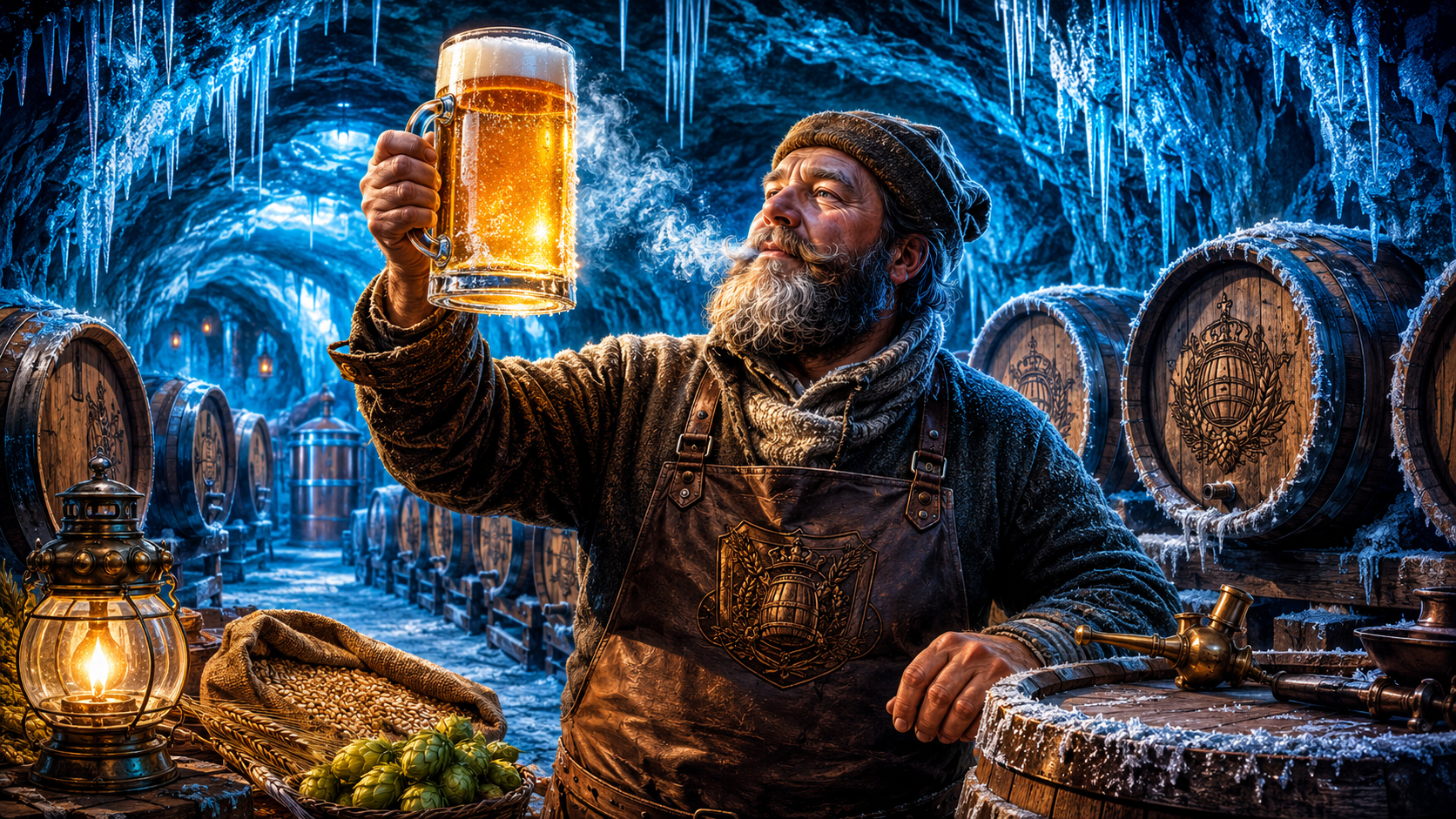
The abbey cellar is feeling smug. Barrels rest in cool silence. Stone walls hold the chill. Brother Spreadsheetius notes that the latest batch is “stable, elegant, and unlikely to embarrass the order.”
The cellar creaks proudly. “I have been keeping beer cool for generations,” it says. “No one can replace me.”
A blue light appears at the top of the stairs.
Madame Refrigeration: “Bonjour, cave. I brought consistency.”
Panel 1: cold was once geography
Before engineered cooling, brewers used what the landscape gave them: caves, cellars, winter temperatures, ice storage, shaded rooms, underground spaces, and seasonal schedules. If your region was cool, you had an advantage. If your cellar was warm, the Spoilage Goblin sent thank-you cards.
The old cellar folds its stone arms. “I was not luck,” it says. “I was architecture.”

Panel 2: lager likes patience and cold
Professor Pint steps forward with a chalkboard. “Lager depends on cool fermentation and cold storage. Temperature affects yeast behavior. Cold can create cleaner, smoother beer when the process is managed well.”
Yeast-chan appears wearing a tiny winter scarf. “Cool fermentation is not lazy,” she says. “It is disciplined.”
Barley Boy shivers. “Does discipline require this much blue lighting?”
Panel 3: Madame Refrigeration introduces herself
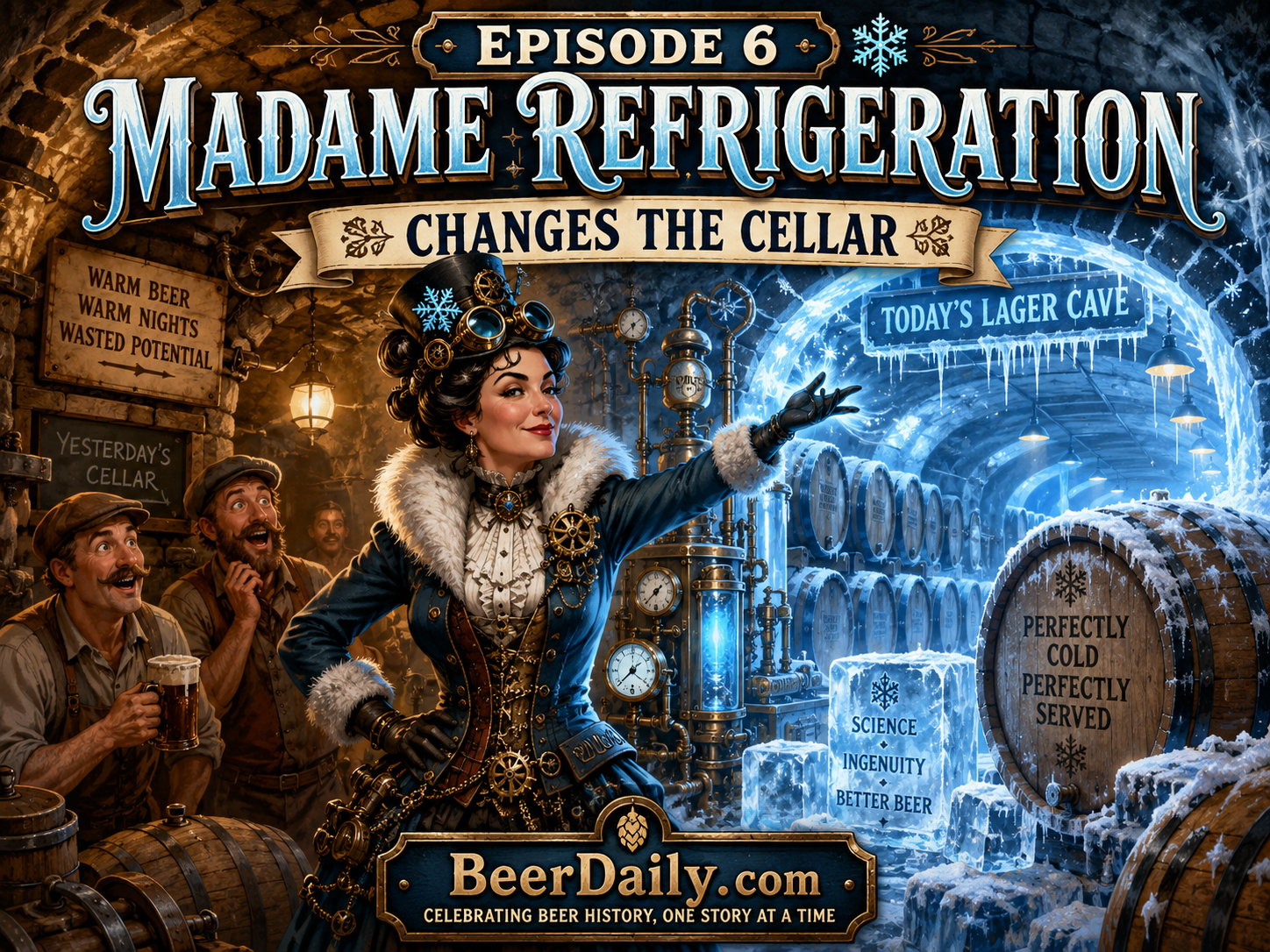
Madame Refrigeration descends the stairs. She wears a gown of frost, brass, gauges, pipes, and industrial confidence. Behind her roll coils, compressors, and a crew of engineers carrying clipboards.
“For centuries,” she says, “brewers asked nature for cold. Now they may manufacture it.”
The cellar gasps. Brother Spreadsheetius writes, “Historic disruption: chilly.”

Panel 4: the cave gets nervous
The old cave speaks from a dramatic mountain panel. “But I gave brewers cold storage, quiet maturation, and natural control.”
Madame Refrigeration bows. “You did. You were essential. But you were also attached to a mountain. I am portable.”
The cave looks offended. The barrels try not to take sides.
History note: refrigeration changed beer’s map
Mechanical refrigeration helped free brewing from strict dependence on seasons, caves, ice houses, and naturally cold regions. It made temperature control more reliable and allowed cold fermentation and storage to expand.
This was especially important for lager brewing. Cold stopped being only a geographic advantage and became an industrial tool.
Panel 5: industrial beer sees opportunity
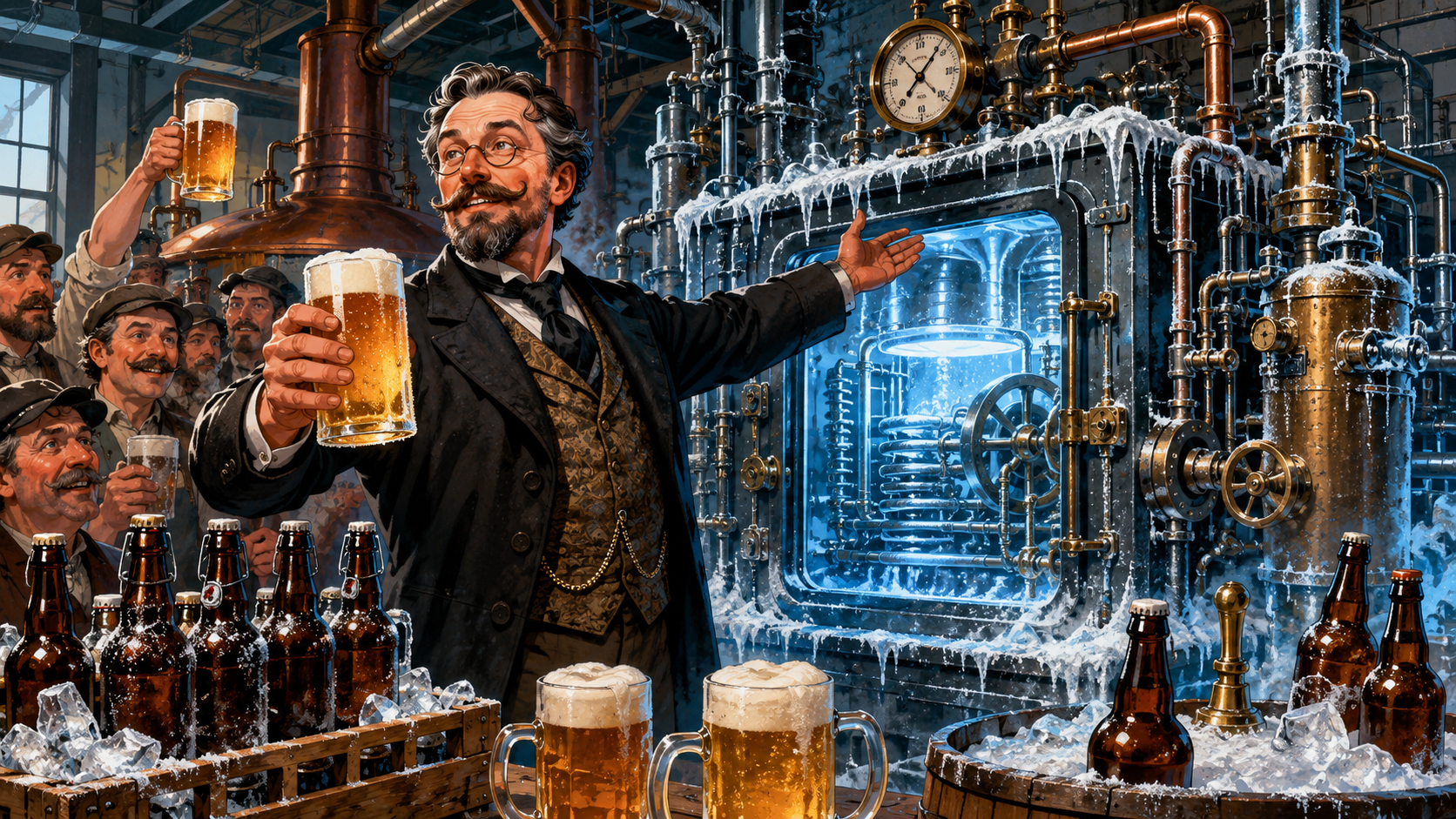
A factory brewer appears, eyes sparkling. “If we can control temperature, we can brew more consistently. If we can brew more consistently, we can ship farther. If we can ship farther, we can advertise. If we can advertise—”
Professor Pint interrupts. “Careful. You are about to invent a marketing department.”
The Foam Goblin whispers, “Can I be vice president of vague claims?”
Everyone says no.
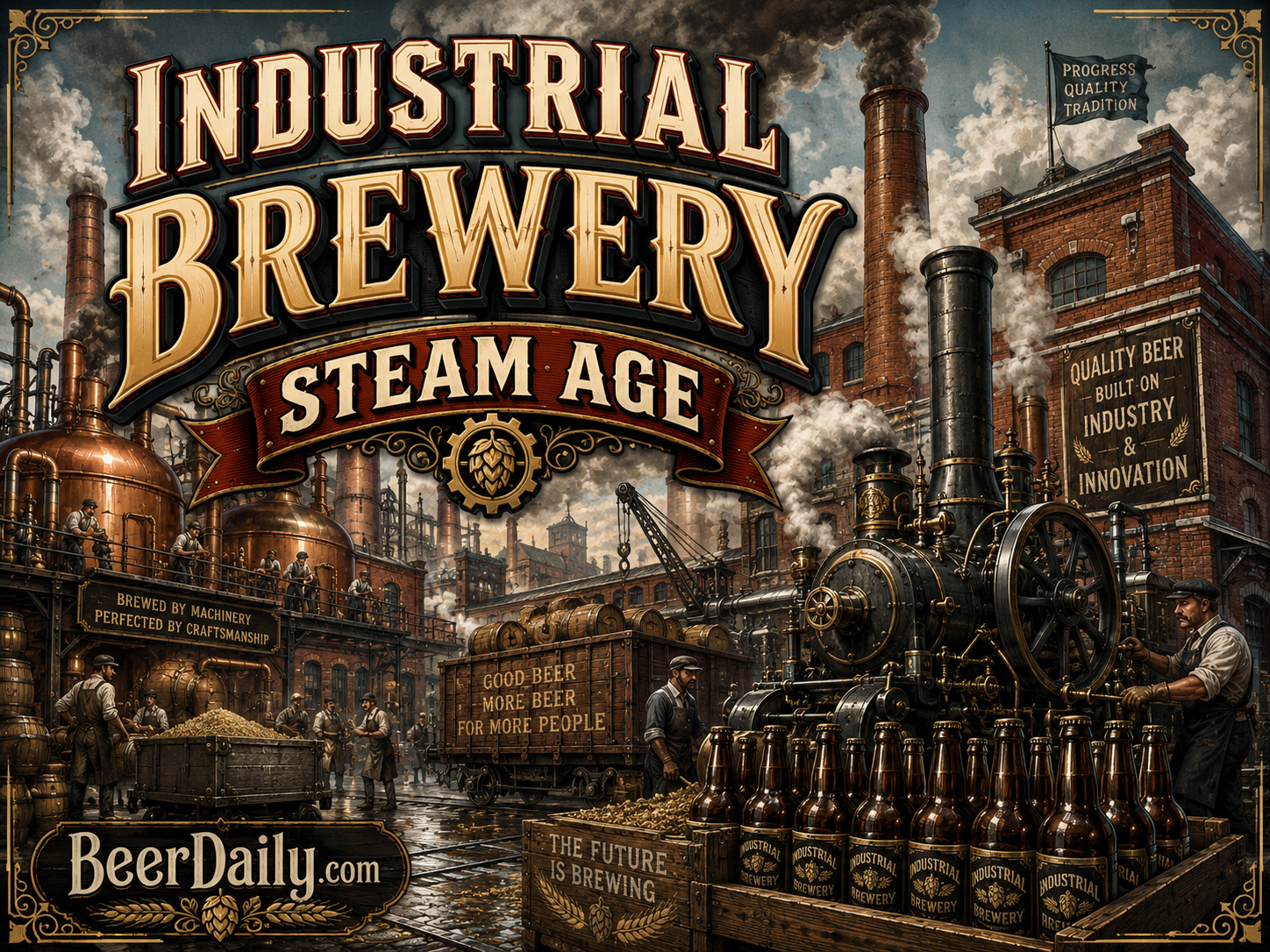
Panel 6: glass, railroads, and cold beer team up
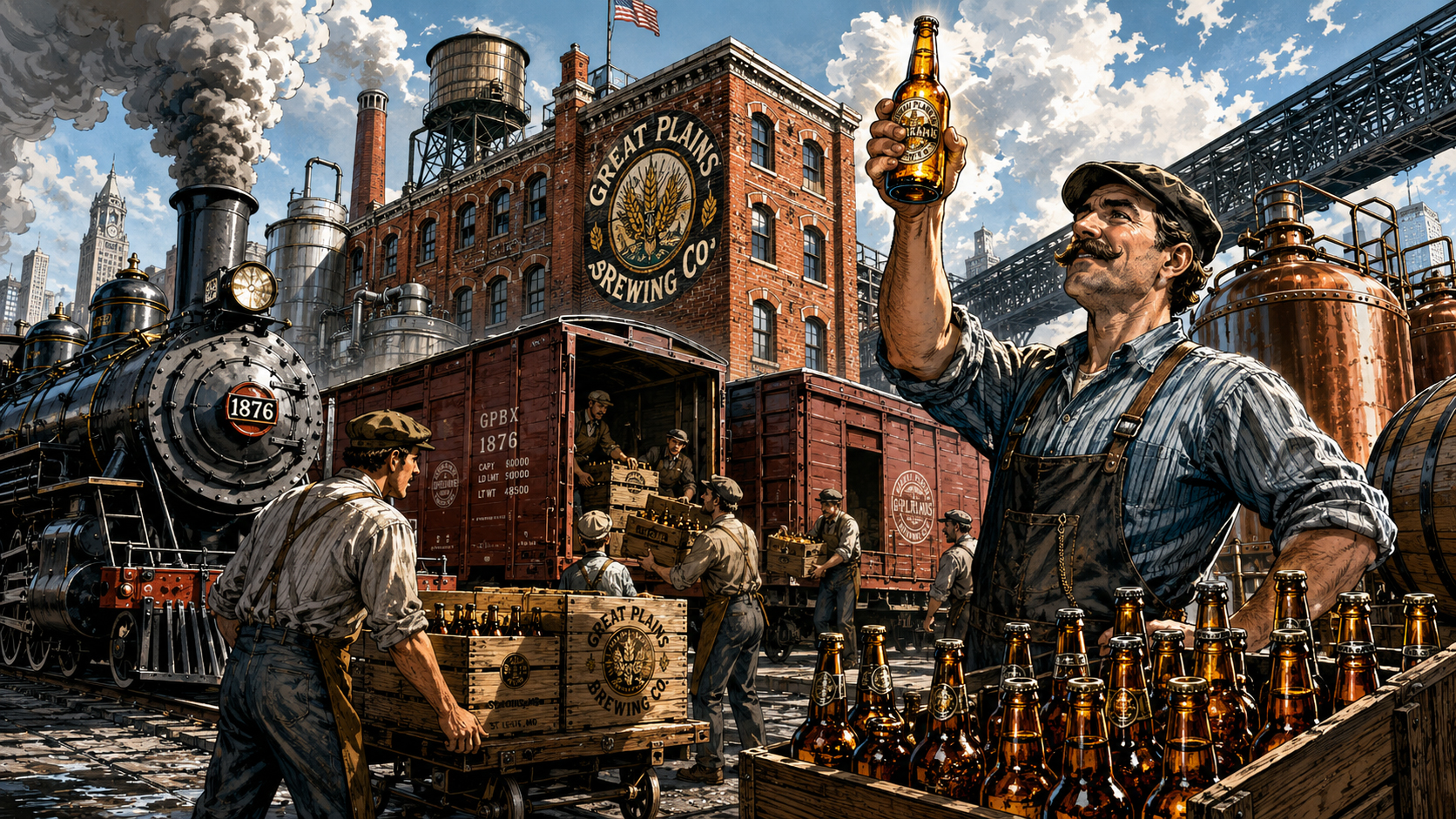
Railroads roll through the next panel. Glass bottles sparkle. Ice wagons clatter. Breweries grow larger. Cold beer begins moving through a modern distribution system.
Madame Refrigeration points to the network. “Cold is no longer a room. It is an infrastructure.”
Railroad: “I move the beer.”
Glass Bottle: “I show the beer.”
Refrigeration: “I protect the beer.”
Beer: “I am suddenly very modern.”
Panel 7: the old cellar negotiates
The cellar clears its throat. “So I am obsolete?”
Madame Refrigeration softens. “No. You are the ancestor. You taught brewers why cold mattered. I simply made cold repeatable.”
The cellar considers this. “Can I still be atmospheric?”
“Extremely,” says Professor Pint. “Tourists love you.”
Panel 8: Spoilage Goblin files a complaint
The Spoilage Goblin appears wearing a scarf and looking miserable. “This is unfair,” he says. “First hops. Now refrigeration. How is a goblin supposed to ruin anything?”
Yeast-chan points to dirty equipment, oxygen, heat abuse, and bad handling. “You still have opportunities,” she says. “Unfortunately.”
Madame Refrigeration snaps her fingers. Frost forms on the goblin’s mustache. He retreats.

What the episode teaches
Refrigeration changed beer because it changed temperature control. Brewing could become less dependent on local climate and seasonal timing. Lager could spread more widely. Industrial brewing could become more consistent. Storage and transport could improve.
Cold was always important. Refrigeration made cold manageable at scale.
Foam Detective correction
Refrigeration did not make old brewing stupid. Caves and cellars were brilliant solutions in their time. The mistake is thinking technology simply replaces history. Better history sees continuity: brewers first used natural cold, then engineered cold.
The cave deserves respect. The compressor deserves credit. The beer deserves a clean line and a proper serving temperature.
Episode moral
Madame Refrigeration did not invent cold beer. She industrialized cold beer. She took the cave’s ancient lesson and made it repeatable in more places, more seasons, and larger breweries.
BeerDaily moral: the cellar taught beer to wait. Refrigeration taught beer to travel.