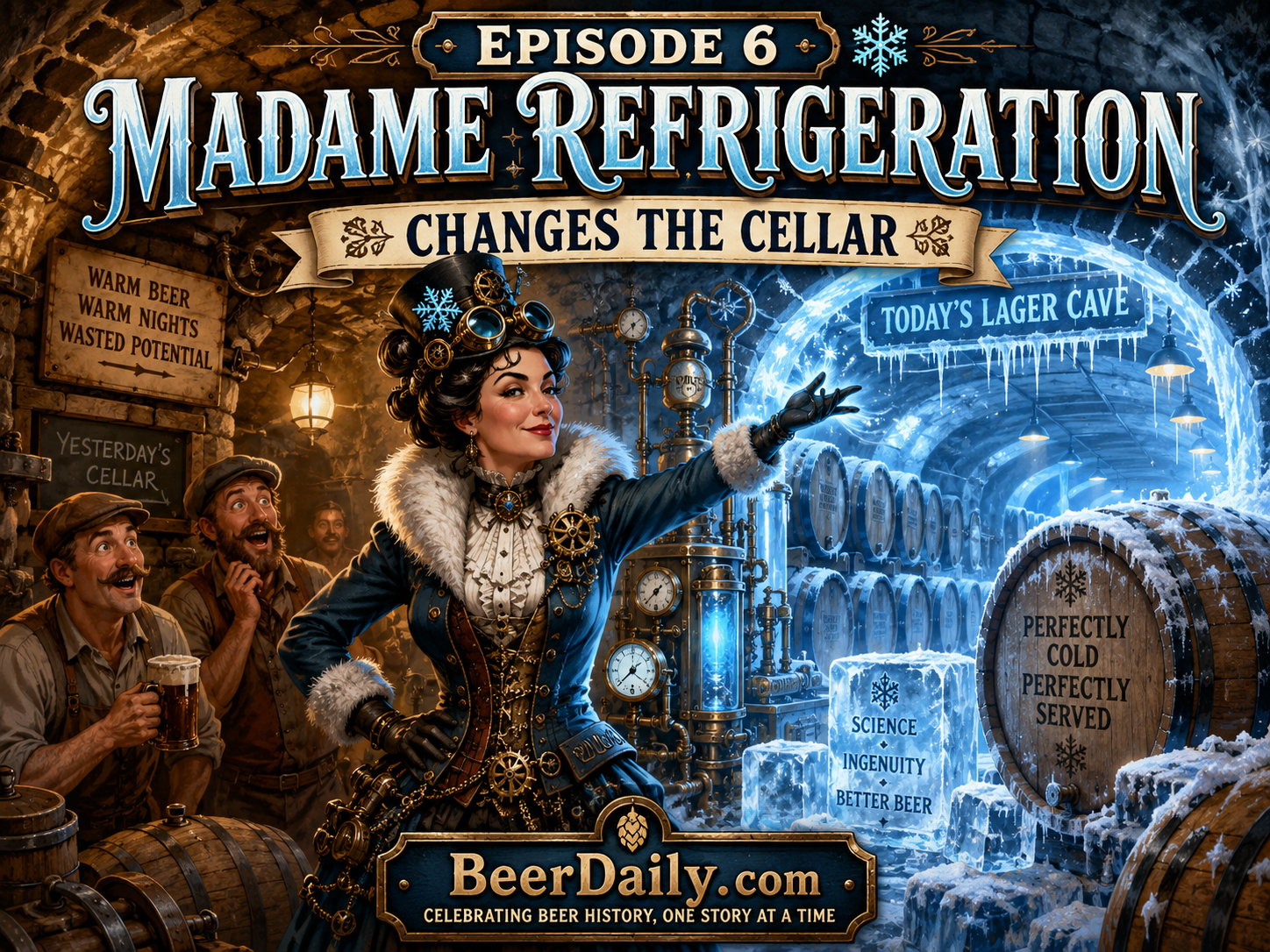
Opening scene: the abbey cellar hums
Deep below the abbey, barrels rest under stone arches. Copper kettles glow. Candles flicker. A monk tastes a sample, pauses, and looks deeply concerned.
“Brother Bartholomew,” he says, “this batch is better than last month’s.”
Brother Bartholomew gasps. “How do you know?”
From the shadows, Brother Spreadsheetius opens a massive book. “Because I wrote down last month.”
Brother Spreadsheetius: “Memory is good. Ink is better.”
Panel 1: monks did not invent beer
Professor Pint appears beside the mash tun before anyone can make a bad claim. “Important correction,” he announces. “Monks did not invent beer. Beer is far older. Ancient Sumer, Babylon, Egypt, China, and many other grain cultures were fermenting long before medieval abbey brewing.”
The Foam Goblin pokes his head out from behind a barrel. “So the monks invented all beer?” Professor Pint points at the door. The goblin leaves before the lecture becomes a full seminar.
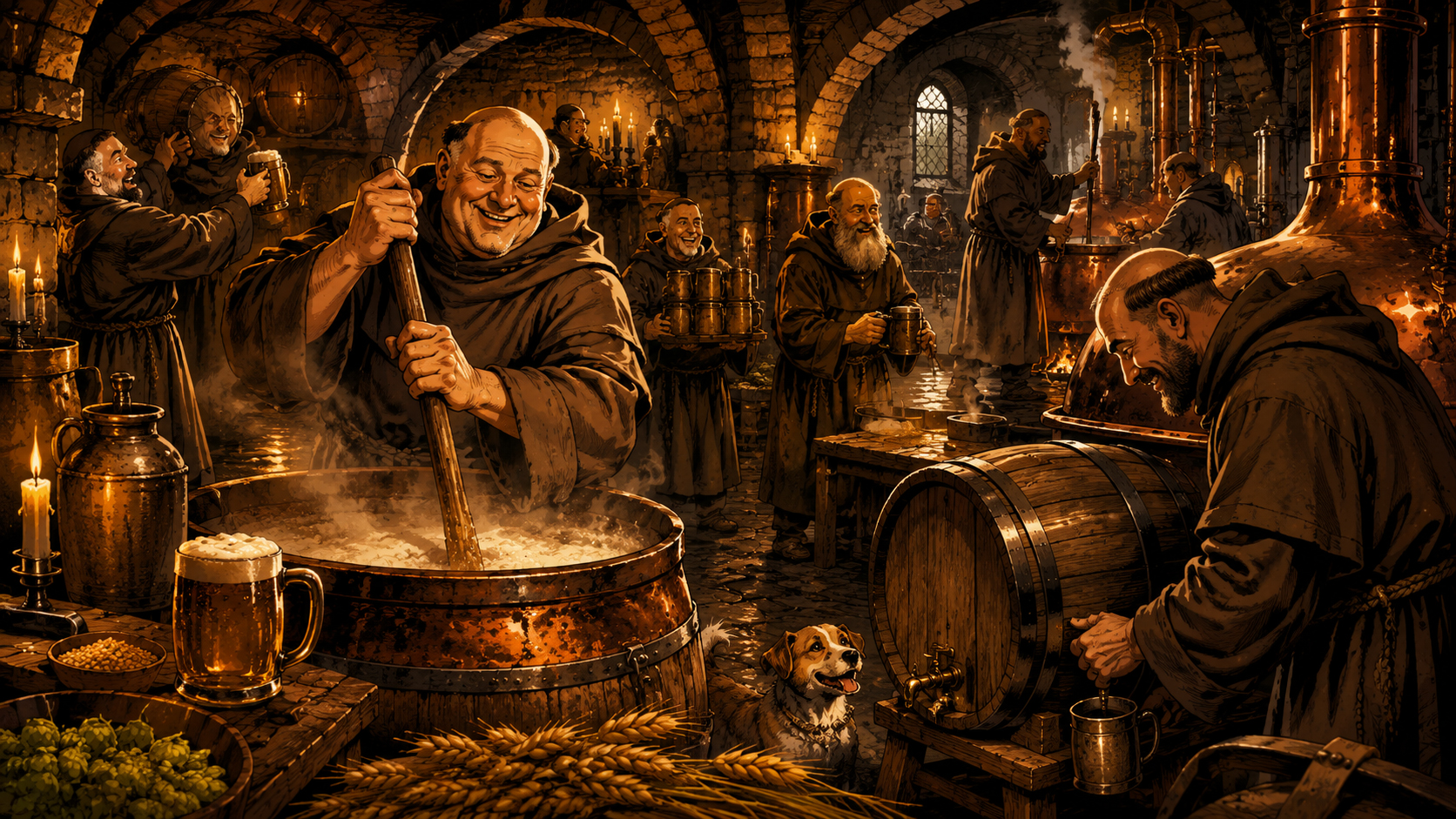
Panel 2: what monks actually helped do
The monks gather around the kettle. Their contribution is not a single invention moment. Their contribution is routine: brewing again and again, observing, storing, tasting, serving, recording, and refining.
“We do not claim the first beer,” says the abbot. “We claim the right to make the next batch slightly less confusing.”
Everyone nods. Yeast-chan approves. She likes process improvement.
Panel 3: the Ledger of Deliciousness opens
Brother Spreadsheetius lays the ledger on a wooden table. The pages list grain amounts, mash notes, cellar behavior, barrel markings, guest reactions, feast-day demands, and one mysterious entry that says only: “Do not trust the left cask.”
The young monks stare in awe. One whispers, “It is beautiful.”
The abbot replies, “It is also searchable if you have patience and a candle.”

Panel 4: hospitality needs consistency
Travelers arrive at the abbey gate. They are tired, cold, hungry, and hoping the monastery has something better than motivational chanting.
The monks serve bread, soup, and beer. Hospitality needs reliability. If a monastery welcomes guests, it helps to have food and drink that can be made again, stored properly, and served without surprise goblin flavors.
Traveler: “This beer is excellent.”
Brother Spreadsheetius: “Thank you. Page 47 predicted this.”
Panel 5: cellars become climate tools
Brother Cellarius leads the group deeper underground. “Behold,” he says, “the cellar: cold, quiet, stone-walled, and much less dramatic than the upstairs kitchen.”
Cellars helped beer mature and keep better before mechanical refrigeration. Architecture became brewing technology. Thick walls, underground space, and cool storage all helped manage beer over time.

Panel 6: refinement through repetition
The monks compare two batches. One is rough. One is smooth. One is too sweet. One is cleaner. The ledger records everything. Over time, repeated brewing plus recordkeeping creates refinement.
Malt Sensei, visiting from Episode 1, bows respectfully. “This is how craft improves,” he says. “Not by guessing loudly, but by remembering quietly.”
History note: records changed brewing
Brewing is complicated enough that records matter. Grain, water, timing, temperature, fermentation, storage, vessels, yeast behavior, and serving all affect the final drink. Even before modern science, careful observation and recordkeeping could improve consistency.
Monastic brewing was powerful because monasteries were durable institutions. They could preserve knowledge across years and generations. The cellar had memory, and the ledger made that memory harder to spill.
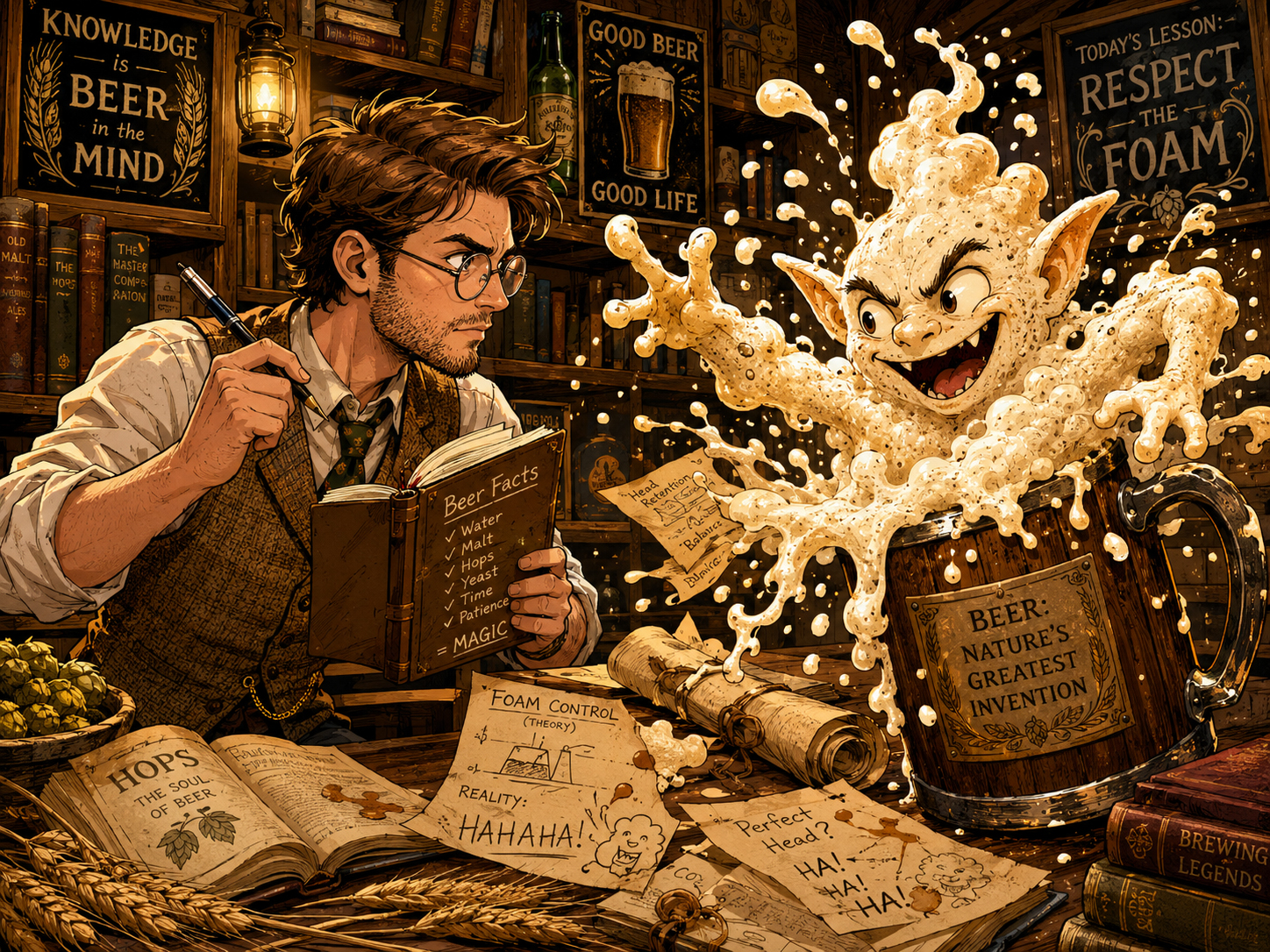
Panel 7: the Foam Goblin attacks the footnotes
The Foam Goblin returns wearing a fake monk hood. “I have simplified history,” he announces. “Monks invented beer, hops, refrigeration, and the pint glass.”
The abbey goes silent.
Brother Spreadsheetius opens the ledger to a blank disciplinary page. “Please spell your name for the correction record.”
The Foam Goblin flees.
Panel 8: the beer improves
Months pass. The beer becomes more consistent. The cellar notes grow better. Guests praise the hospitality. The abbot smiles. Brother Spreadsheetius adds a new section: “Things We Should Definitely Do Again.”
Yeast-chan stamps the page with a tiny approval mark. “Finally,” she says. “Someone respects the batch history.”
What the episode teaches
Monks matter in beer history because monasteries helped beer become more organized. Abbey brewing connected hospitality, daily life, storage, written memory, and repeated craft. This helped preserve and refine brewing knowledge.
The true history is better than the myth. Monks did not create beer from nothing. They helped make brewing more repeatable, disciplined, and recorded.
Episode moral
Beer improves when people pay attention. Monastic brewing shows the power of patience, cellars, records, hospitality, and repeated practice.
BeerDaily moral: if the beer is worth making twice, the batch notes are worth writing once.