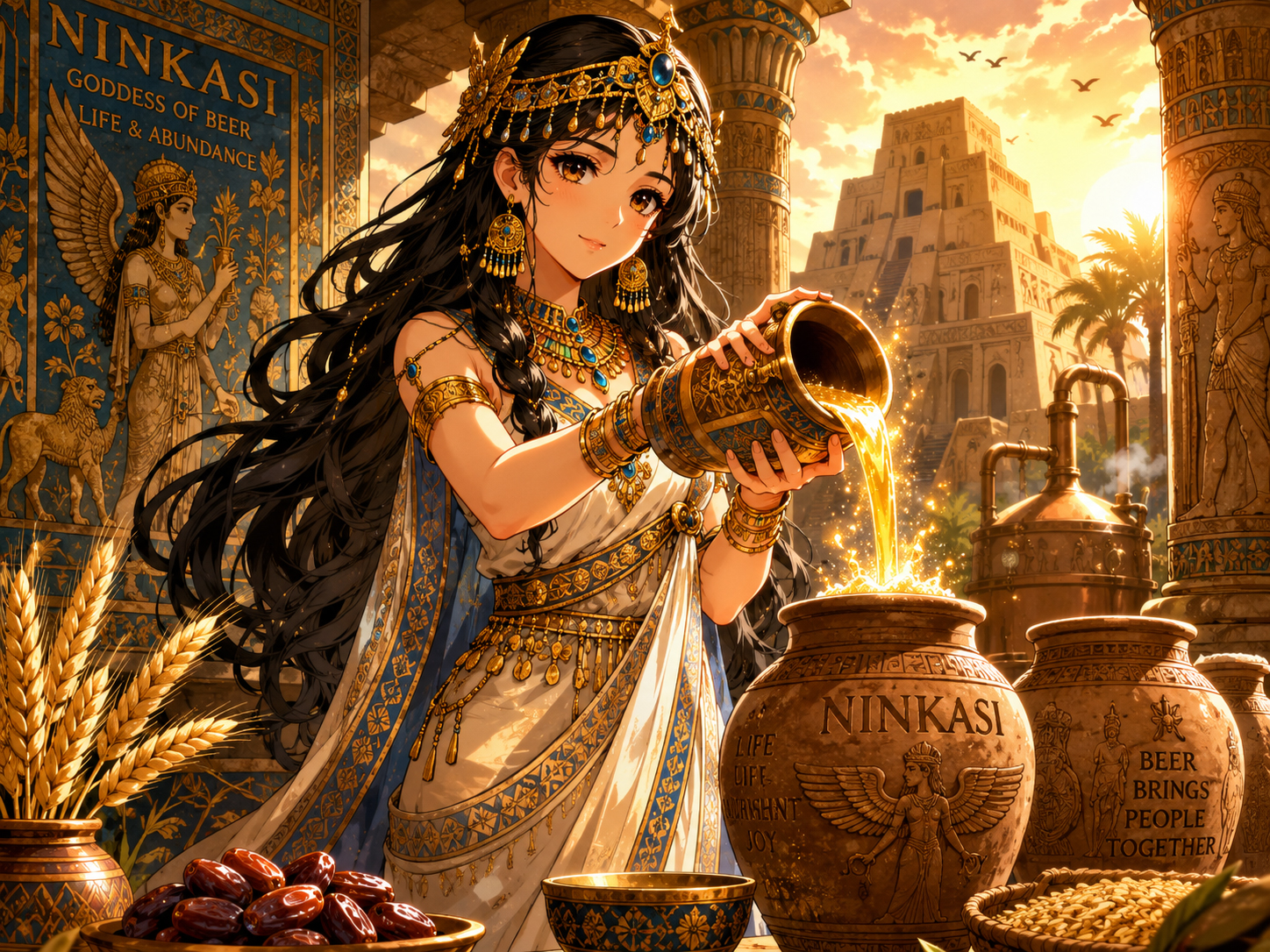
Meet Ninkasi
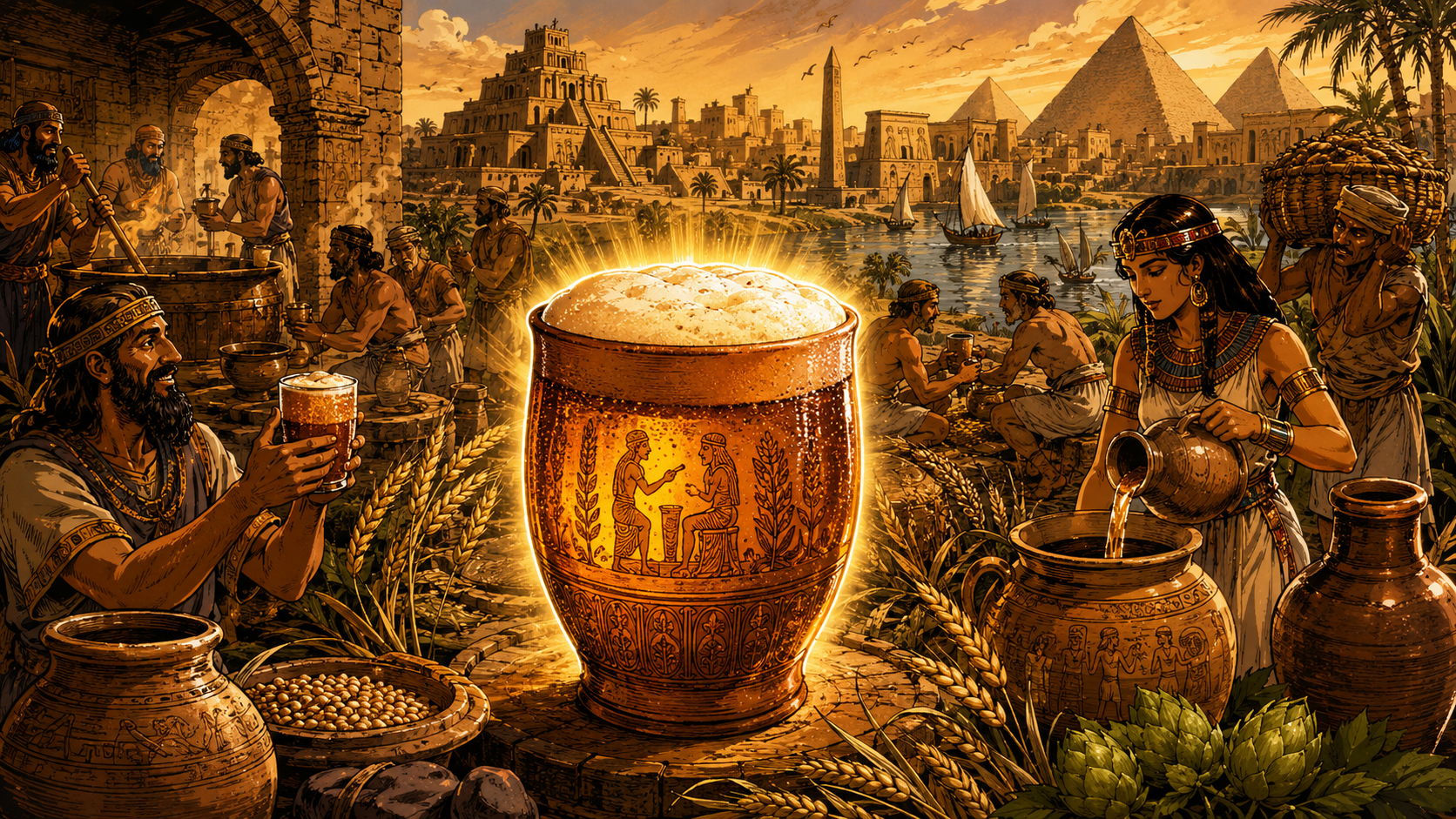
Ninkasi is one of beer history’s most important mythic figures because she shows how deeply brewing mattered in ancient Mesopotamian culture. Beer was not just a casual drink. It belonged to food, ritual, household practice, temple imagination, labor systems, and social life.
BeerDaily’s Ninkasi is not a modern mascot wearing ancient jewelry. She is a character built around a real historical idea: brewing was important enough to be sung, remembered, personified, and preserved.
Ninkasi: “A recipe feeds the batch. A song feeds the memory.”
The Hymn to Ninkasi
The Hymn to Ninkasi is famous because it praises the beer goddess while also preserving brewing process language. It is not a modern recipe card with exact temperatures and timers. It is an ancient poem that carries practical knowledge through rhythm, imagery, and repetition.
That makes it one of BeerDaily’s favorite historical objects: useful, beautiful, mysterious, incomplete, and deeply human.
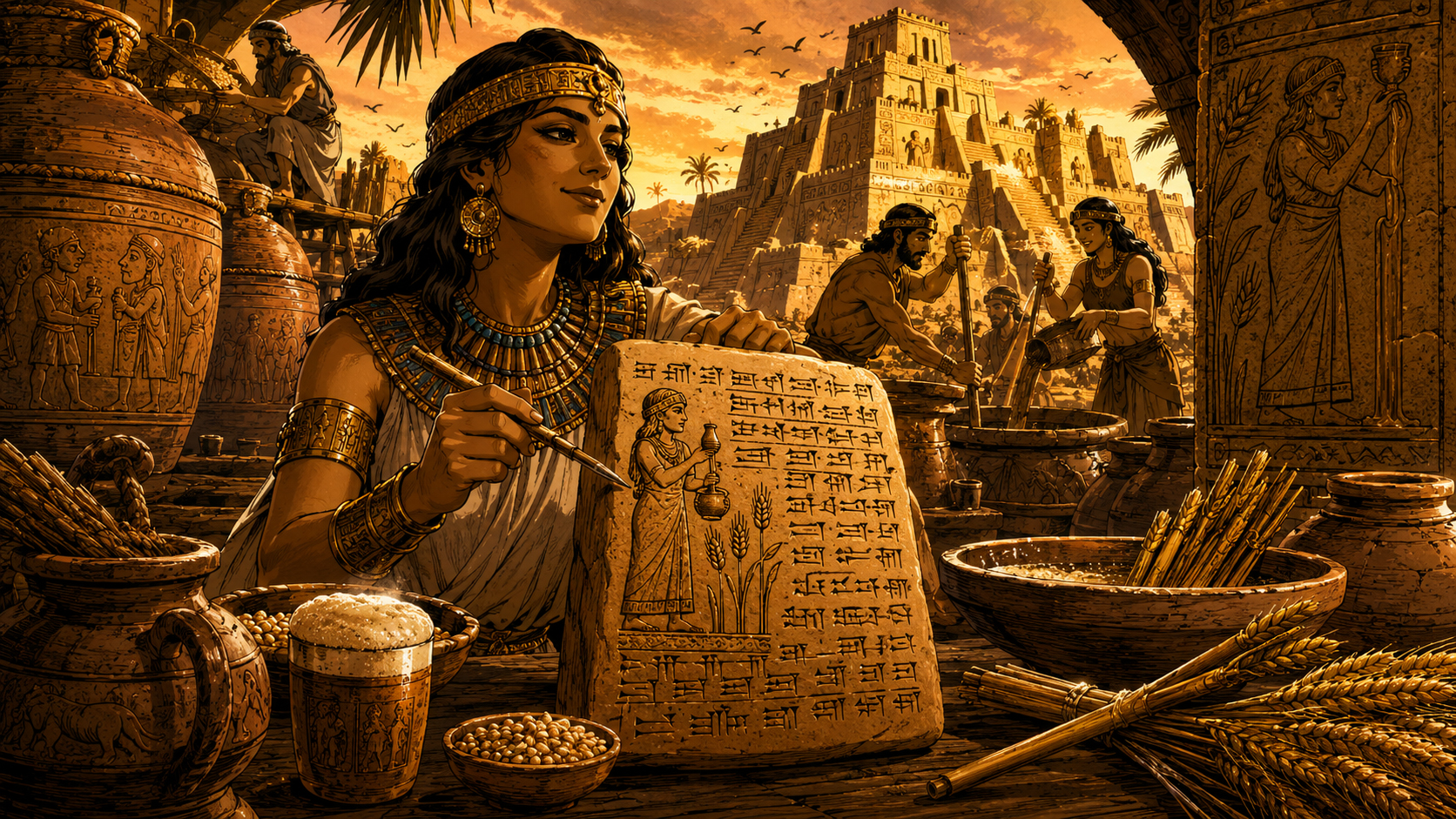
Why a recipe would become a prayer
Brewing is a sequence. Grain must be prepared. Sweetness must be extracted. Vessels must be managed. Fermentation must happen. Beer must be separated, poured, shared, and trusted.
In a world before printed manuals, songs and ritual language helped carry important knowledge. A recipe-prayer is not silly. It is ancient process documentation with better rhythm.
Ninkasi and the clay jar
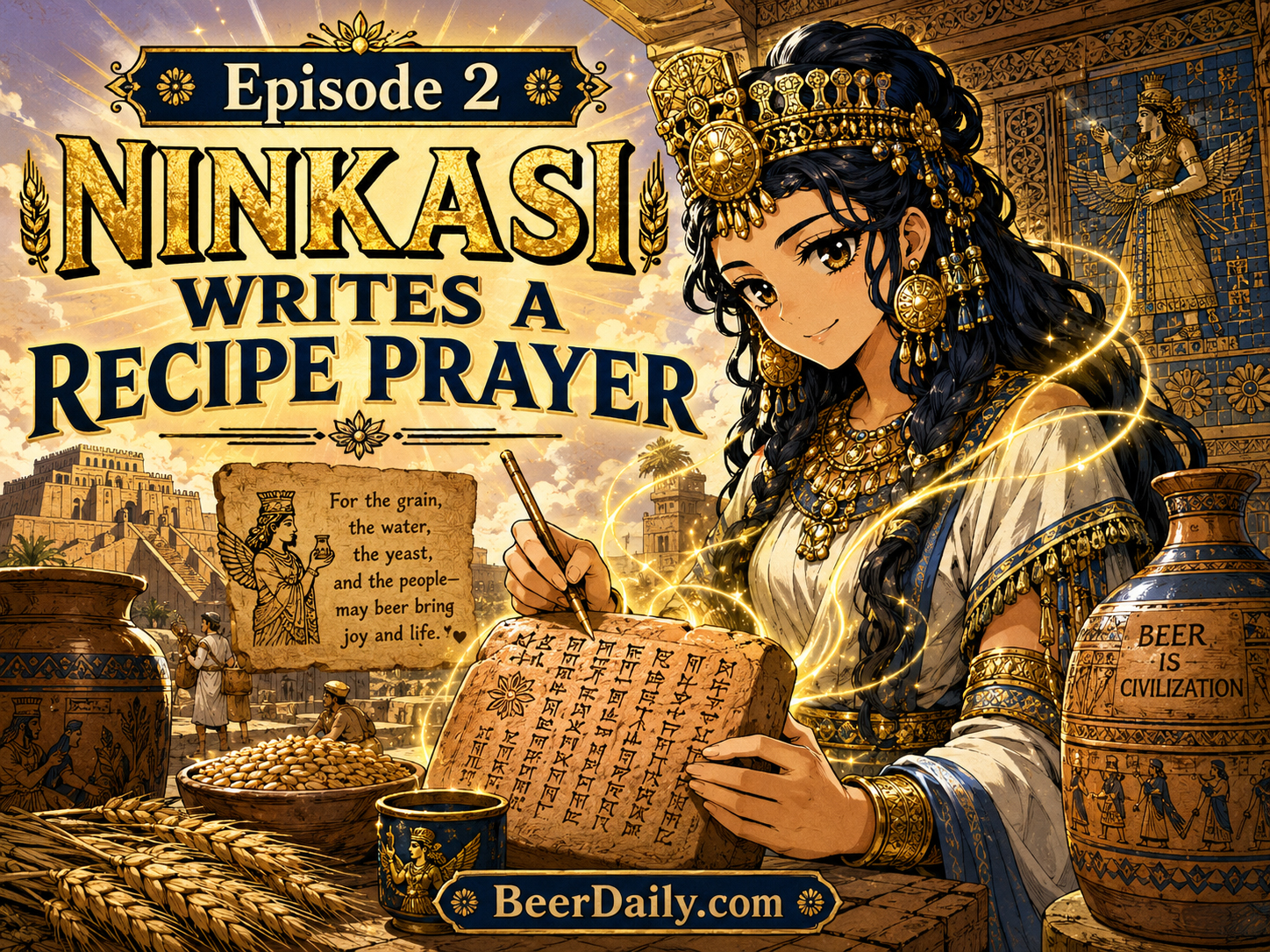
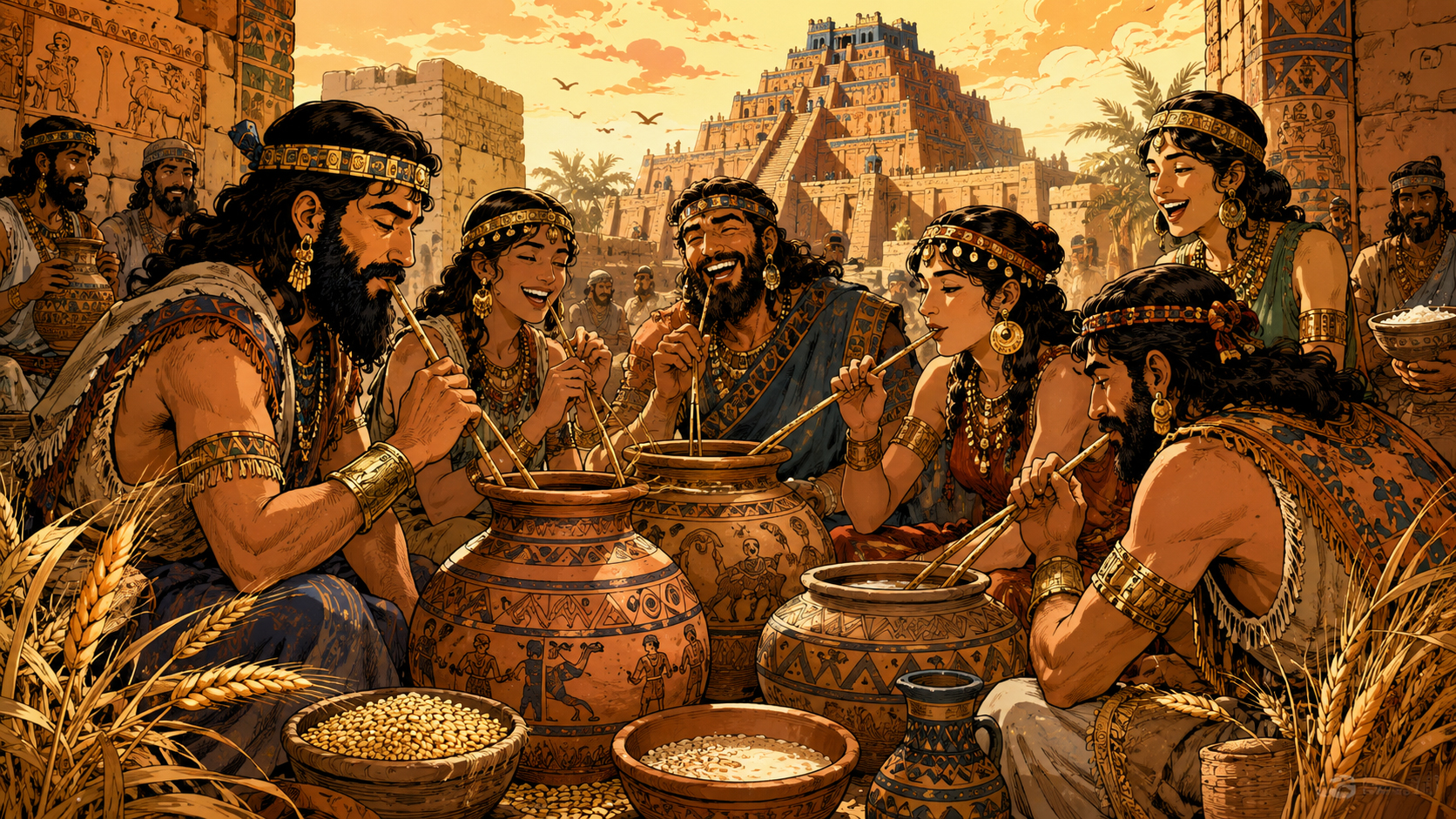
Ninkasi’s world is a world of clay jars, grain baskets, water, heat, thick beer, straws, sediment, and shared vessels. Beer was not yet the cold, clear, filtered drink many modern people imagine. Ancient beer could be cloudy, nourishing, sweet, sour, grainy, and alive.
The clay jar is not a prop. It is technology. It stores, ferments, serves, and remembers. In the BeerDaily universe, every ancient clay jar has seen things and refuses to gossip without a footnote.
Ninkasi versus the Foam Goblin
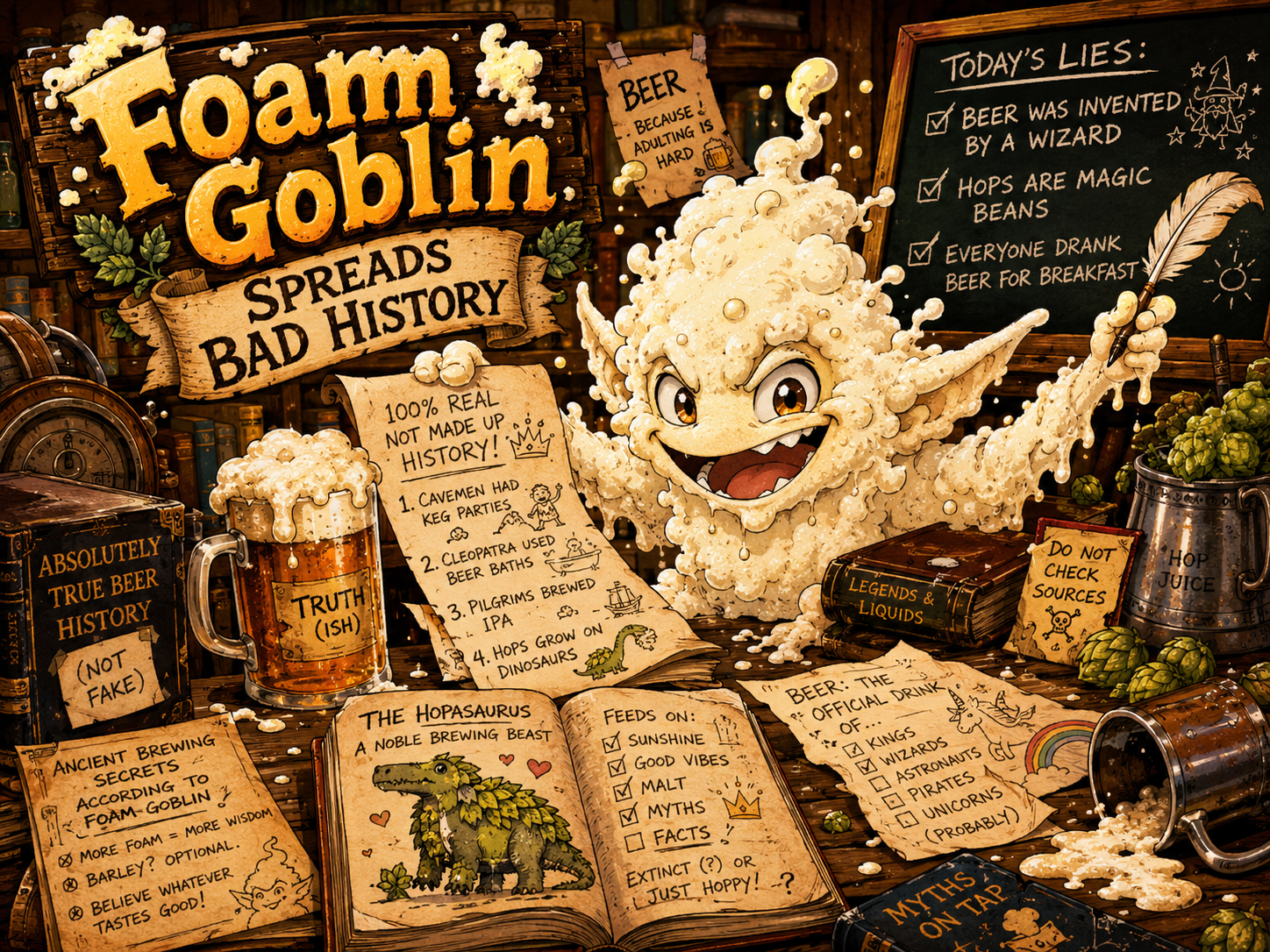
Foam Goblin tries to reduce ancient beer to one lazy sentence: “They drank beer because water was bad.” Ninkasi does not even blink.
“Water mattered,” she says. “But so did grain, ritual, labor, taste, offering, memory, hospitality, and the joy of transformation.”
Foam Goblin opens his mouth to argue. The clay tablet closes itself.
Ancient beer was not modern beer in costume
Ninkasi also reminds us not to force modern expectations onto ancient beer. Ancient Sumerian beer was not a modern IPA, pilsner, stout, or craft flight. It belonged to its own world of ingredients, vessels, methods, climate, and culture.
The point is not to pretend ancient beer tasted like our beer. The point is to understand why fermented grain mattered so much that people built stories, rituals, and divine figures around it.
Ninkasi and the brewers
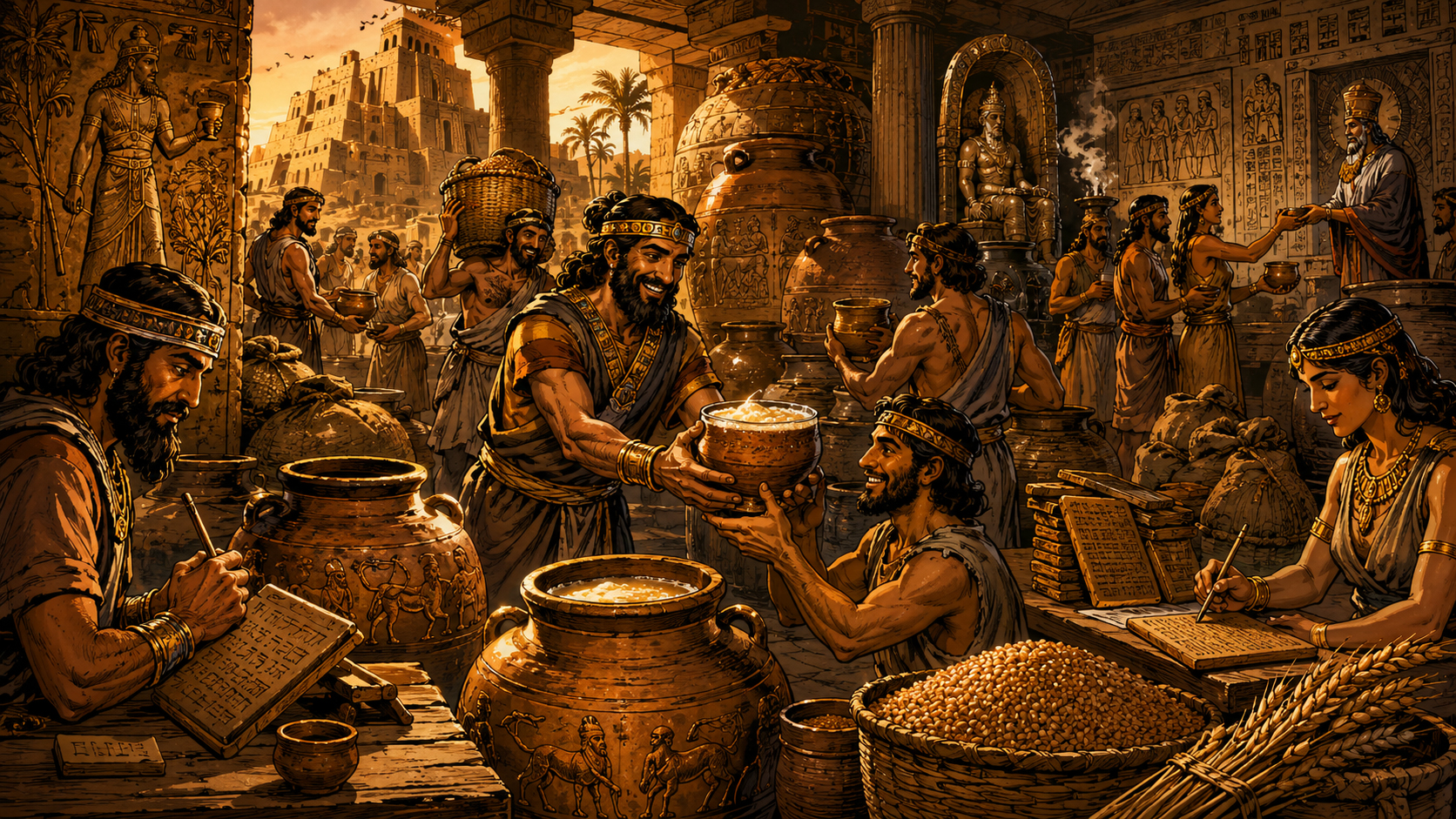
In BeerDaily manga scenes, Ninkasi is surrounded by brewers, workers, scribes, barley, jars, and tiny yeast spirits. She does not replace human labor. She honors it. Brewing is work. Brewing is memory. Brewing is repetition. Brewing is the art of turning grain into social meaning.
She is less “party goddess” and more “patron of the entire ancient brewing workflow.” Also, she has better lighting than everyone else.
The BeerDaily version of Ninkasi
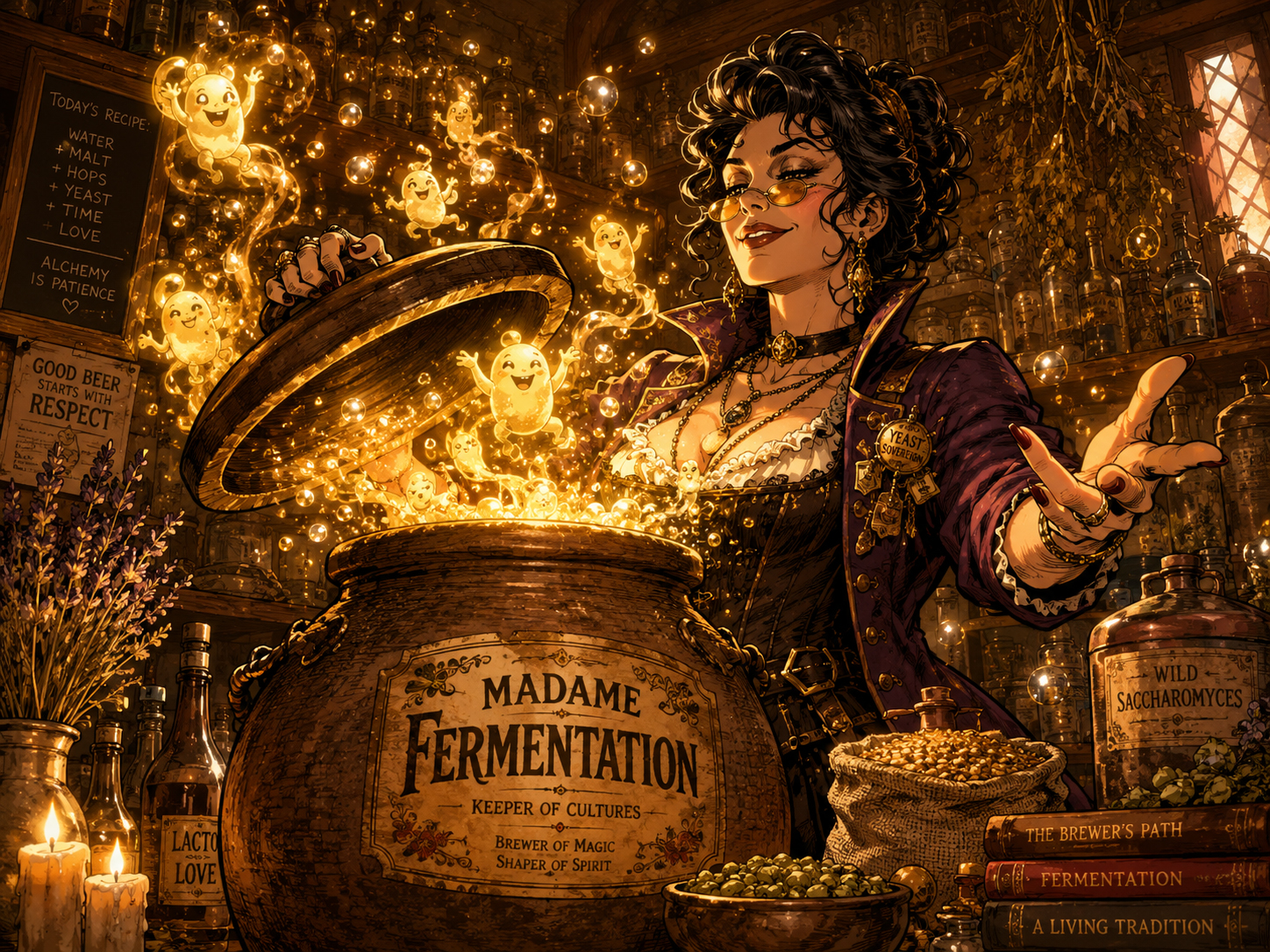
BeerDaily’s Ninkasi is warm, commanding, funny, and patient. She respects the ancient craft, corrects bad myths, and knows that a good brew requires more than ingredients. It requires memory.
When Professor Pint gets too academic, she reminds him that beer is also joy. When Foam Goblin gets too loud, she lets the tablet handle it. When Barley Boy gets too proud, she points at Yeast-chan.
What Ninkasi teaches
Ninkasi teaches that beer history is not just technical history. It is cultural history. A brewing process can be practical and sacred. A drink can be food and symbol. A recipe can be instruction and poetry.
That is why she belongs near the beginning of BeerDaily. Before hops, before monasteries, before lager caves, before industrial breweries, before craft taprooms, there was grain, water, vessels, fermentation, memory, and song.
BeerDaily moral: the oldest beer stories do not begin with brands. They begin with grain, gods, jars, and memory.