Opening scene: the clay tablet waits
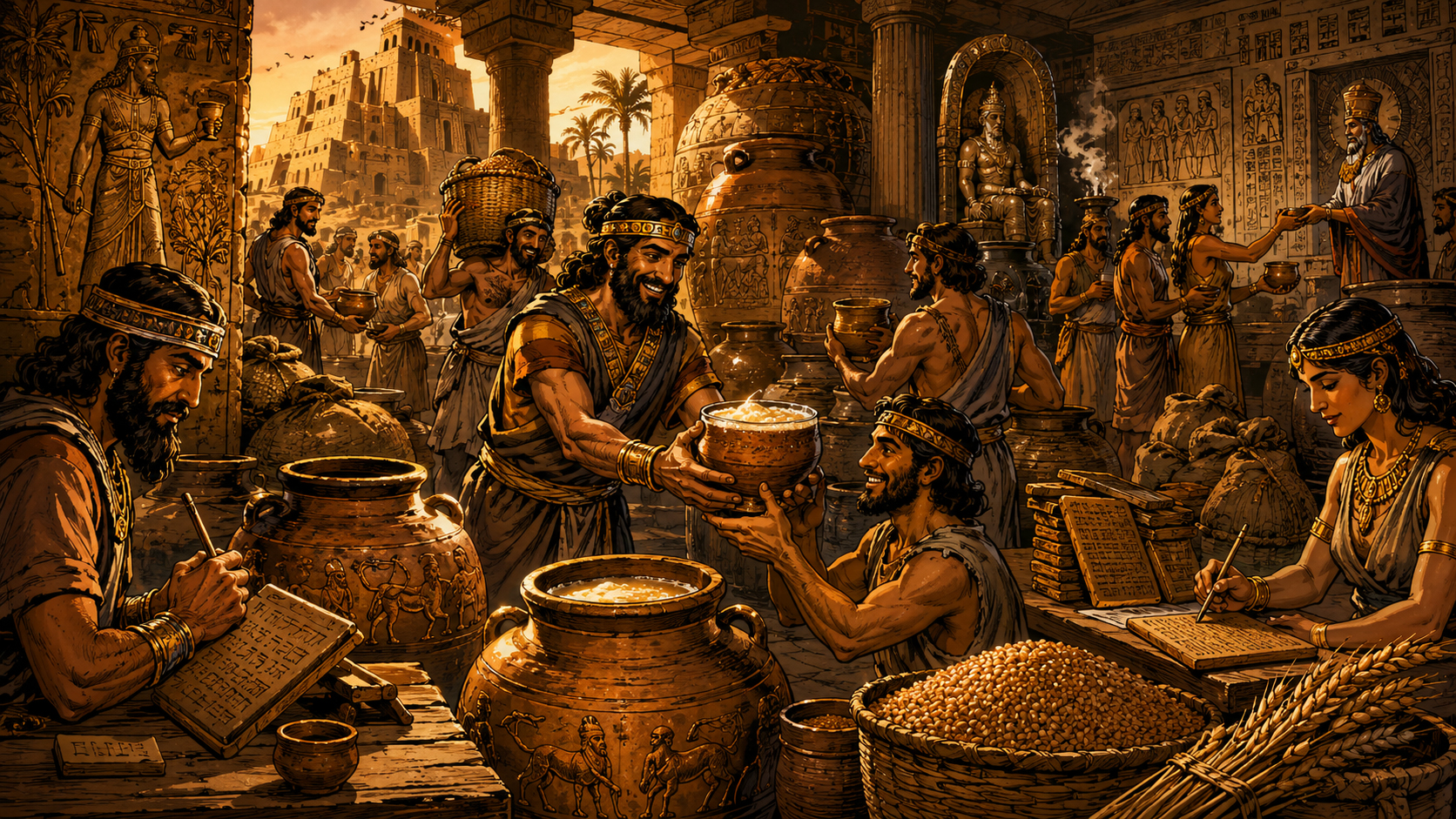
A clay tablet sits in the warm light of an ancient brewhouse. It is blank, nervous, and fully aware that wet clay has no spellcheck.
Barley Boy, still recovering from Episode 1, whispers, “Is this another fermentation thing?” Yeast-chan adjusts her tiny clipboard. “Everything is a fermentation thing if you wait long enough.”
Clay Tablet: “Please write clearly. I have to survive several thousand years.”
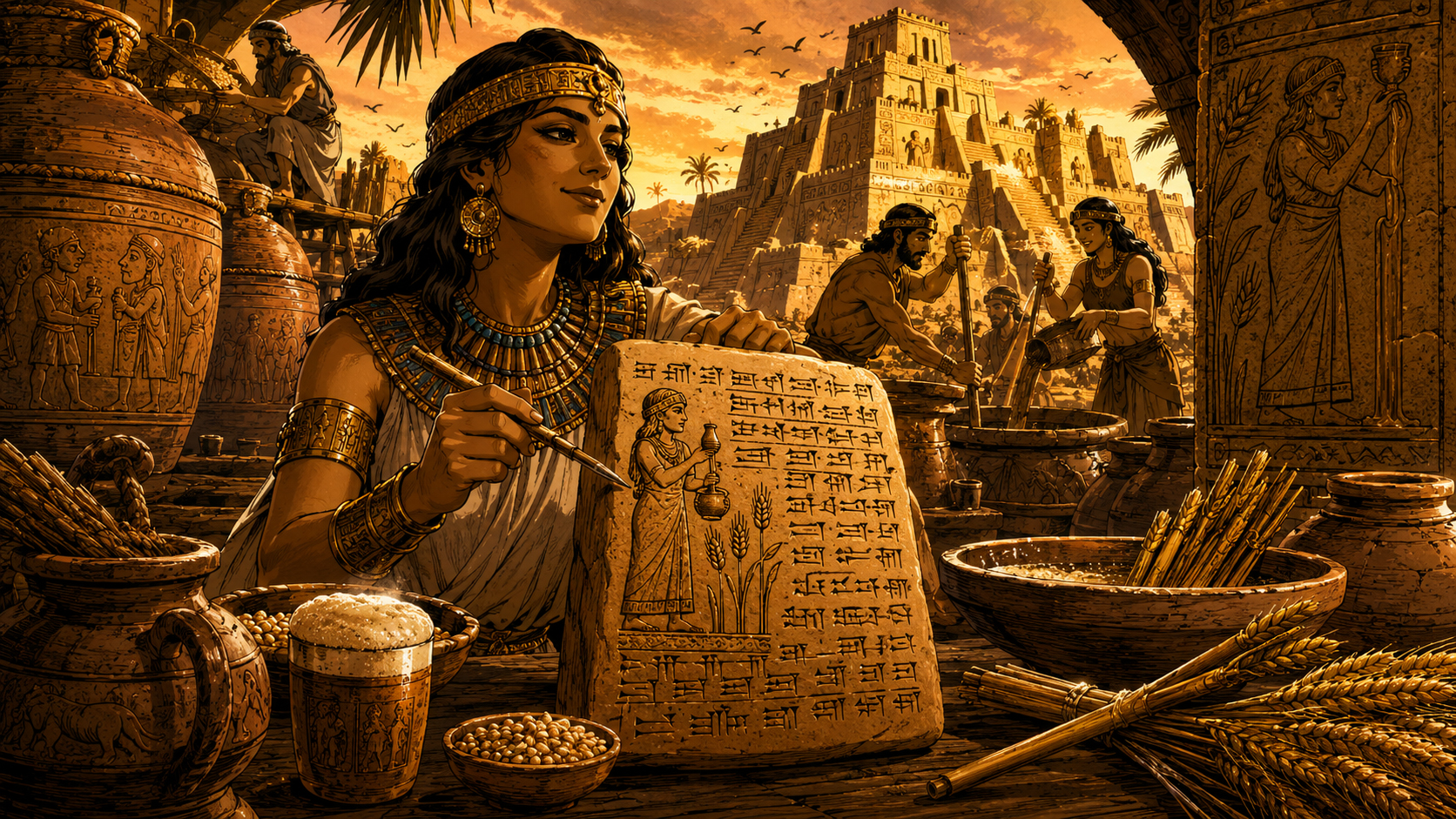
Panel 1: Ninkasi enters the brewhouse
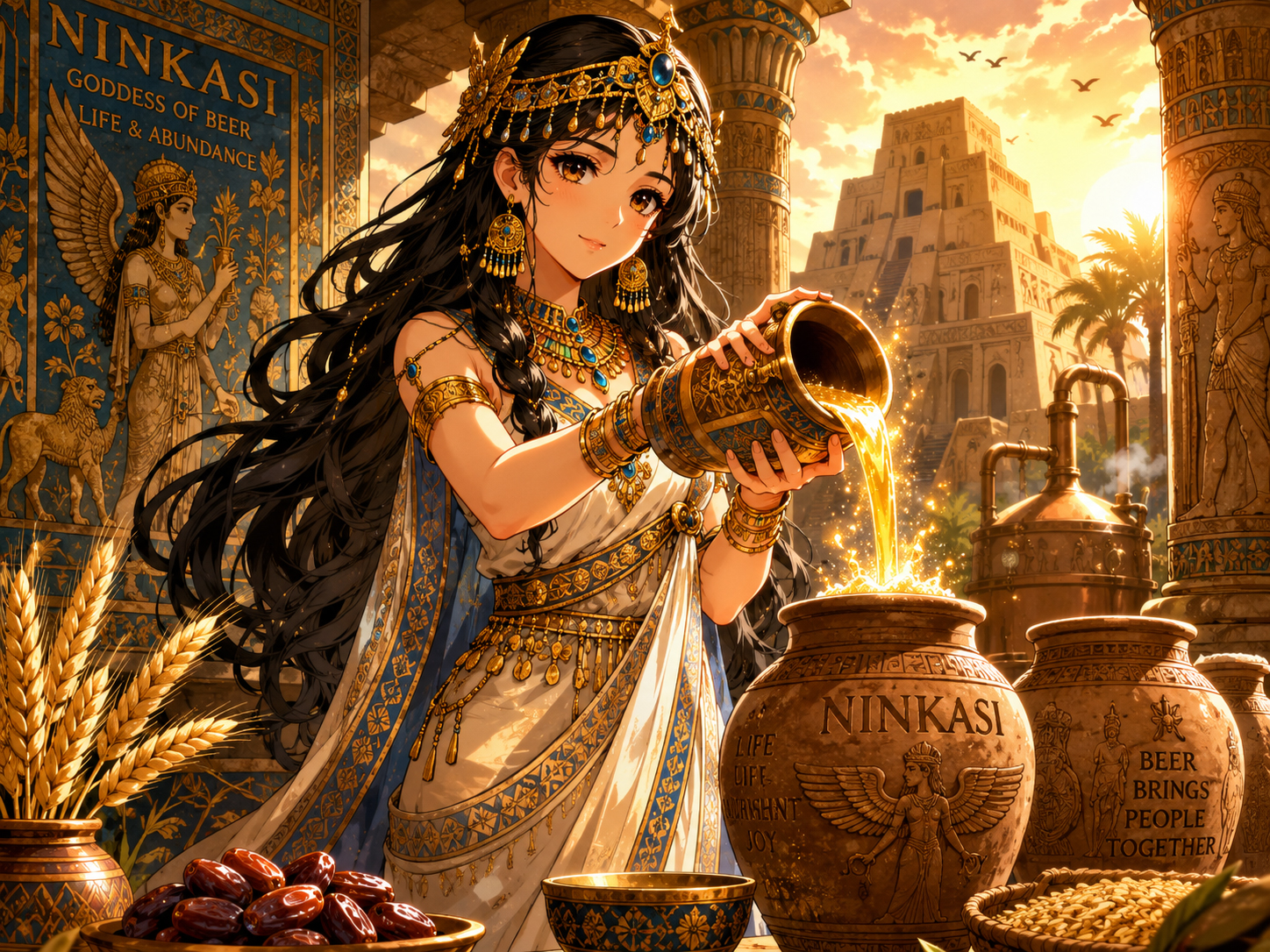
Ninkasi enters with grain in one hand and a cup in the other. The room goes quiet. Even the bubbles behave. She looks at the jars, the malt, the sweet liquid, the workers, and the tablet.
“A recipe is useful,” she says. “A prayer is remembered. So today, we do both.”
Panel 2: the problem of remembering
Brewing is not one action. It is a sequence. Grain must be prepared. Water must be managed. Sweetness must be coaxed out. Fermentation must be protected. The beer must be separated, poured, shared, and praised.
Ancient brewers did not have laminated brew sheets taped to stainless tanks. They had memory, repetition, oral tradition, ritual, song, and people who would absolutely complain if the beer was wrong.
Panel 3: recipe memory becomes sacred memory
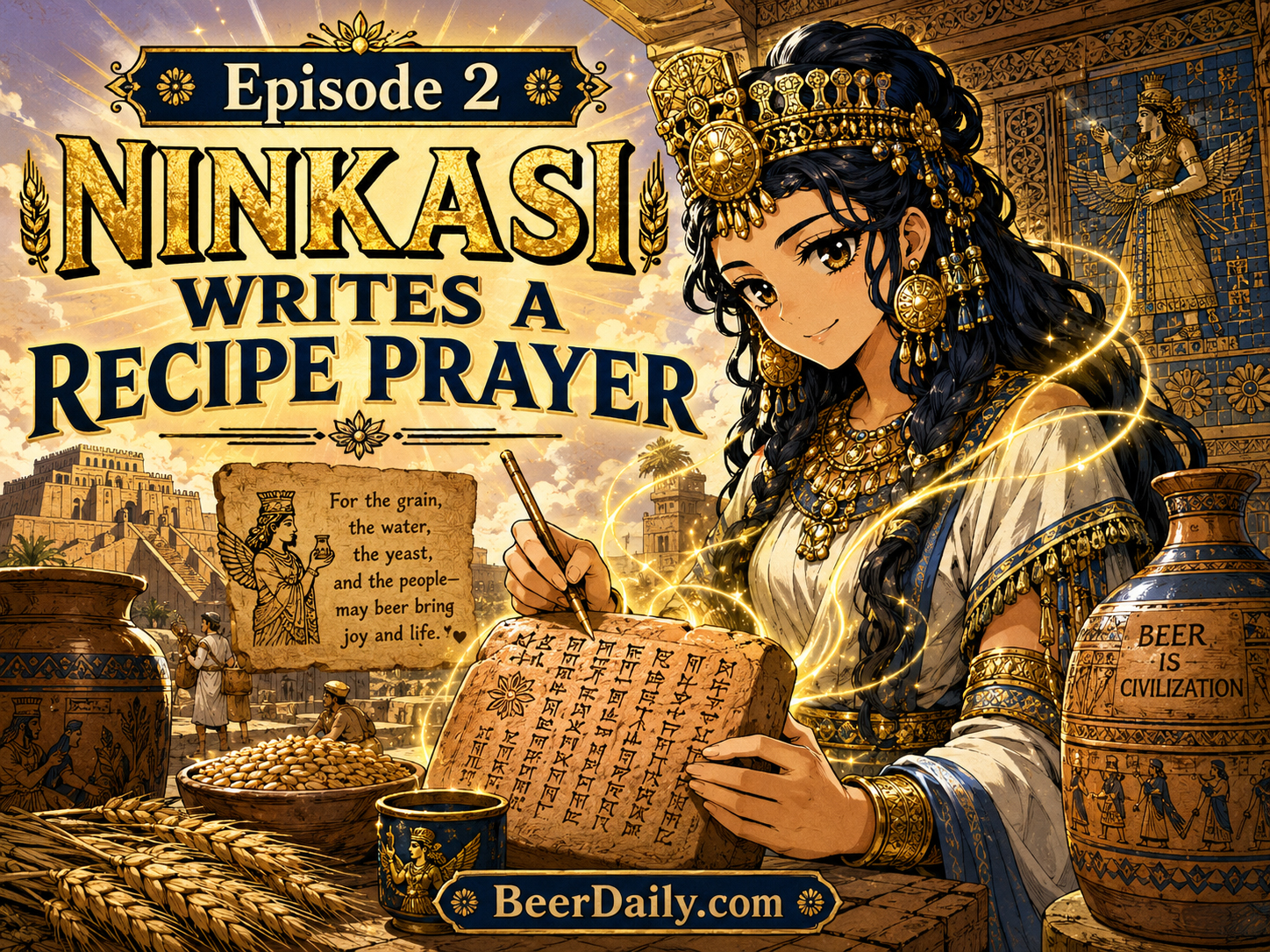
Ninkasi begins to chant. The chant is not just pretty. It carries instructions. It names actions. It honors the process. It helps people remember what to do.
Professor Pint steps into the corner with a chalkboard and writes: “Song + sequence = ancient workflow management.”
Panel 4: Barley Boy misunderstands holiness
Barley Boy raises his hand. “So if the recipe is a prayer, does that make me sacred?”
Ninkasi smiles. “You are useful, beloved, and historically significant.”
Barley Boy beams. Yeast-chan mutters, “That is not a yes.”
Panel 5: the brewers repeat the song
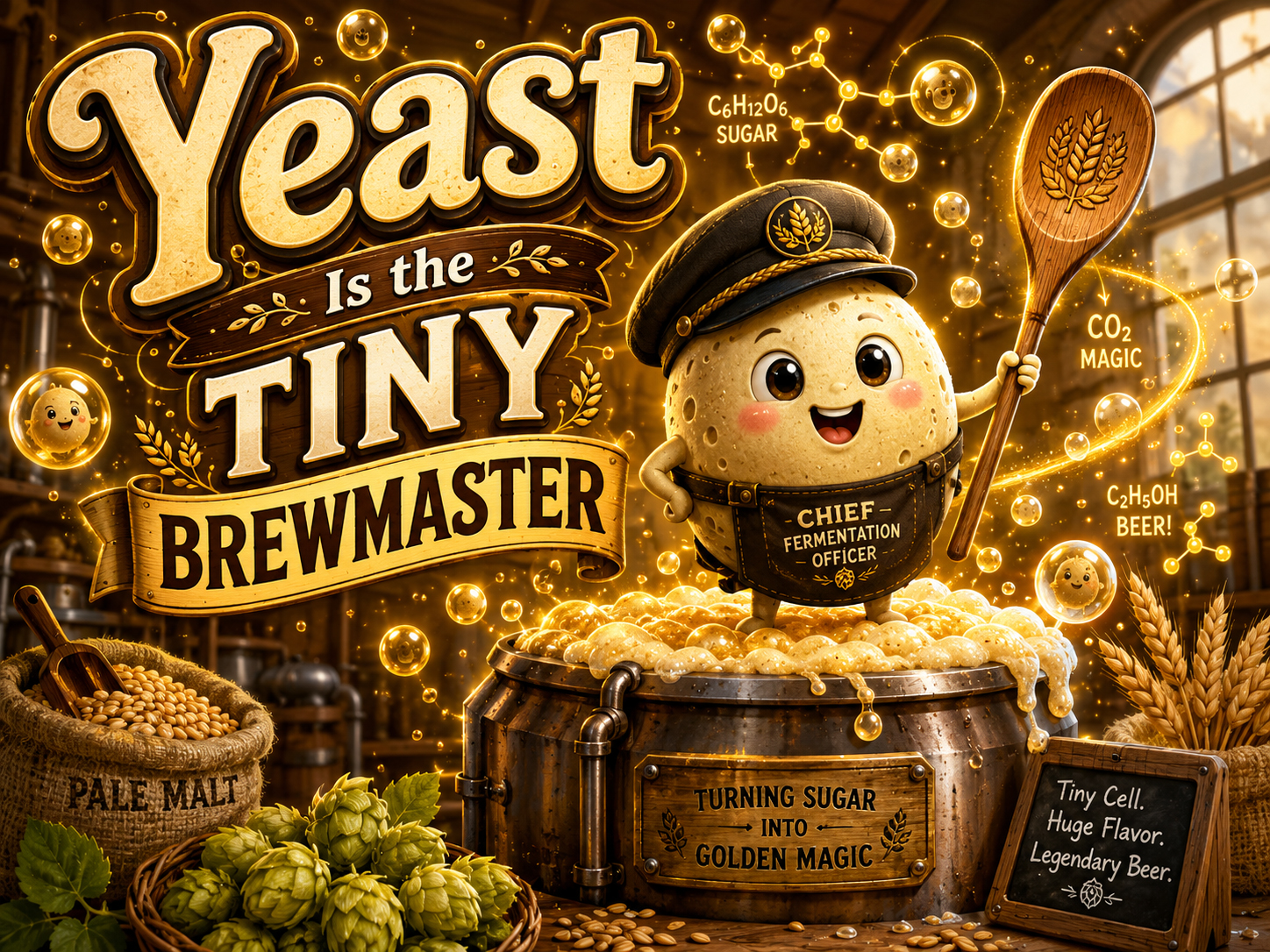
The brewers repeat the lines. The tablet receives marks. The jars warm. The sweet liquid waits. Yeast-chan bounces impatiently near the vessel, ready to turn sugar into bubbles and destiny.
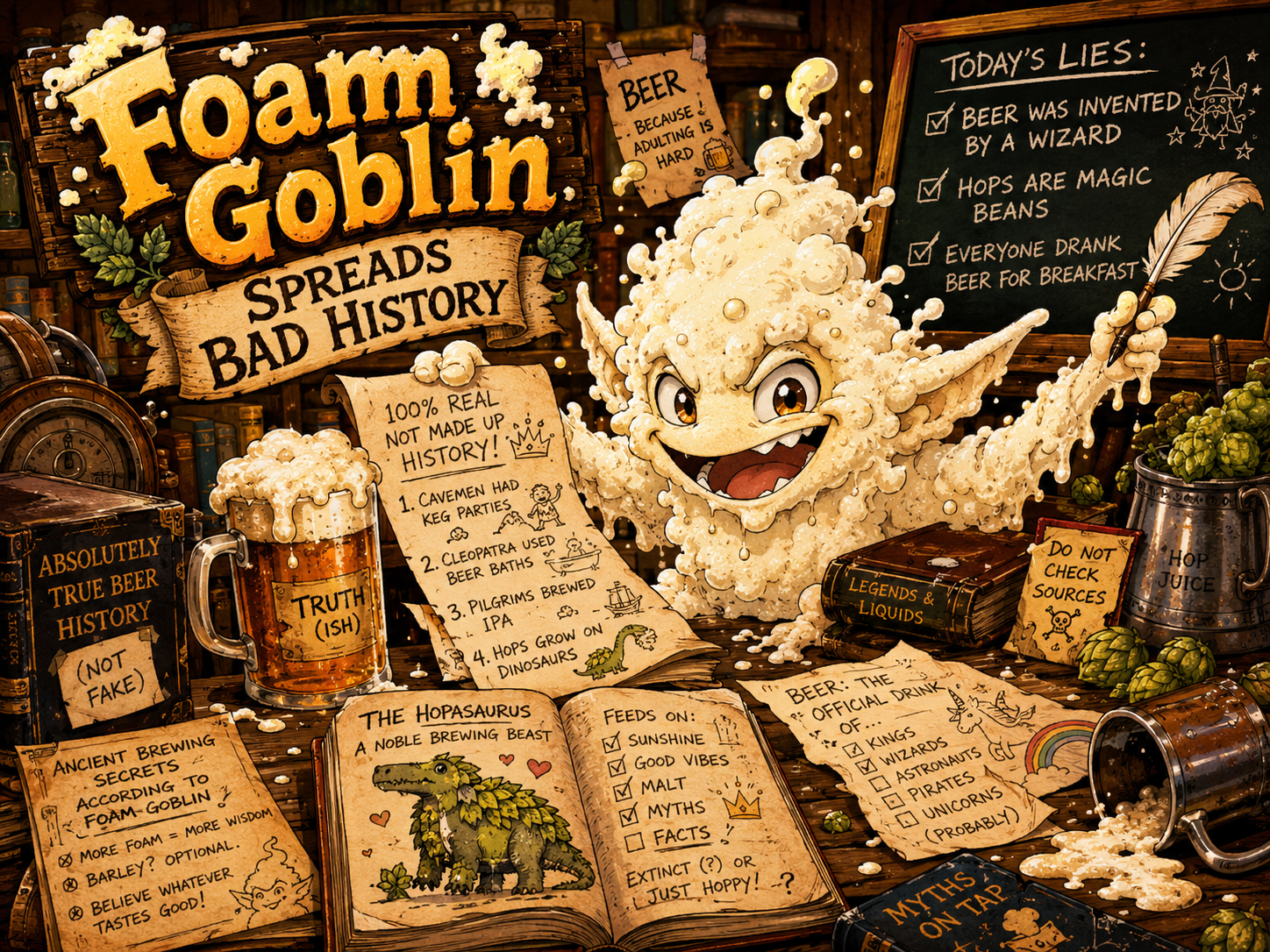
The Foam Goblin appears at the doorway and says, “Actually, ancient beer was invented because everyone was terrified of water.” The entire room turns and stares.
Ninkasi: “Remove him from the brewhouse.”
Foam Goblin: “But my myth is easy to remember!”
Professor Pint: “That is exactly the problem.”
History note: why the Hymn to Ninkasi matters
The real Hymn to Ninkasi is one of the great treasures of beer history because it preserves brewing knowledge inside praise poetry. It is not a modern recipe card with exact temperatures, timers, and sanitation notes. It is an ancient cultural text that links brewing, memory, divinity, and process.
That is what makes it powerful. It shows that beer was meaningful enough to be sung about, remembered, offered, repeated, and placed inside sacred imagination.

The beer recipe was not just technical
Modern brewing separates recipe, process, equipment, quality control, and branding into different categories. Ancient brewing did not always divide the world that way. A beer process could also be a household practice, a temple activity, a communal memory, and a divine gift.
Ninkasi’s recipe-prayer reminds us that useful knowledge often travels best when it has rhythm, story, and ceremony.
Panel 6: Yeast-chan adds the invisible part
Ninkasi finishes the chant. The brewers nod. The tablet glows in the firelight. Then Yeast-chan climbs onto the rim of the vessel.
“Lovely song,” she says. “Now the invisible workforce begins.”
The vessel begins to bubble. Barley Boy hears the same song from Episode 1, but now it has words.
Panel 7: the first BeerDaily citation battle
The Foam Goblin returns wearing fake scholarly robes. “I have another theory,” he declares. “Ancient Sumerians invented IPA.”
Hop Samurai, still centuries early but spiritually offended, appears in a cloud of hop leaves. “Incorrect timeline,” he says.
Ninkasi points to the door. The Foam Goblin leaves again, dragging a chalkboard full of nonsense.
What the episode teaches
This episode is funny, but the lesson is serious. Brewing is a process, and processes must be remembered. Ancient people used song, ritual, repetition, and sacred language to preserve important knowledge.
The Hymn to Ninkasi shows beer as culture, not merely chemistry. It links the practical act of brewing to the symbolic world of gods, offerings, community, and memory.
Episode moral
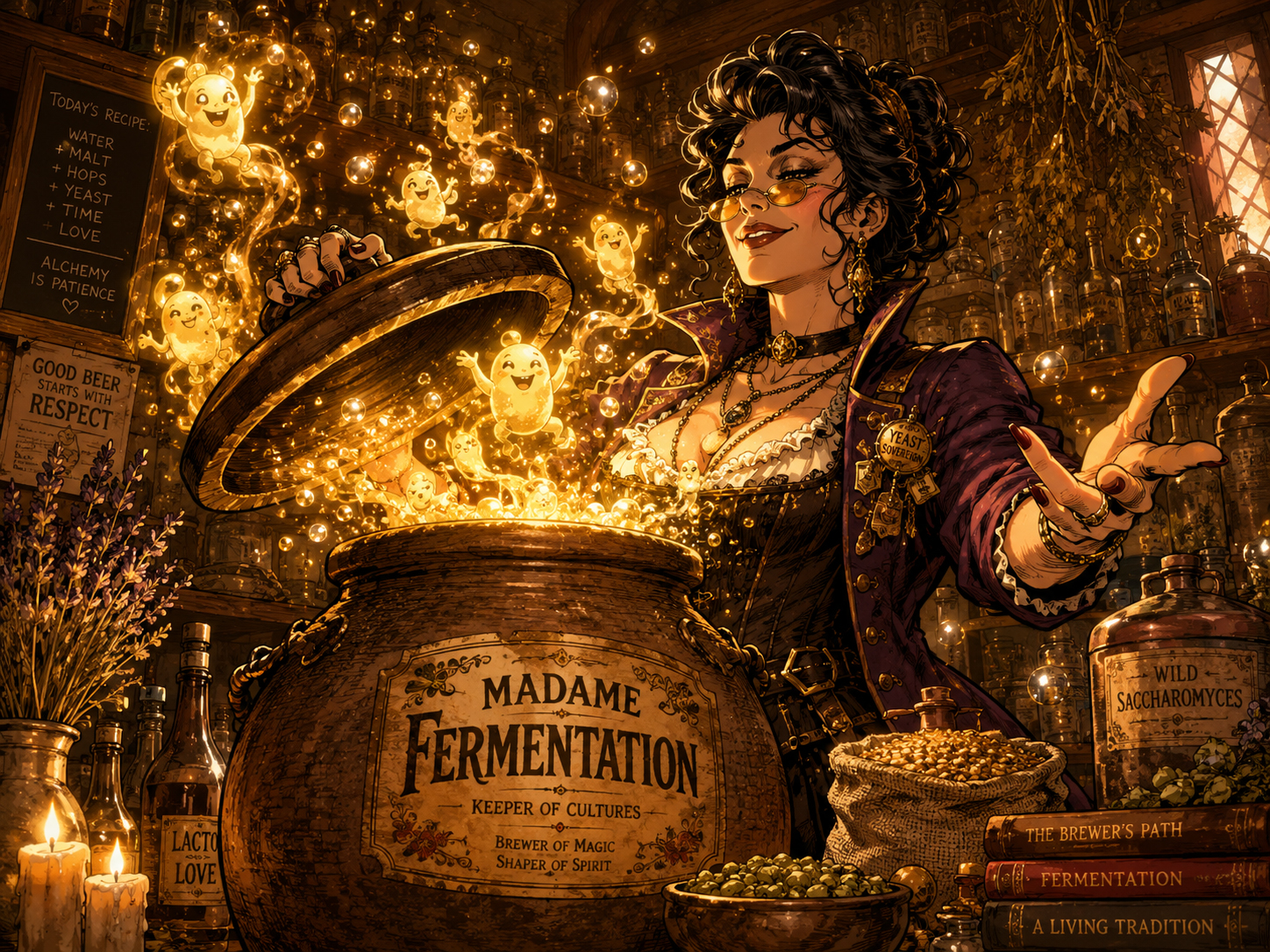
Beer history begins with grain, but it becomes civilization when people remember the method, repeat the method, honor the method, and teach the method to others.
Ninkasi writes the recipe-prayer because the beer is not only something to drink. It is something to carry forward.
BeerDaily moral: if the recipe is important enough, give it rhythm. If the history is important enough, keep the Foam Goblin away from the chalk.