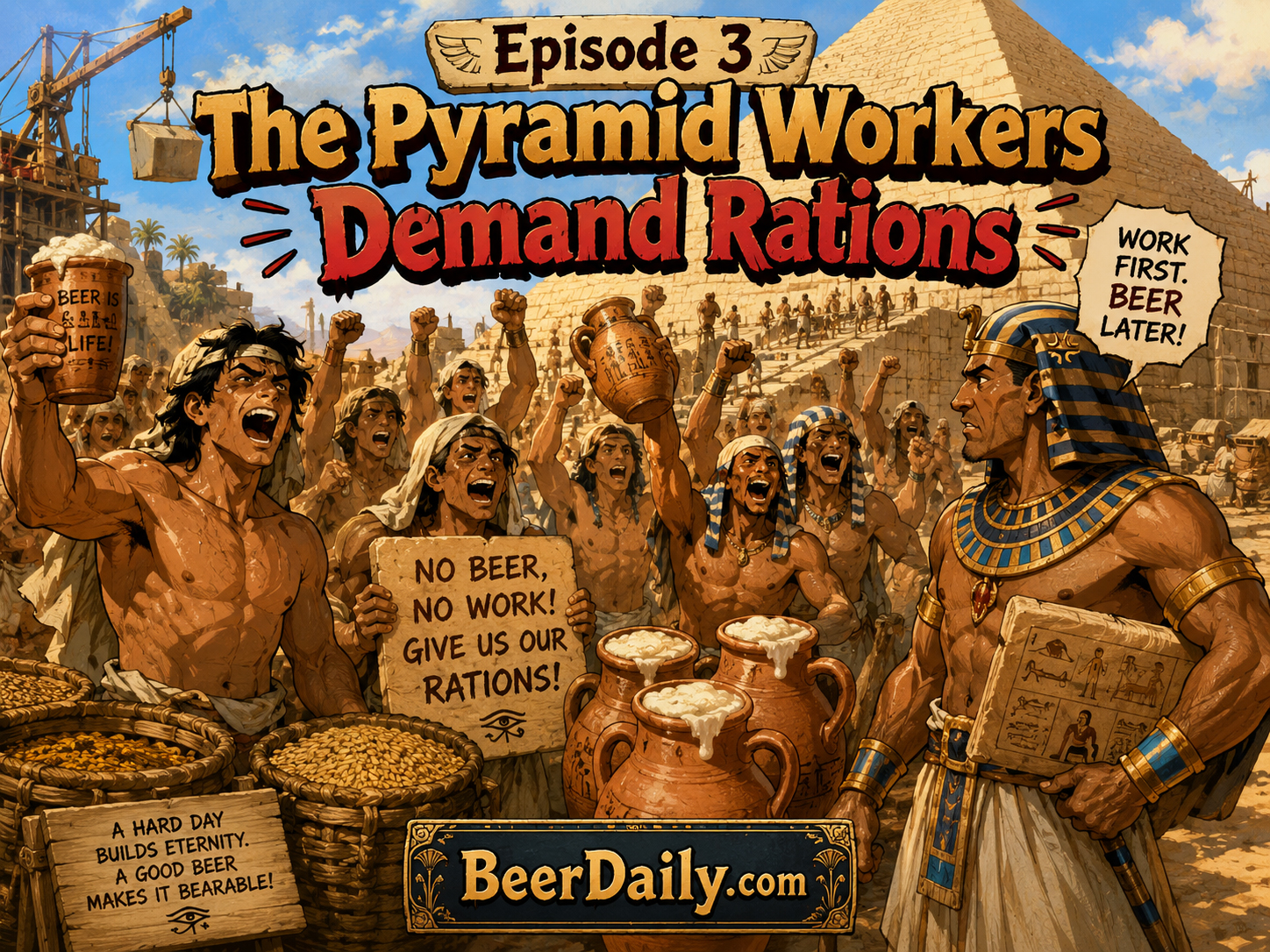
Opening scene: the worksite wakes up
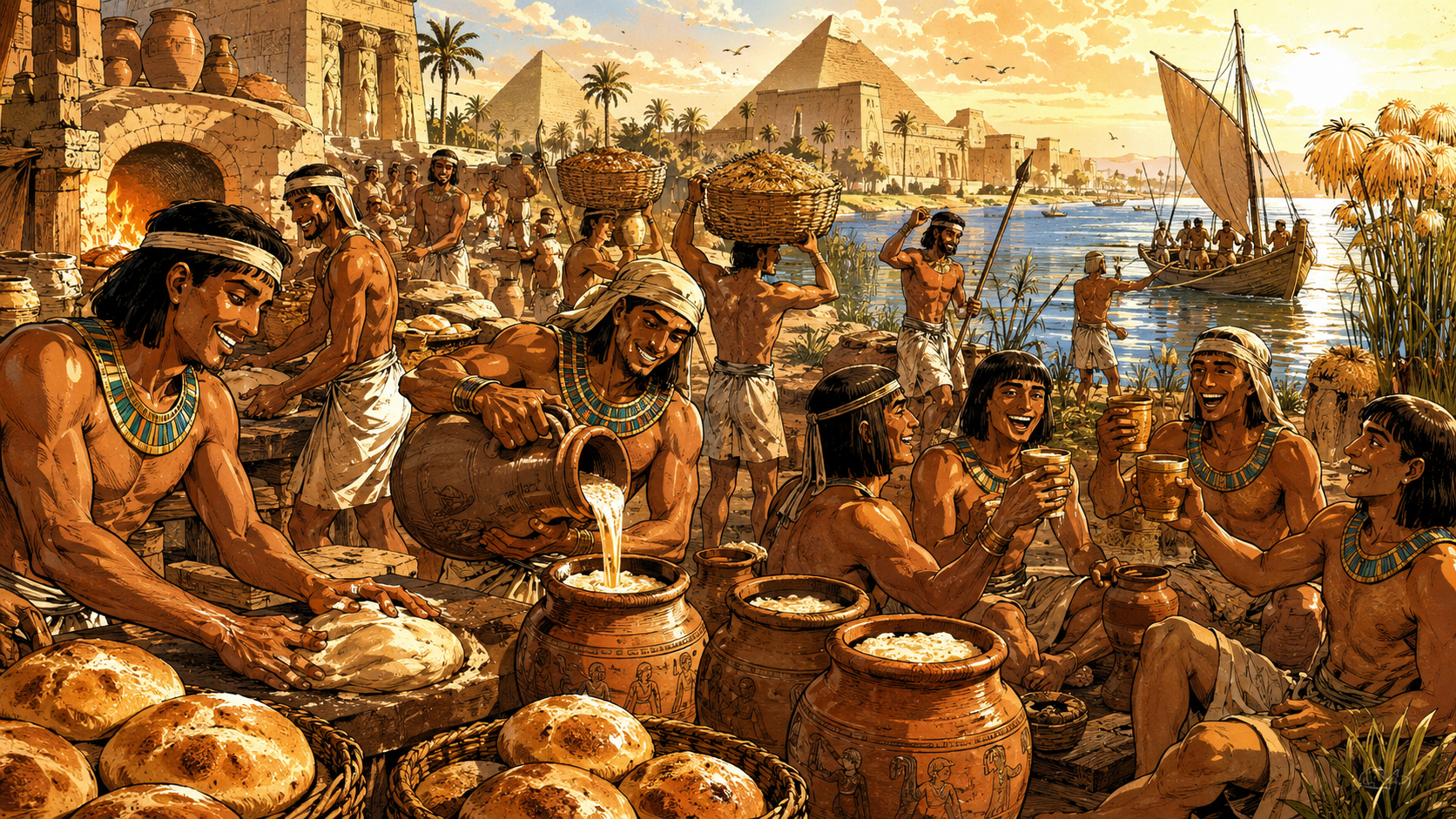
The sun rises over the Nile. Grain baskets arrive. Bakers knead dough. Brewers prepare jars. Workers gather near the project site, looking strong, dusty, and very aware that civilization does not build itself on vibes alone.
A foreman climbs onto a block of stone and announces, “Today we move history.” A worker raises his hand and replies, “Excellent. Does history come with rations?”
Worker: “We respect the monument. We also respect lunch.”
Panel 1: bread and beer are cousins
The bakery and brewery sit side by side. Bread and beer both begin with grain. One becomes a loaf. One becomes a drink. Both feed people, support labor, and keep the ancient food system moving.
Barley Boy visits from Episode 1 wearing a linen tourist scarf. “So I could have become bread?” he asks. Yeast-chan nods. “Or beer. Or paperwork. Egypt is full of possibilities.”
Panel 2: the scribe counts everything
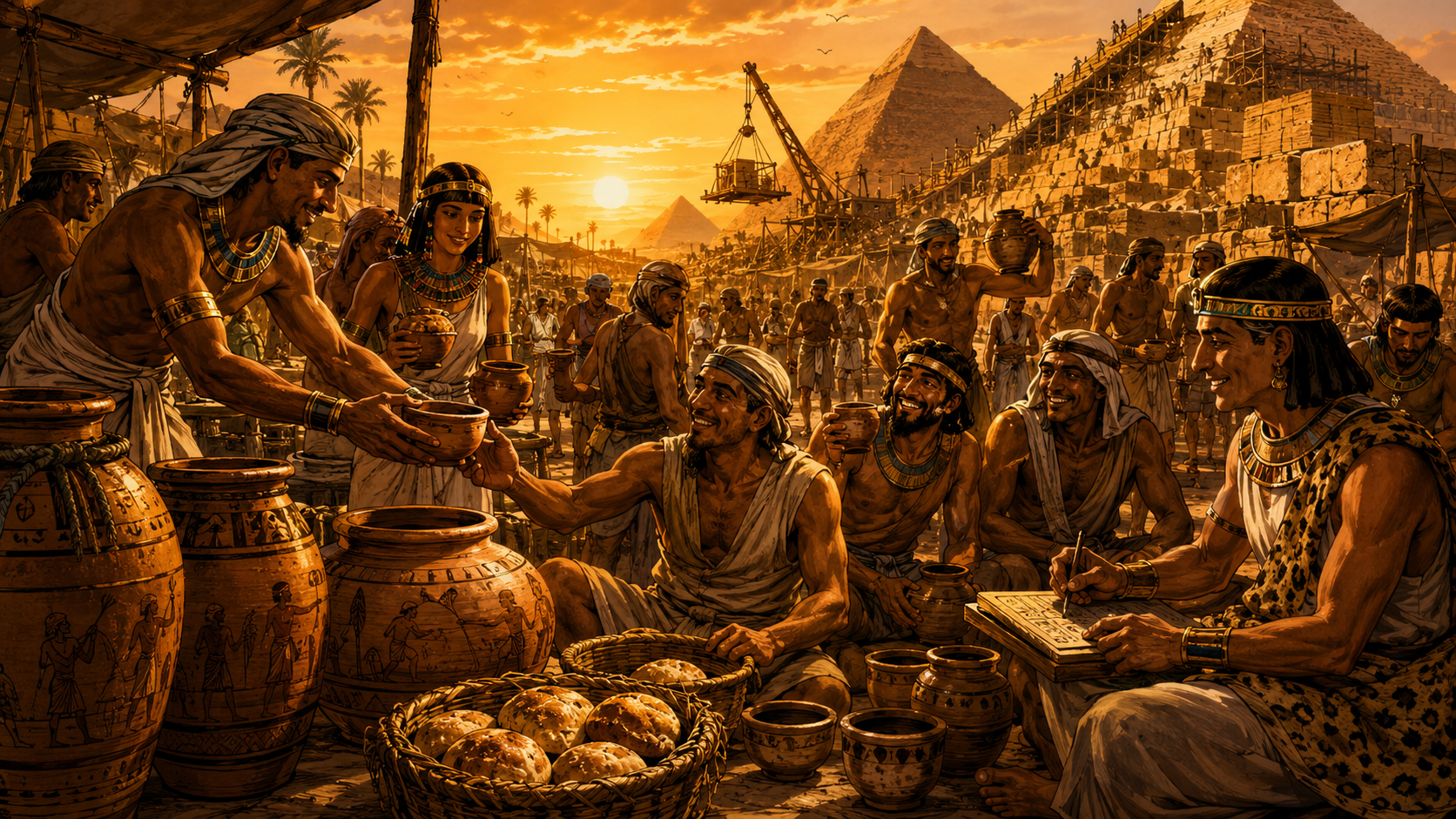
A scribe appears with a tablet and the focused expression of someone who can turn lunch into administration. He counts baskets, jars, workers, loaves, and beer portions.
“This is not merely food,” Professor Pint explains from the shade. “This is a ration system. Grain becomes labor support. Beer becomes part of the economic machine.”
The Foam Goblin tries to write “ancient happy hour” on the wall. The scribe erases it with professional contempt.
Panel 3: the workers negotiate
The workers approach the ration table. They are not rowdy caricatures. They are laborers with a point: big work requires reliable support. Bread and beer are not luxuries in this scene. They are calories, custom, compensation, and morale.
The foreman says, “The schedule is ambitious.” The workers reply, “So is our appetite.”
Panel 4: the brewer defends the jar
The brewer steps forward holding a large clay jar. “This is not just a drink,” she says. “This is grain transformed. This is water, malt, bread, yeast, vessel, timing, and tradition.”
The workers nod. The scribe writes faster. The jar looks proud of itself.
Clay Jar: “I would like it noted that I am essential infrastructure.”
History note: beer as ration, not cartoon drunkenness
Beer in ancient labor systems should not be reduced to a joke about everyone being drunk on the job. Fermented grain drink could be nourishing, practical, customary, and part of organized provisioning. Beer could sit beside bread as part of the daily support system for workers.
The true story is better than the lazy myth. Ancient beer was part of grain administration, labor organization, food technology, and social practice. That is much more interesting than “pyramid happy hour.”
Panel 5: the Foam Goblin misunderstands everything
The Foam Goblin sneaks in wearing a fake pharaoh beard. “I have solved ancient Egypt,” he says. “They drank beer only because the water was bad.”
The entire worksite groans. Professor Pint puts down his cup. The scribe sharpens his reed pen like a sword.
“Water quality can matter,” Professor Pint says, “but beer was also grain, food, ritual, wages, culture, and administration. Do not reduce a whole civilization to one bar-stool sentence.”
Panel 6: Ninkasi visits the Nile
Ninkasi appears briefly, looking across the Nile grain world with approval. “Different river, different people, same ancient truth,” she says. “Grain wants to become culture.”
The Egyptian brewer bows politely. “Here, grain becomes bread beer.”
Barley Boy whispers, “I am starting to think I am historically flexible.”
Panel 7: the ration table opens
Loaves are distributed. Beer jars are filled. Workers gather in the shade. The scribe completes the count. The foreman admits that civilization runs smoother when the ration table is not treated as optional.
Yeast-chan raises a tiny cup. “To fermentation,” she says. “The invisible workforce supporting the visible workforce.”
What the episode teaches
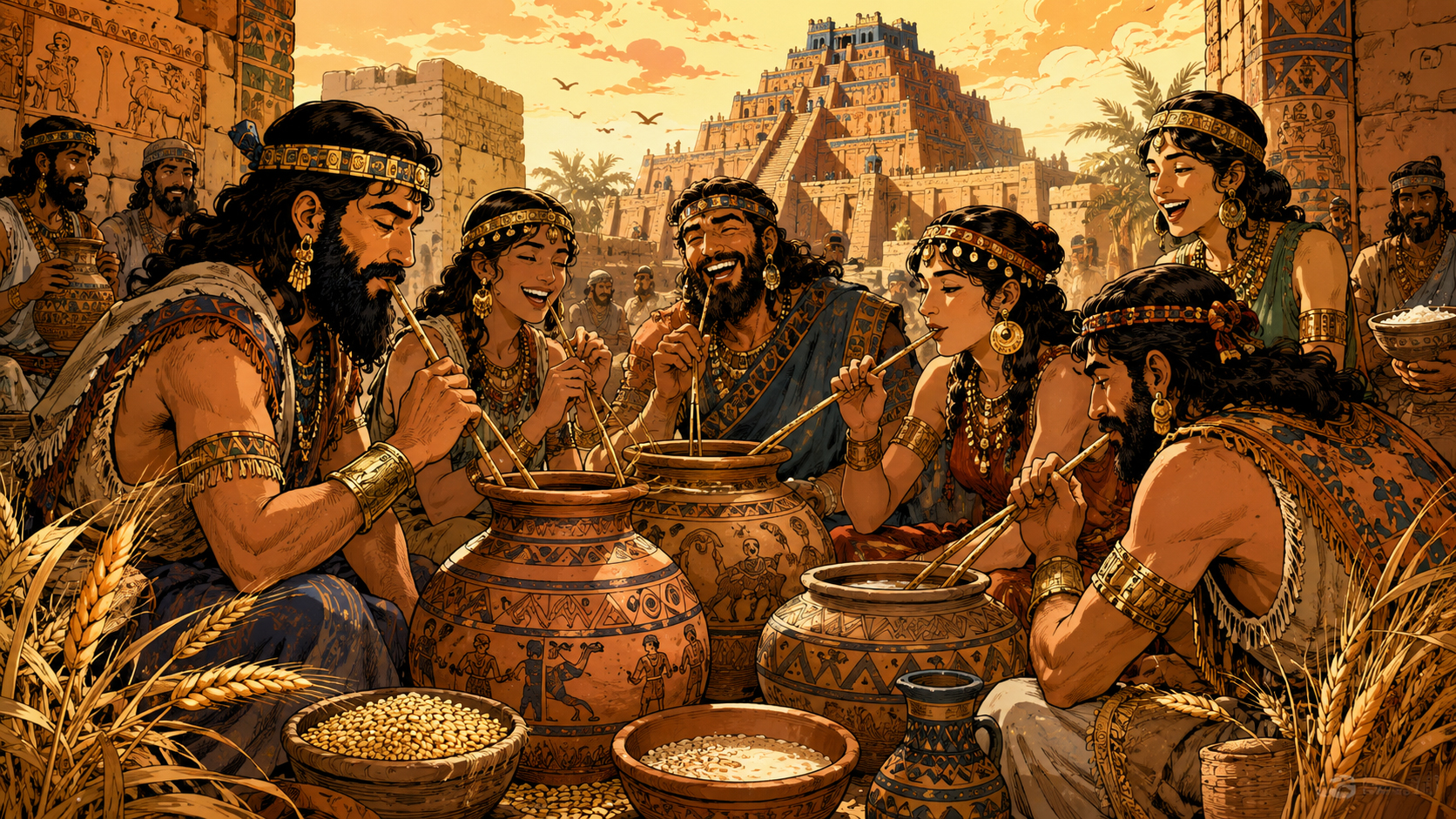
Beer in ancient Egypt belonged to a world of grain production, bread-making, brewing, labor support, offerings, and administration. It was practical and symbolic at the same time.
A ration of beer can tell us about agriculture, work, social organization, and daily life. That is why beer history matters. It does not just show what people drank. It shows how people organized life around grain.
The BeerDaily version of ancient payroll
Ancient payroll did not have direct deposit, health apps, or a breakroom fridge. It had grain, loaves, jars, records, and people who knew exactly when the ration table was running late.
The pyramid workers demanding rations is funny because it feels modern: big project, hard labor, management optimism, paperwork, and the eternal worker question — “What are we eating?”
Episode moral
Beer was not merely refreshment in ancient Egypt. It was part of the food system, labor system, temple system, and memory system. A jar of beer could connect Nile fields to human hands and monumental work.
BeerDaily moral: if you want civilization to move stones, feed the workers and respect the jar.