Opening scene: the arena of sameness
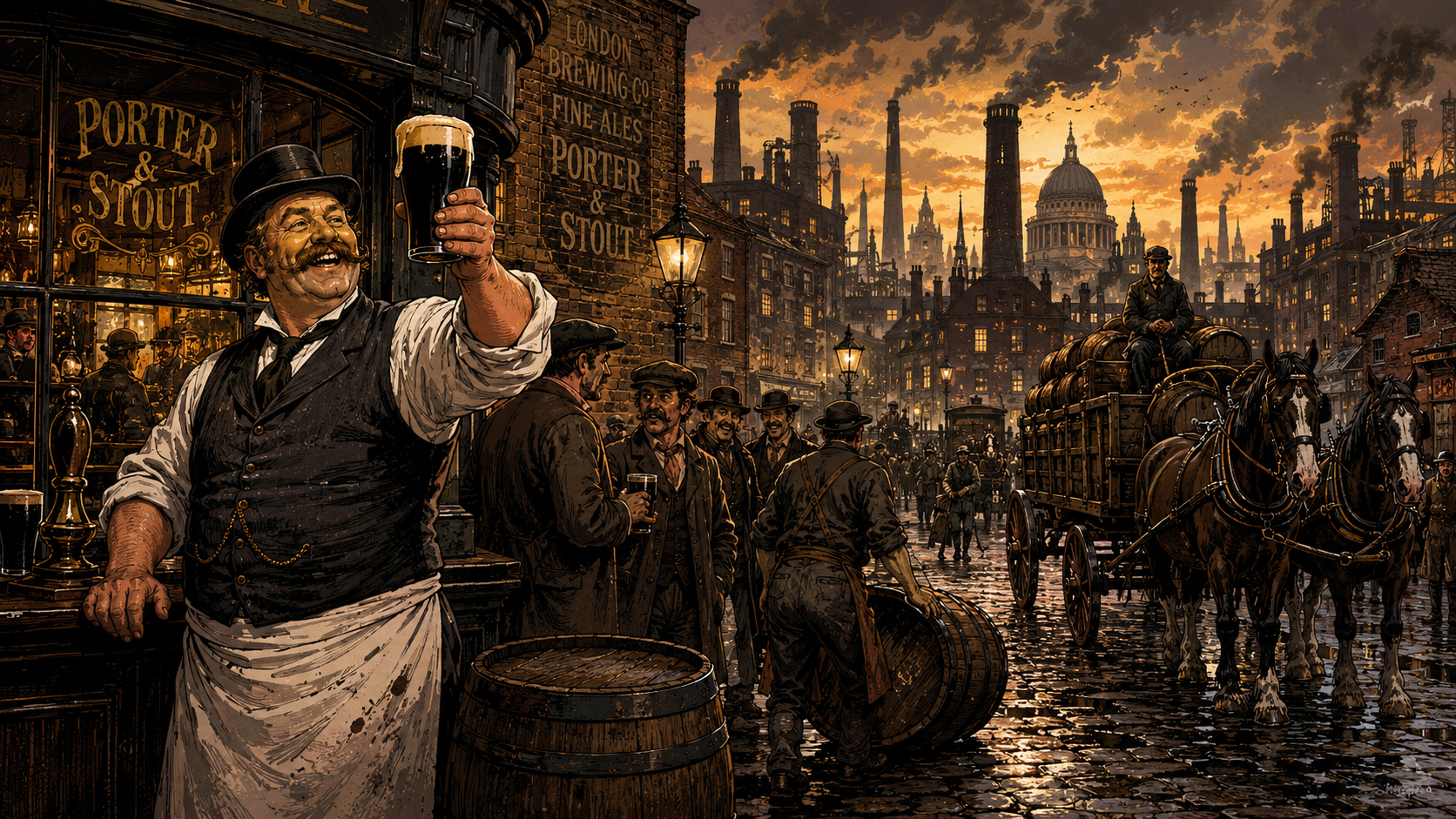
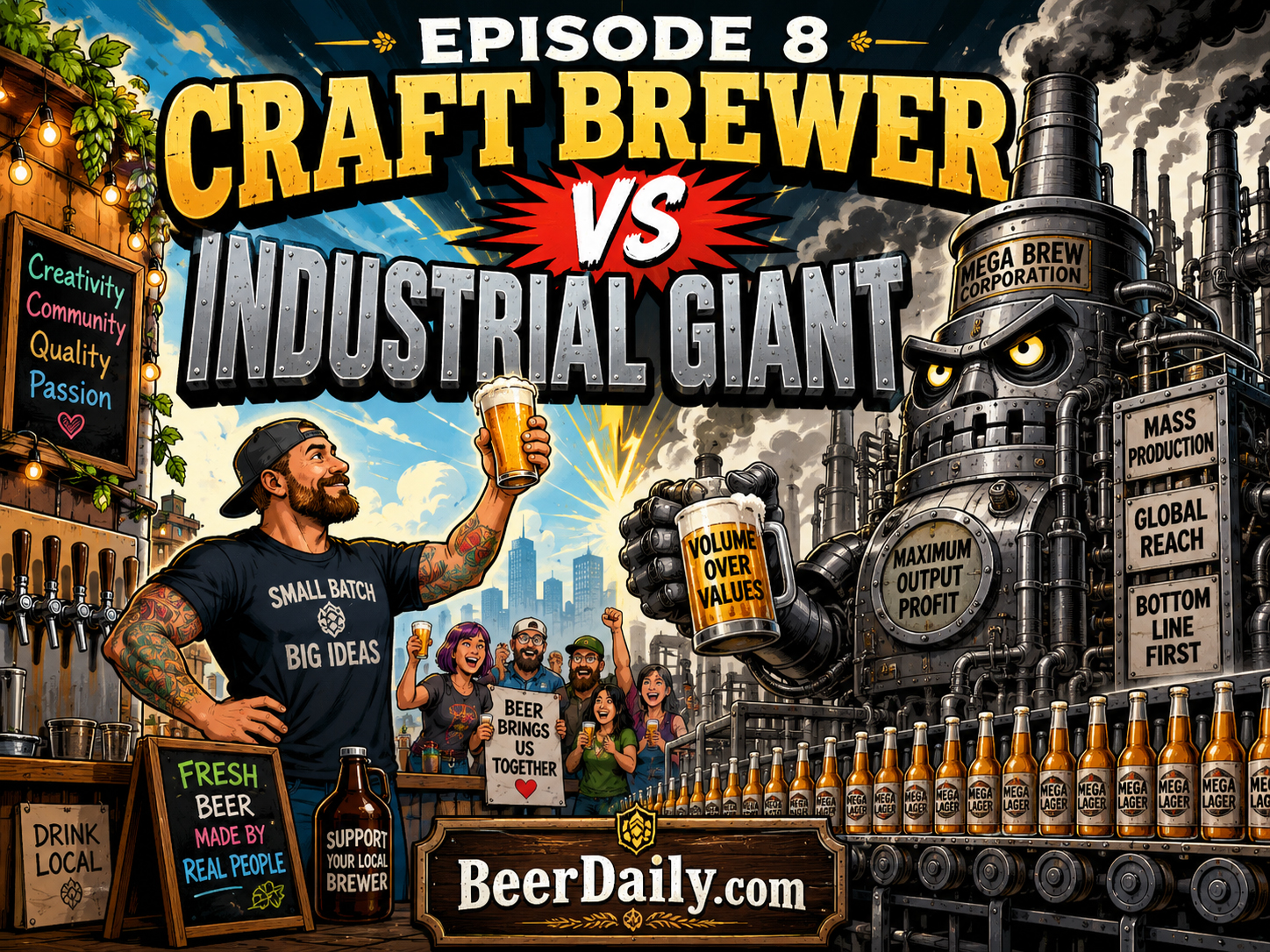
A giant brewery rises over the city: polished tanks, endless conveyors, perfect labels, delivery trucks, quality labs, and a marketing department that has already workshopped the word “crisp” eleven times before breakfast.
The Industrial Giant steps forward wearing a suit made of stainless steel and sales reports. “I bring consistency,” he booms. “I bring scale. I bring beer that tastes the same in every airport.”
A small door opens across the arena. A Craft Brewer enters carrying grain, hops, yeast, a tap handle, and a chalkboard that says, “Today’s beer: maybe weird.”
Industrial Giant: “Who are you?”
Craft Brewer: “Local trouble.”
Panel 1: industrial beer built the modern stage
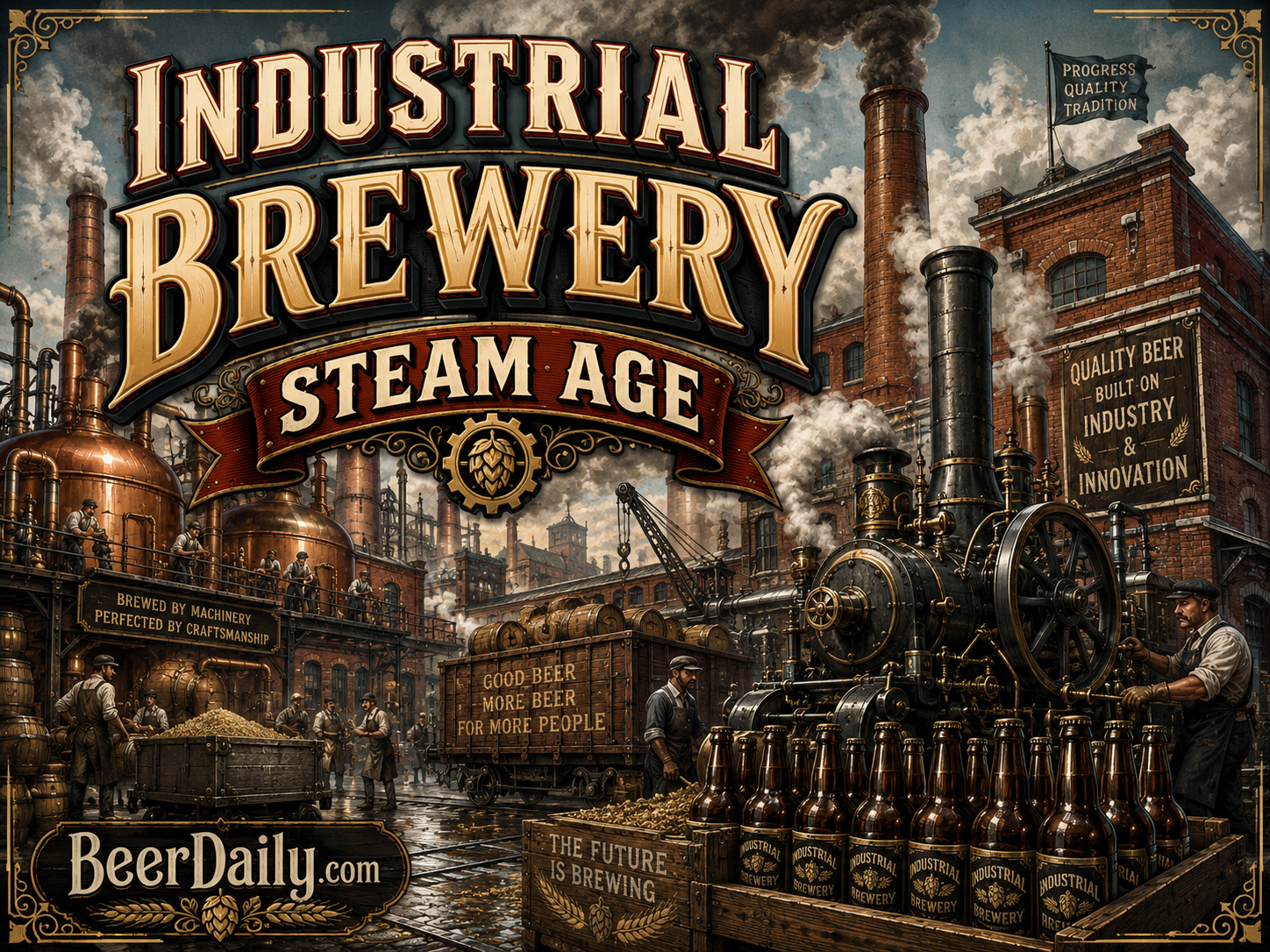
Professor Pint steps between them. “Important footnote before anyone starts throwing hops: industrial beer was not useless. It gave beer consistency, refrigeration, sanitation, packaging, railroads, glass, distribution, and large-scale quality control.”
The Industrial Giant nods proudly. “Thank you.”
Professor Pint continues, “It also helped flatten variety in many markets.”
The Industrial Giant looks at his lawyers. “Can he say that?”
Panel 2: the craft brewer brings the flavor map
The Craft Brewer unrolls a map across the floor. It shows porter, stout, saison, pilsner, sour beer, smoked beer, IPA, mild, bock, wheat beer, farmhouse ale, barrel-aged experiments, and one recipe labeled “Probably Too Much Coffee.”
“Beer can be local again,” the Craft Brewer says. “It can be historical, strange, precise, expressive, fresh, seasonal, and tied to place.”
Panel 3: homebrew enters with a bucket
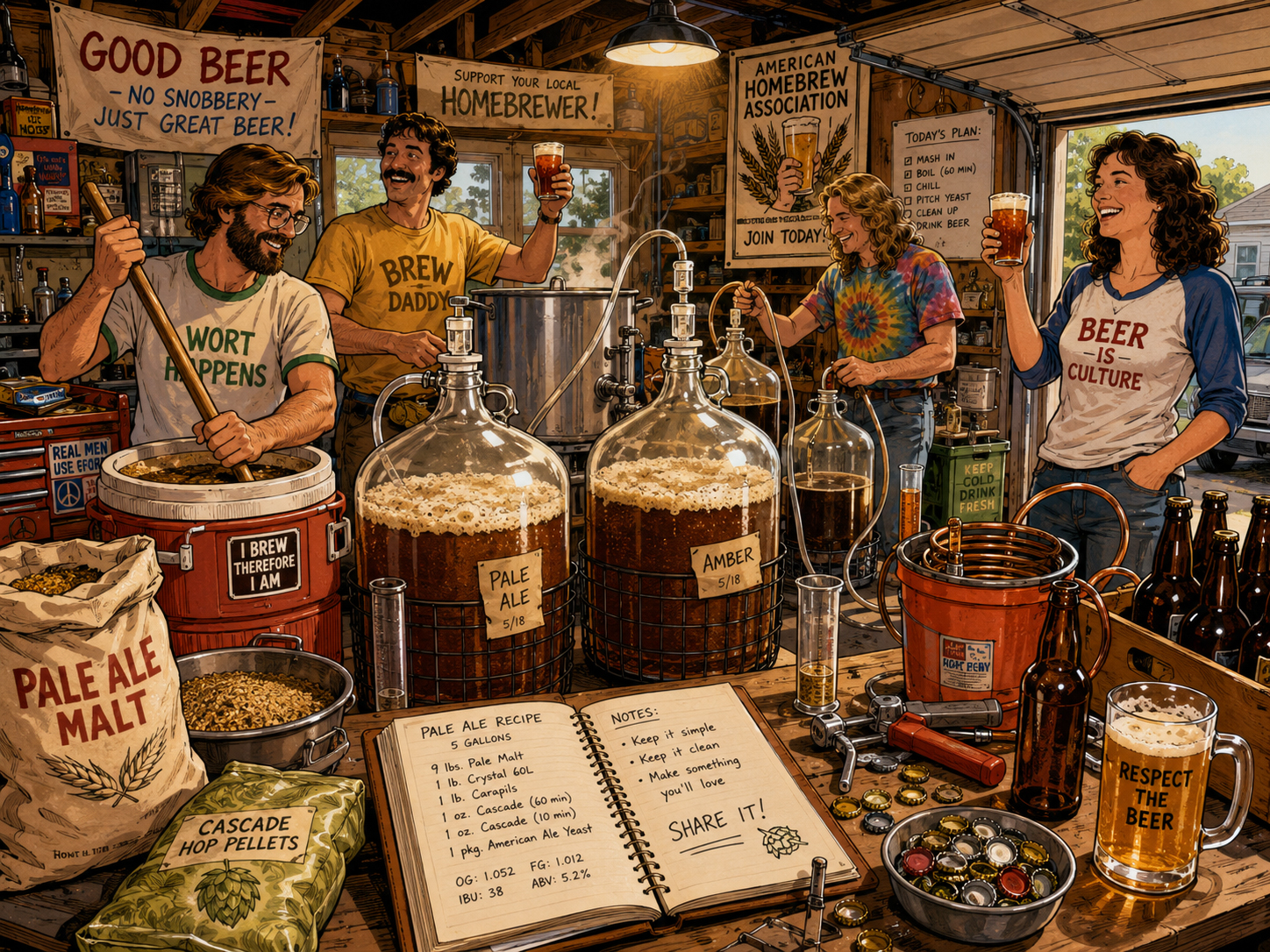
A garage door opens. Homebrewers pour into the arena with buckets, carboys, notebooks, siphons, malt extract, grain bags, and the confidence of people who have cleaned sticky wort off a floor at midnight.
“We kept the spark alive,” they say.
Yeast-chan inspects a bucket. “Some of you also kept several contamination risks alive, but your heart was in the right place.”
Panel 4: the taproom opens
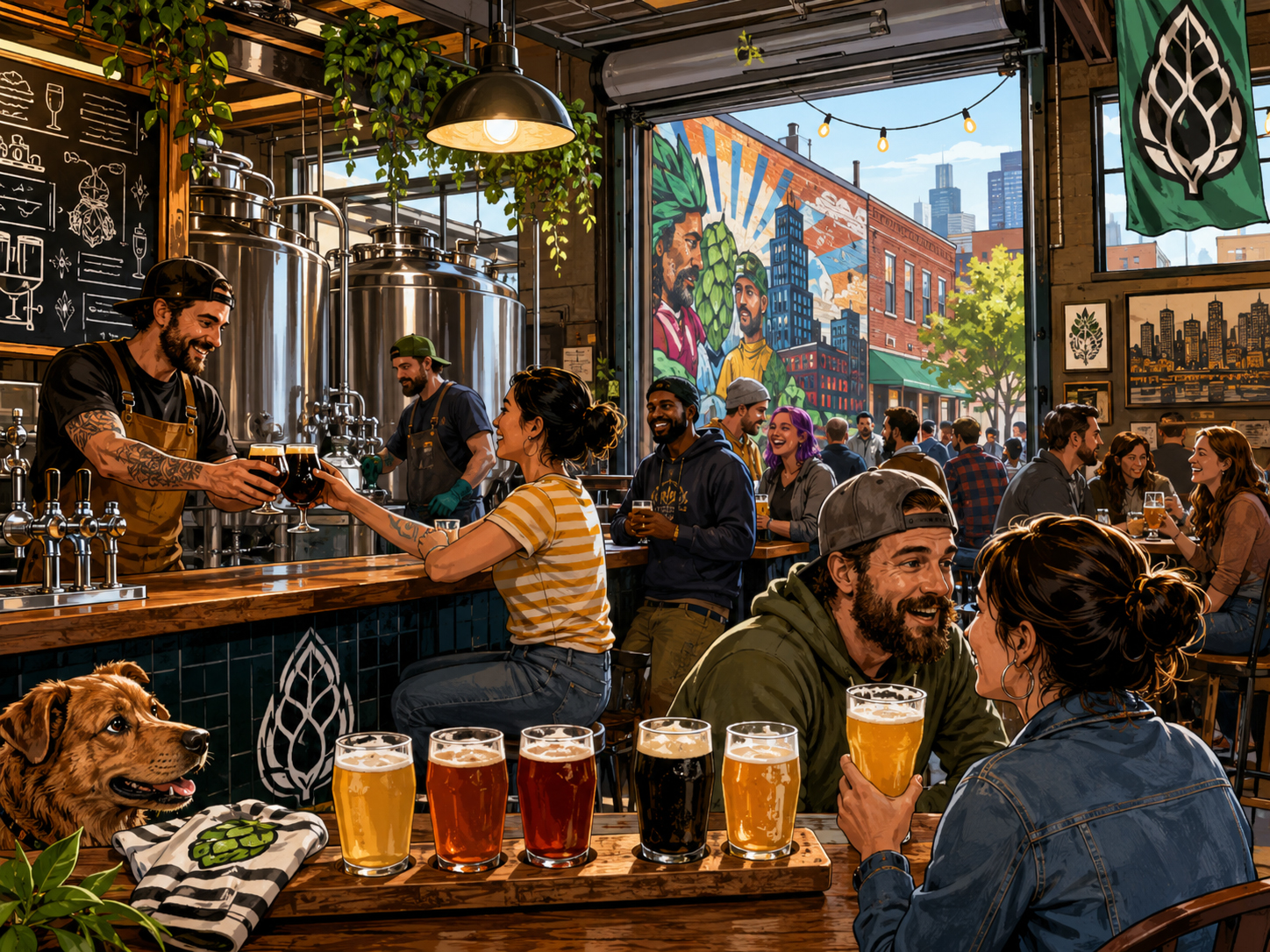
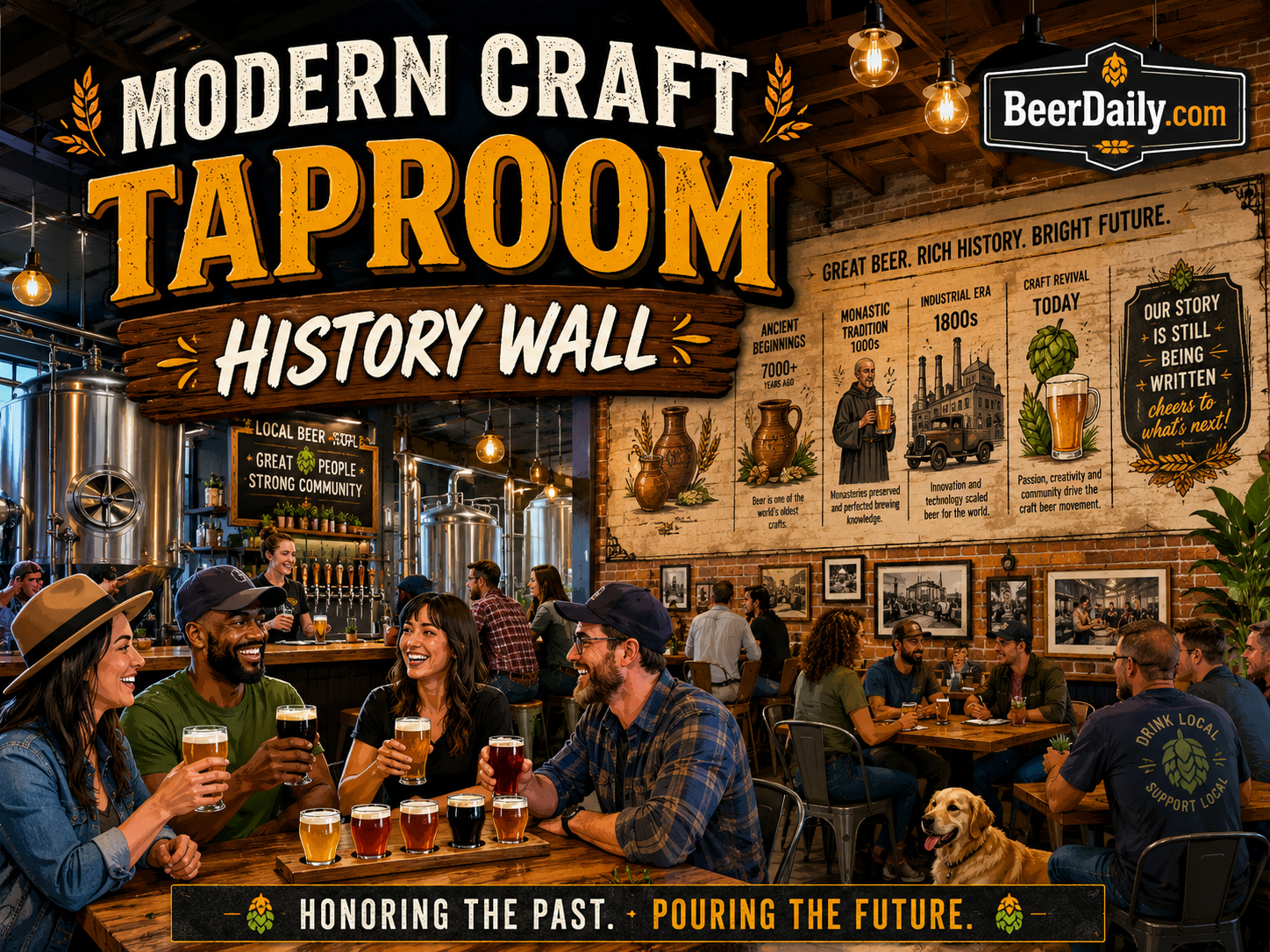
The Craft Brewer pulls a lever and a taproom appears: tanks behind glass, local art on the wall, a food truck outside, neighbors at tables, a trivia team arguing about ancient beer, and one dog who clearly thinks it owns the patio.
“Beer belongs to place,” the Craft Brewer says. “People should know where it was made and who made it.”
The Industrial Giant checks his spreadsheet. “Can place be distributed nationally?”
The dog growls.
Panel 5: hops become celebrities
Hop Samurai returns with sunglasses. Behind him is a crowd of hop varieties demanding stage names, aroma notes, and separate merchandise.
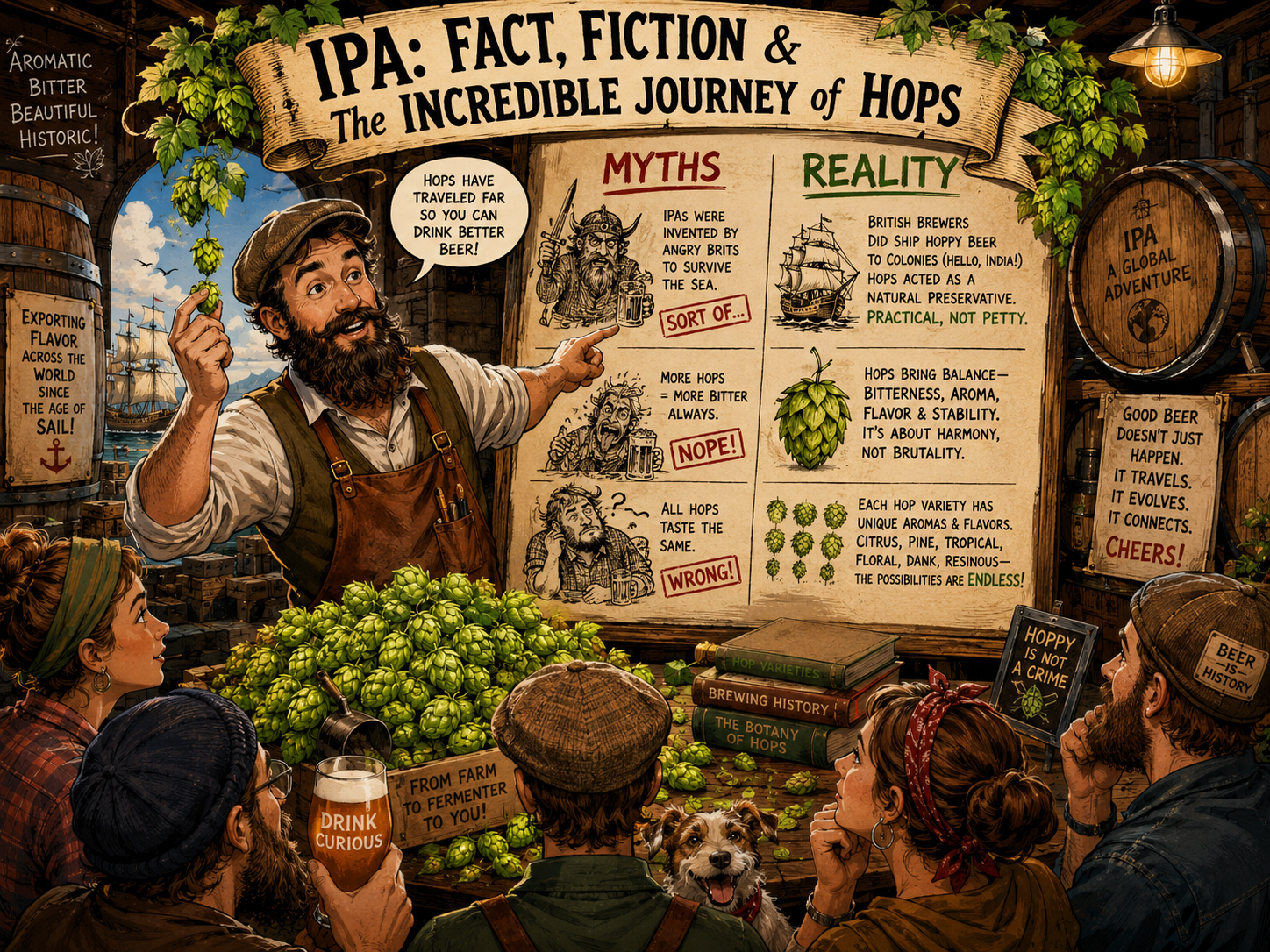
“Craft beer,” Professor Pint explains, “made hops visible in a new way. Drinkers learned variety names, aroma profiles, dry hopping, freshness, bitterness, haze, and the emotional politics of limited releases.”
Hop Samurai bows. “I was always useful. Now I am also dramatic.”
Panel 6: the Industrial Giant is not entirely wrong
The Industrial Giant raises one enormous finger. “Scale matters. Consistency matters. Sanitation matters. Distribution matters. Quality control matters. Not every tiny batch is good.”
The Craft Brewer pauses. “Fair.”
Foam Detective blows his whistle. “Excellent. Nuance has entered the arena.”
Foam Detective: “Small is not automatically good. Big is not automatically bad. Lazy history is automatically annoying.”
Panel 7: the Foam Goblin tries to ruin craft beer
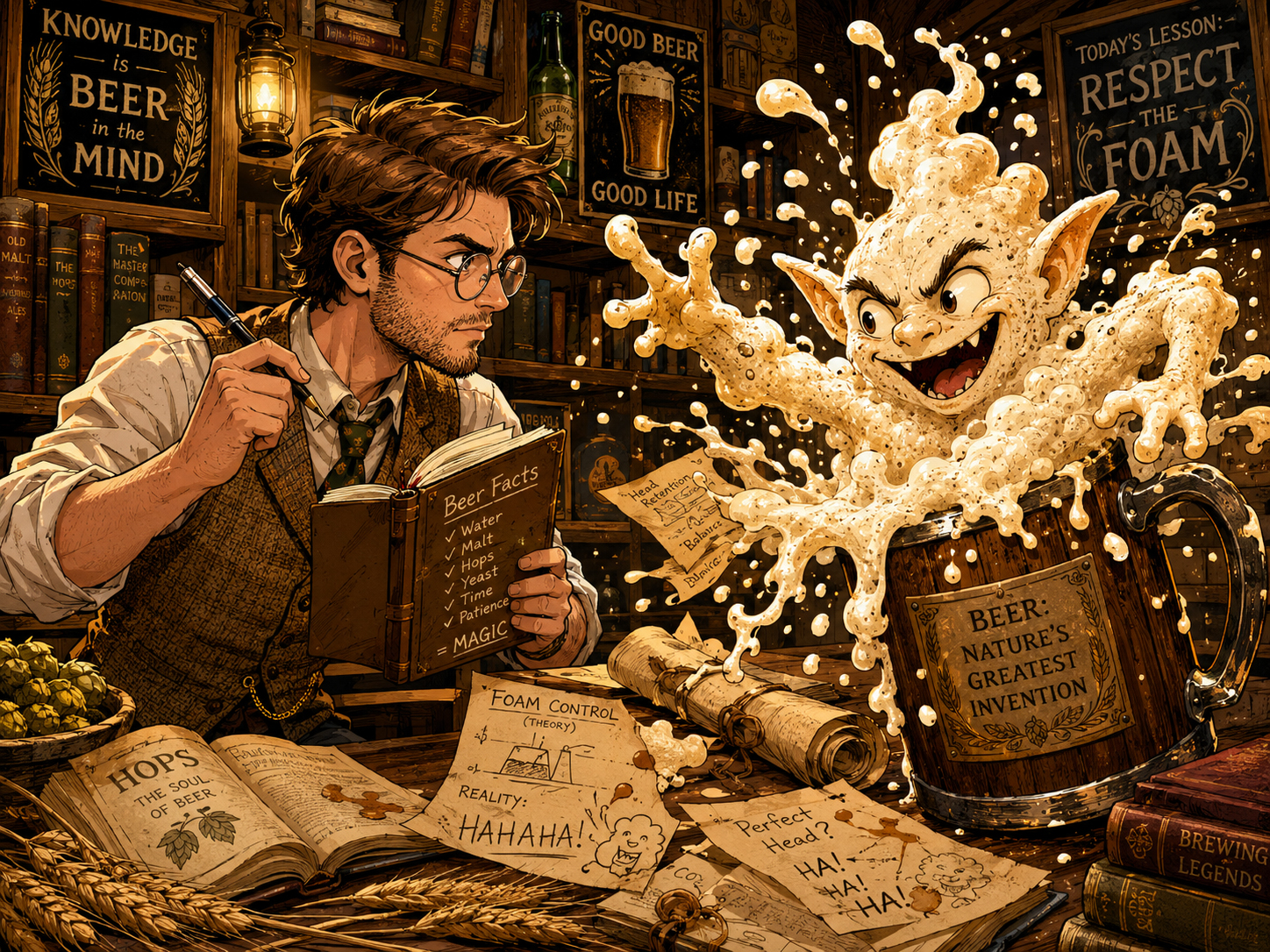
The Foam Goblin jumps onto a barrel. “Craft beer is always better!”
The Craft Brewer winces. “Please do not help me.”
Professor Pint corrects him. “Craft beer reopened the flavor map, but the label does not guarantee quality. Good beer needs skill, sanitation, balance, freshness, and purpose.”
The Foam Goblin tries again: “Then industrial beer is always bad!”
The Industrial Giant and Craft Brewer both throw coasters at him.
History note: craft beer borrowed modern tools
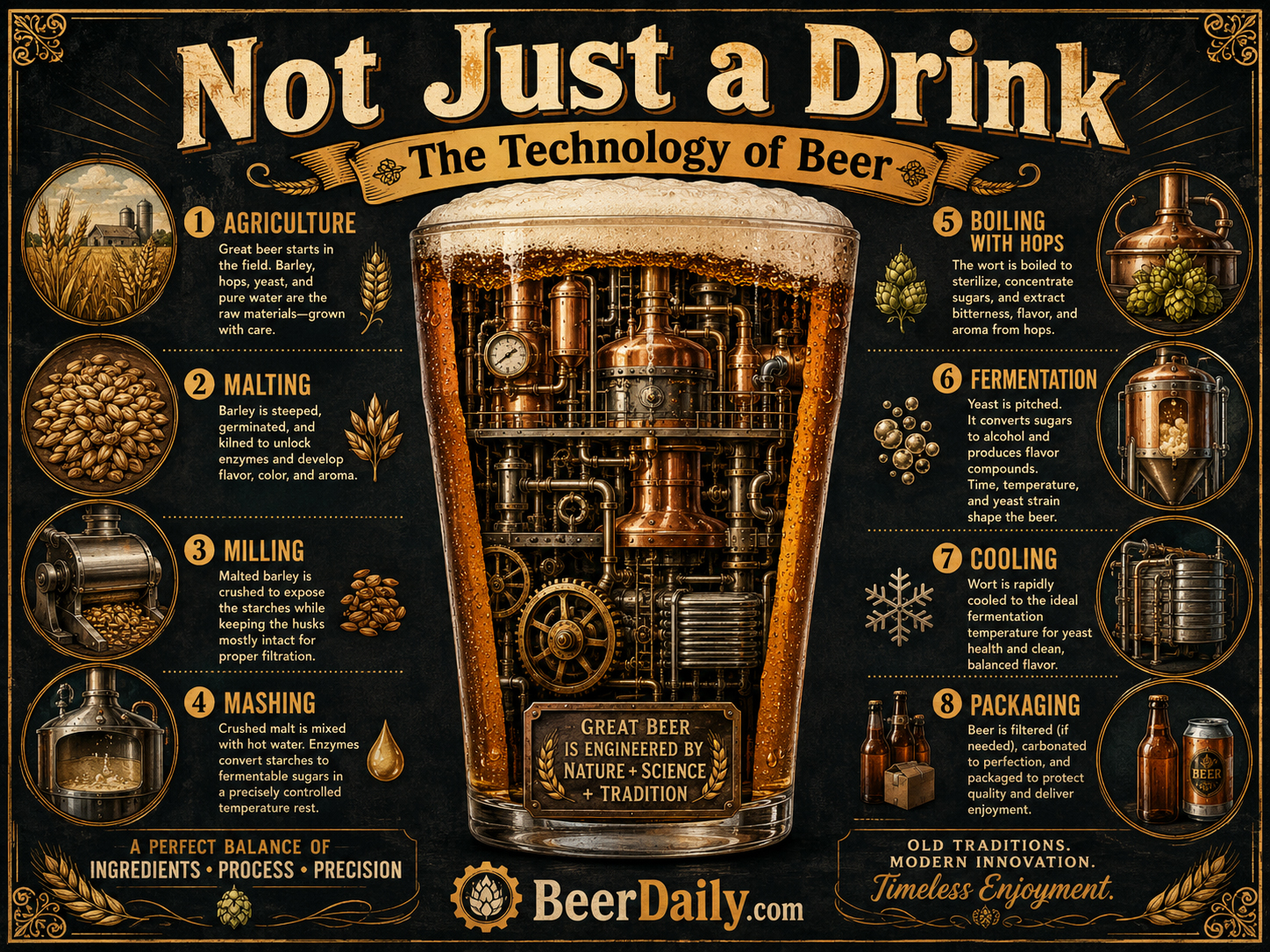
Craft beer is often framed as rebellion against industrial sameness, but it also depends on industrial-era tools: stainless steel, refrigeration, pumps, packaging lines, lab knowledge, sanitation chemistry, yeast supply, malt supply, hop agriculture, and distribution networks.
The craft movement did not go backward into the ancient jar. It used modern equipment to reopen older and broader possibilities: local flavor, historic styles, experimentation, taproom culture, and creative independence.
Panel 8: the showdown becomes a conversation
The Craft Brewer lowers the mash paddle. The Industrial Giant lowers the spreadsheet. Both look at the long beer timeline behind them: grain baskets, Ninkasi, pyramid rations, hop fields, abbey ledgers, cold caves, steam breweries, Prohibition barrels, garages, taprooms.
“Maybe beer history is not one hero,” the Craft Brewer says.
“Maybe it is a long argument about how grain should become community,” says the Industrial Giant.
Professor Pint wipes away a tear. “That is almost usable copy.”
What the episode teaches
Craft beer mattered because it returned beer to locality, variety, experiment, and identity. It showed drinkers that beer could be more than one dominant mainstream profile. It revived old styles, pushed hops forward, explored sourness, celebrated taprooms, and connected brewing to community.
But craft beer is not magic. It needs discipline. The best craft brewing combines creativity with skill, sanitation, process, and respect for history.
Episode moral
Industrial beer made beer consistent and widely available. Craft beer made beer curious again. The best future learns from both: precision from the factory, personality from the local brewer, and humility from the Foam Detective.
BeerDaily moral: scale can make beer reliable. Place can make beer memorable. The glass is big enough for both lessons.